Have you ever typed adress and immediately seen a red underline? You’re not alone. The keyword address vs adress is searched thousands of times every month because people around the world are unsure which spelling is correct. This confusion shows up in emails, online forms, school assignments, resumes, and even official documents. One small spelling mistake can make writing look unprofessional—or worse, cause real misunderstandings.
The main reason people search for address vs adress is simple: both spellings look believable, and pronunciation doesn’t clearly show the double d and double s. In fast typing, especially on phones, adress feels natural. Some people also wonder if adress might be a British or American variation. Others see the mistake online (Reddit, social media, comments) and assume it might be acceptable.
This article clears all that confusion once and for all. You’ll get a quick answer, a deep explanation, real-world examples, and professional advice on which spelling to use. By the end, you’ll know exactly why address is correct, why adress is wrong, and how to use address confidently in every situation—formal or casual.
Address vs Adress
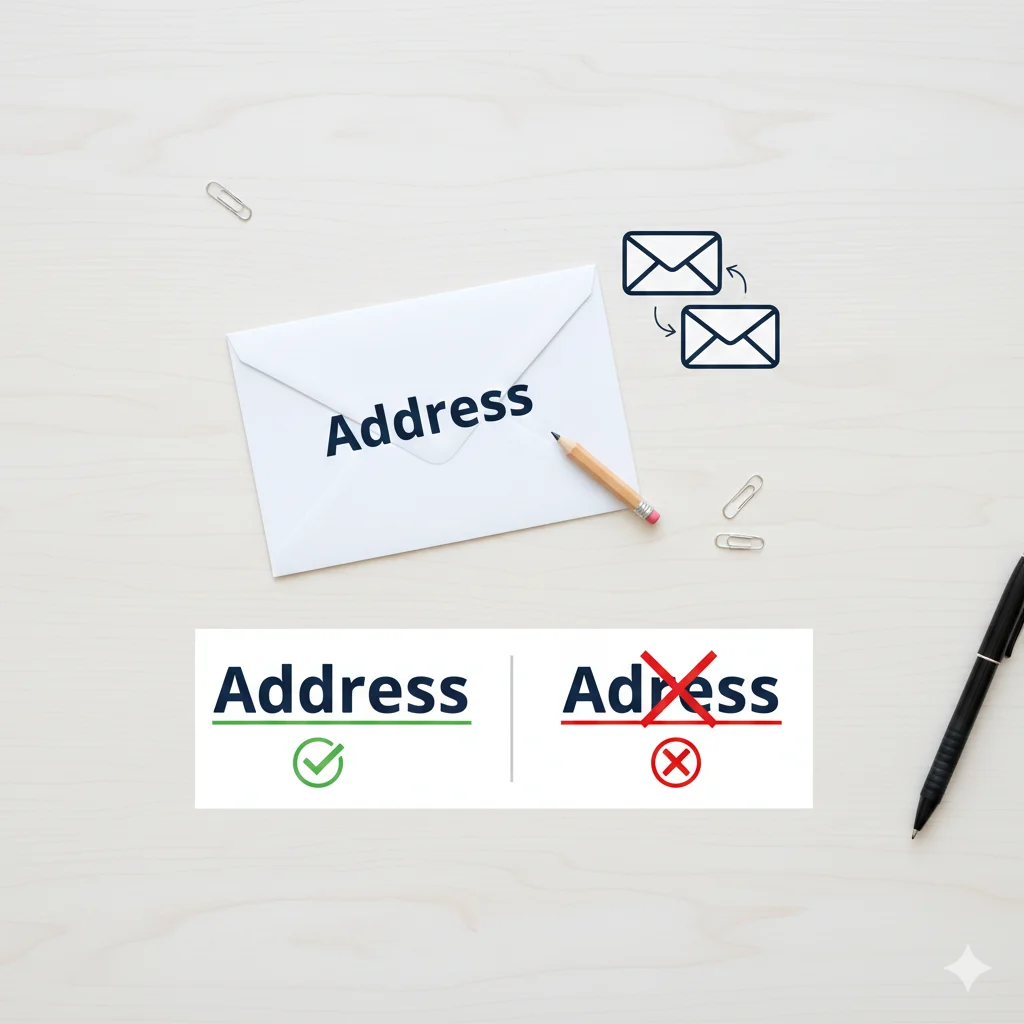
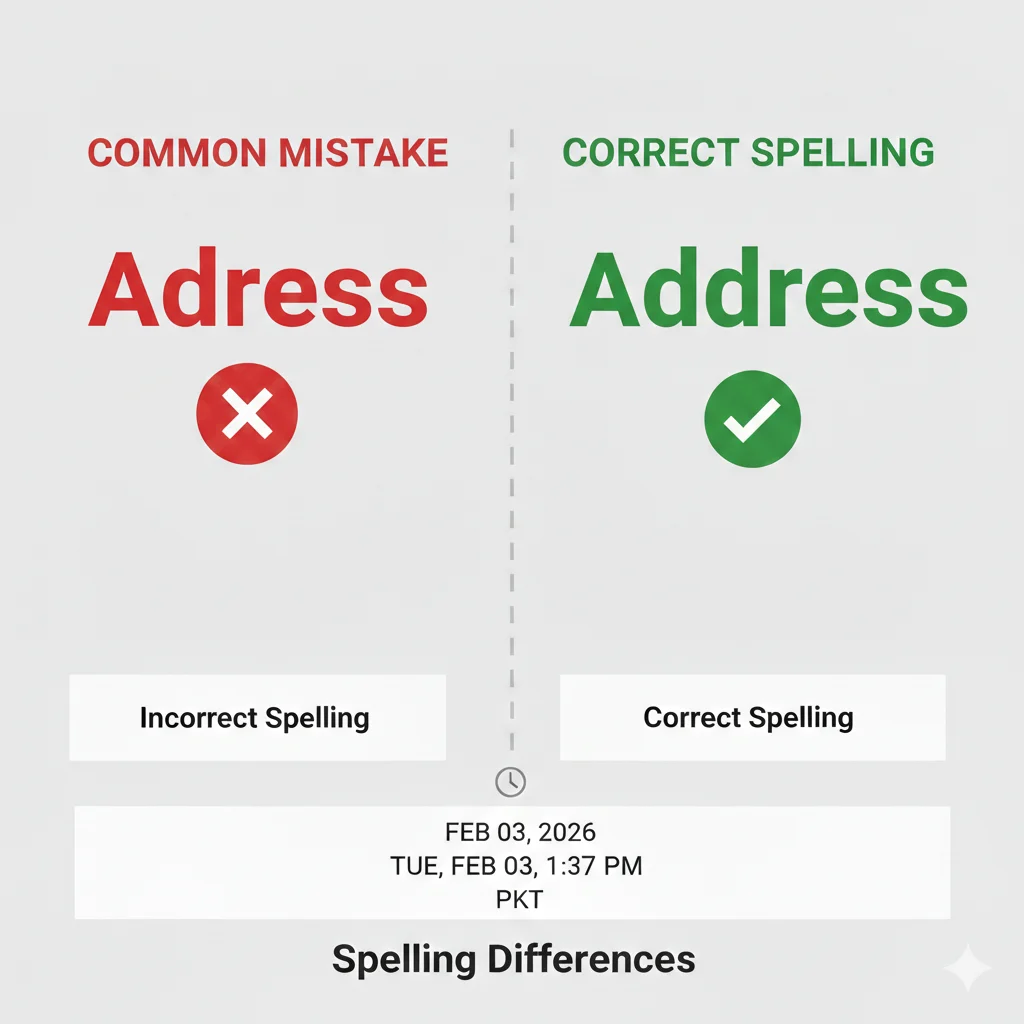
The correct spelling is address.
❌ Adress is not a real word in English.
Examples
- ✅ Please confirm your address.
- ❌ Please confirm your adress.
Address can mean:
- A physical or email location
- To speak to or deal with a problem
There is no situation where adress is correct in English.
The Origin of Address vs Adress
The word address comes from Middle English adresen, which came from Old French adresser, meaning “to direct” or “to set straight.”
Over time, English spelling settled on double d (dd) and double s (ss) to match pronunciation and stress patterns. English often keeps extra letters from its French and Latin roots, which is why spelling doesn’t always feel logical.
So why does adress exist at all?
It doesn’t—at least not officially. Adress is simply a common misspelling caused by:
- Fast typing
- Pronunciation shortcuts
- Seeing the error repeated online
- ESL learners applying simpler spelling rules
English dictionaries only recognize address.
British English vs American English Spelling
This is where many people get confused—but the answer is simple.
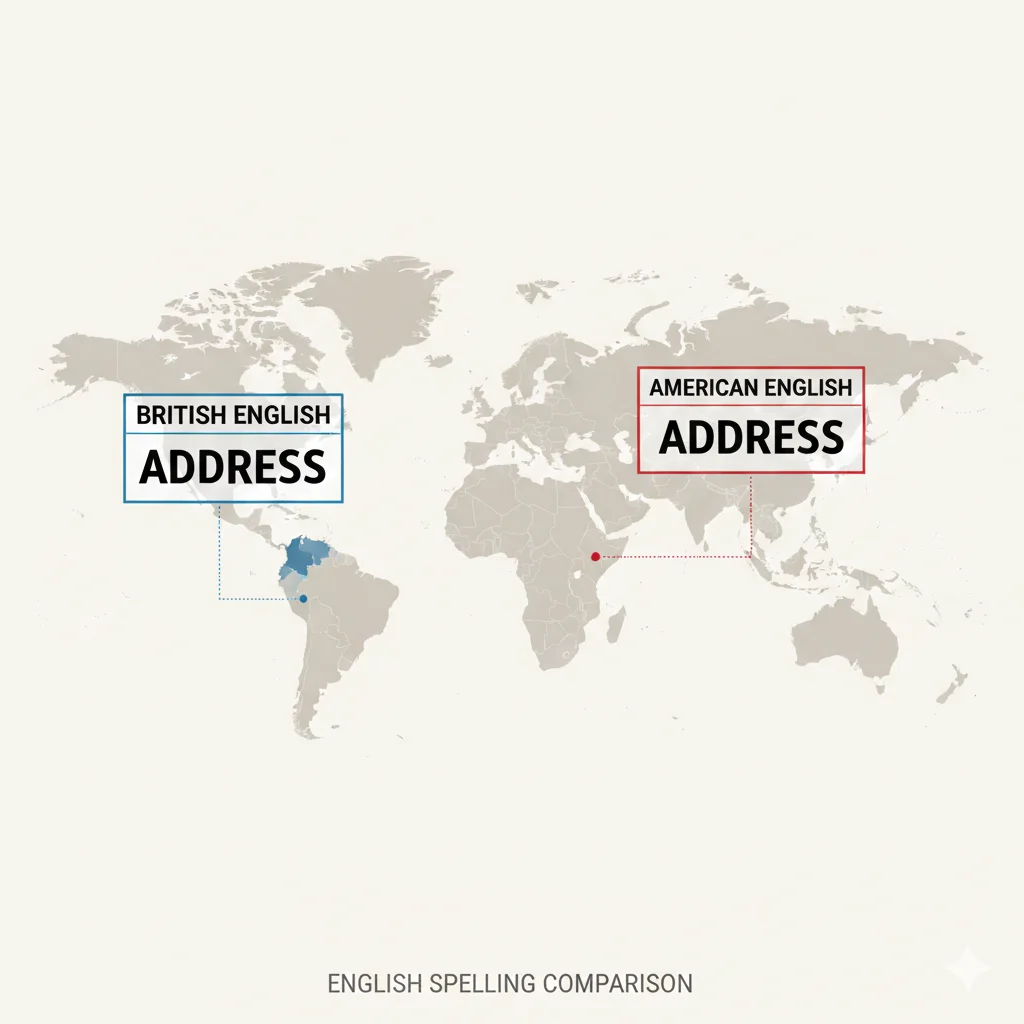
👉 British English and American English use the same spelling: ADDRESS
There is no regional difference here.
Comparison Table
| Feature | British English | American English |
|---|---|---|
| Correct spelling | address | address |
| Incorrect spelling | adress | adress |
| Pronunciation | uh-DRESS | uh-DRESS |
| Usage | Same | Same |
Unlike colour vs color or centre vs center, address does not change between regions.
Ninth vs Nineth: Why One Spelling Doesn’t Exist
Which Spelling Should You Use?
Always use ADDRESS—no matter your audience.
Audience-based advice
- US audience: Use address
- UK audience: Use address
- Canada, Australia, Pakistan, India: Use address
- Global or professional writing: Use address
If you use adress in:
- Job applications ❌
- Academic writing ❌
- Business emails ❌
- Website forms ❌
…it will be seen as a spelling error.
Common Mistakes with Address vs Adress
Here are frequent errors and how to fix them:
- ❌ Please enter your adress
✅ Please enter your address - ❌ Email adress is invalid
✅ Email address is invalid - ❌ Address vs adress meaning
✅ Address vs adress: only address has meaning - ❌ Assuming adress is informal
✅ It’s always wrong
Pro tip: If you remember “dress” inside address, you’ll never misspell it again.
Address vs Adress in Everyday Examples
Emails
- ✅ Please send your address by email.
- ❌ Please send your adress.
News & Media
- ✅ The president will address the nation tonight.
- ❌ The president will adress the nation.
Social Media
- ✅ I forgot my delivery address 😅
- ❌ I forgot my delivery adress
Formal Writing
- ✅ The issue must be addressed immediately.
- ❌ The issue must be adressed immediately.
Dealt vs Delt: Which Form Is Actually Correct?
Address – Google Trends & Usage Data
Search data shows:
- “address” is searched millions of times monthly
- “adress” spikes due to spelling confusion
- High confusion in:
- Non-native English regions
- Mobile searches
- School-level writing
Google treats adress as a misspelling, often auto-correcting it to address. In SEO and professional content, using adress can hurt credibility and rankings.

Address vs Adress – Comparison Table
| Term | Correct? | Meaning |
|---|---|---|
| address | ✅ Yes | Location or to speak/deal with |
| adress | ❌ No | Misspelling |
| email address | ✅ Yes | Digital contact |
| address a problem | ✅ Yes | Deal with an issue |
| addressee | ✅ Yes | Person receiving mail |
FAQs – Address vs Adress
1. What’s the correct spelling for address?
The correct spelling is address. Adress is incorrect.
2. What does it mean to address a situation?
It means to deal with or handle a problem.
3. How do Americans say address?
Americans pronounce it as uh-DRESS (noun) or uh-DRESS (verb).
4. What’s the difference between address and address line?
An address is the full location.
An address line is one part of a form (e.g., street name).
5. Is adress ever correct in English?
No. Adress is never correct.
6. What’s the difference between address and addressee?
- Address: location or act of speaking
- Addressee: person receiving the message
7. Why do people write address vs adress on Reddit?
Because spelling confusion is common, and people want confirmation of the correct form.
Conclusion
The confusion around address vs adress is understandable—but the rule is clear. Address is the only correct spelling in English, whether you are writing an email, filling out a form, posting on social media, or publishing professional content. The word comes from French origins, and its spelling has stayed consistent across British and American English.
Adress is not an alternative spelling, not informal English, and not region-based. It is simply a common typing mistake. Knowing this helps you write with confidence and avoid errors that can affect clarity, credibility, and professionalism.
Remember that address has two main meanings: a location and the act of speaking to or dealing with something. Once you understand this, usage becomes natural. If you ever hesitate, think of the word “dress” inside address—that small trick can save you from big mistakes.
Clear writing starts with correct spelling, and mastering small details like this makes a powerful difference.

Pam Peters is a linguist and grammar expert, known for clear explanations of modern English usage, style, and practical language rules.