Many people get confused between broach vs brooch. At first glance, they look almost the same. Even more confusing, they sound very similar too. This is why people often search for questions like “Is it broach the topic?” or “What is a broach in jewelry?”
The truth is simple: these two words have different meanings, even though their spelling and pronunciation overlap. One word belongs to language and conversation, while the other belongs to fashion and jewelry.
This confusion happens because English has many words that sound alike but mean different things. These are called homophones. If you mix them up, your writing may look unprofessional or unclear.
In this guide, you will learn the exact difference between broach and brooch, how to use them correctly, and avoid common mistakes. You will also see real examples, pronunciation tips, and expert advice so you can use both words with confidence.
Broach vs Brooch
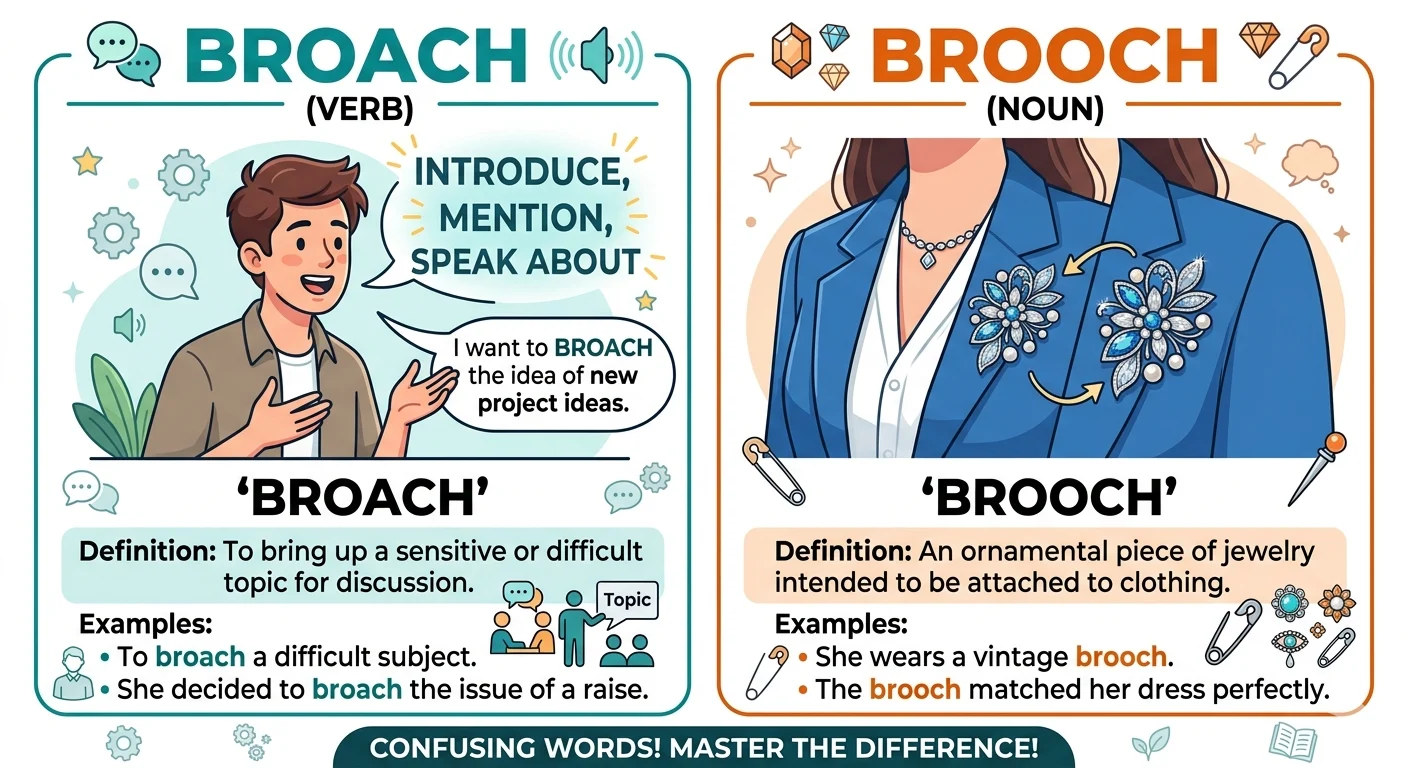
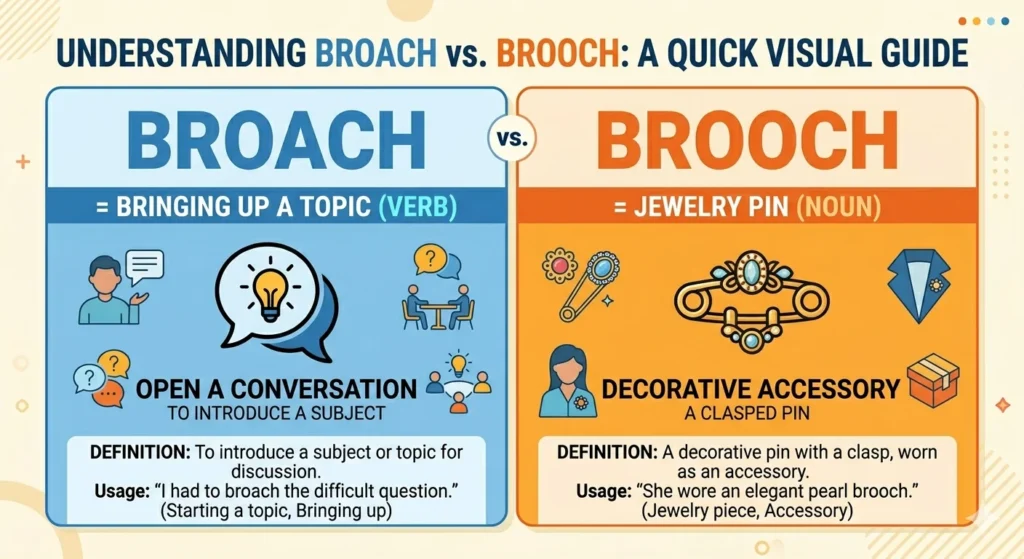
Broach vs brooch is a common confusion in English.
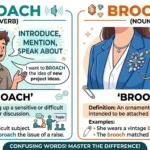
- Broach = to bring up a topic for discussion
- Brooch = a decorative jewelry pin
Examples:
- I will broach the topic during the meeting. ✅
- She wore a gold brooch on her dress. ✅
❌ Wrong:
- She wore a gold broach
- I will brooch the subject
👉 Simple rule:
If it’s about talking, use broach.
If it’s about jewelry, use brooch.
The Origin of Broach vs Brooch
Understanding the origin helps clear the confusion.
Broach
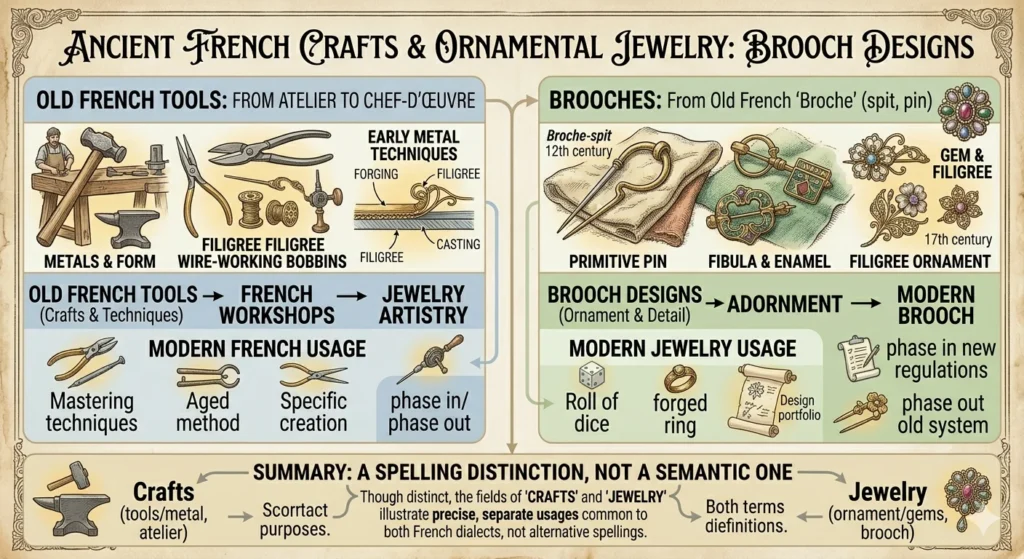
The word broach comes from Old French broche. It first meant a sharp tool or spit for roasting meat. Later, its meaning changed to piercing into a topic, which led to its modern meaning: to introduce a subject.
Brooch
The word brooch also comes from the same French root broche. Over time, it became linked with decorative pins used in clothing.
👉 So both words share the same root, but their meanings split over time. That is why they look alike but mean different things.
British English vs American English Spelling
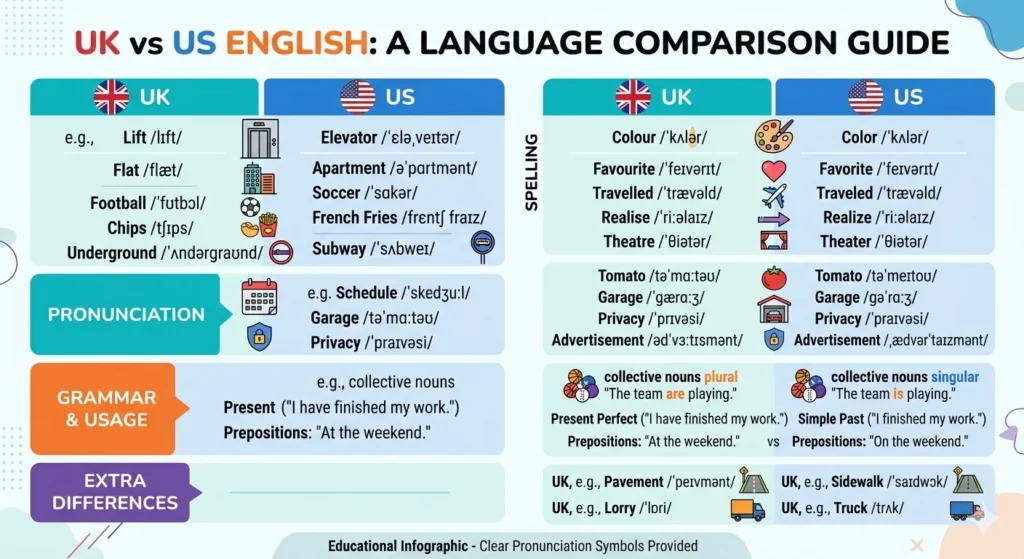
Unlike many English words, broach vs brooch is not mainly a US vs UK spelling issue. Both forms exist in both regions—but with different meanings.
Key Differences:
| Word | Meaning | UK Usage | US Usage |
|---|---|---|---|
| Broach | Start a discussion | Common | Common |
| Brooch | Jewelry pin | Common | Common |
Pronunciation Comparison:
| Word | British Pronunciation | American Pronunciation |
|---|---|---|
| Broach | /brəʊtʃ/ | /broʊtʃ/ |
| Brooch | /brəʊtʃ/ | /broʊtʃ/ |
👉 Important:
Broach vs brooch pronunciation is almost identical in both accents. That’s why people confuse them.
Which Spelling Should You Use?
Choosing the right word depends on your context.
Use Broach when:
- You are talking about starting a discussion
- Example: Let’s broach this issue carefully
Use Brooch when:
- You are talking about fashion or jewelry
- Example: She bought a diamond brooch
Audience-Based Advice:
- US audience → Same rule applies
- UK/Commonwealth → Same rule applies
- Global writing (blogs, SEO) → Always choose based on meaning, not location
👉 Pro Tip:
If you are writing about brooch definition jewelry, never use broach.
Common Mistakes with Broach vs Brooch
Here are the most common errors and how to fix them:
❌ Mistake 1:
She wore a beautiful broach
✅ Correct: She wore a beautiful brooch
❌ Mistake 2:
I will brooch the topic
✅ Correct: I will broach the topic
❌ Mistake 3:
Confusing meaning
- Broach meaning = discussion
- Brooch meaning = jewelry
❌ Mistake 4:
Mixing with “pin”
- A brooch is a type of pin, but not all pins are brooches
Broach vs Brooch in Everyday Examples
1. In Emails:
- I would like to broach the topic of budget changes.
2. In News:
- The minister refused to broach the issue in public.
3. In Social Media:
- Love this vintage brooch! 💎
4. In Formal Writing:
- The researcher carefully broached the subject.
5. In Fashion:
- This gold brooch for men is trending in 2026.

Broach vs Brooch – Google Trends & Usage Data
Search data shows clear intent behind both keywords:
- “Broach the topic” → high usage in writing and communication
- “Brooch definition jewelry” → popular in fashion searches
- “Brooch for men” → rising trend globally
Popular Regions:
- US & UK → high usage of both
- India & Pakistan → more confusion between spellings
- Fashion markets → higher use of brooch
👉 Insight:
Most users searching broach vs brooch meaning want a quick grammar fix, while others want jewelry information.
Comparison Table: Broach vs Brooch
| Feature | Broach | Brooch |
|---|---|---|
| Meaning | Start a discussion | Decorative jewelry pin |
| Part of Speech | Verb | Noun |
| Context | Communication | Fashion/Jewelry |
| Example | Broach the topic | Wear a brooch |
| Common Error | Used for jewelry ❌ | Used for topic ❌ |
FAQs About Broach vs Brooch
1. What is a broach in jewelry?
A broach is incorrect in jewelry. The correct word is brooch, which is a decorative pin.
2. What does broach mean?
Broach means to introduce or start a topic in conversation.
3. Is it broach the topic?
Yes ✅
The correct phrase is “broach the topic.”
4. Is a broach a pin?
No ❌
A brooch is a pin, but broach is not.
5. Broach vs brooch pronunciation?
Both sound almost the same: brohch.
6. Why is brooch pronounced broach?
Because both words come from the same French root, so their pronunciation stayed similar.
7. Brooch vs pin – what’s the difference?
A brooch is decorative, while a pin can be simple or functional.
Conclusion
The difference between broach vs brooch is simple but very important. One small spelling change can completely change the meaning of your sentence.
Use broach when you want to talk about starting a conversation or introducing a topic. Use brooch when you are referring to a piece of jewelry worn on clothing.
Even though both words sound the same, their meanings are very different. This is why many learners and writers make mistakes. But now, you know the rule.
If you remember one thing, remember this:
👉 Talking = broach | Jewelry = brooch
Using the correct word will improve your writing, make your message clear, and help you sound more professional. Whether you are writing emails, blogs, or social media posts, choosing the right word matters.
Now you can confidently use both words without confusion.

Pam Peters is a linguist and grammar expert, known for clear explanations of modern English usage, style, and practical language rules.