Have you ever paused mid-sentence and wondered: Is it delt or dealt? You’re not alone. This small spelling confusion shows up in emails, exams, social media posts, and even professional writing. Many people hear the word spoken and assume “delt” must be correct—especially because it sounds right when spoken quickly. That’s why searches like What does delt mean?, Dealt meaning, and Deal past tense are so common.
The confusion mostly comes from pronunciation habits and spelling logic. English has many verbs where -t endings are correct (like felt or built), so people naturally assume deal becomes delt. But English doesn’t always follow patterns neatly.
This article clears the confusion once and for all. You’ll learn what dealt really means, whether delt is ever acceptable, how British and American English handle it, and which spelling you should use in formal and informal writing. By the end, you’ll never second-guess this word again.
Dealt vs Delt
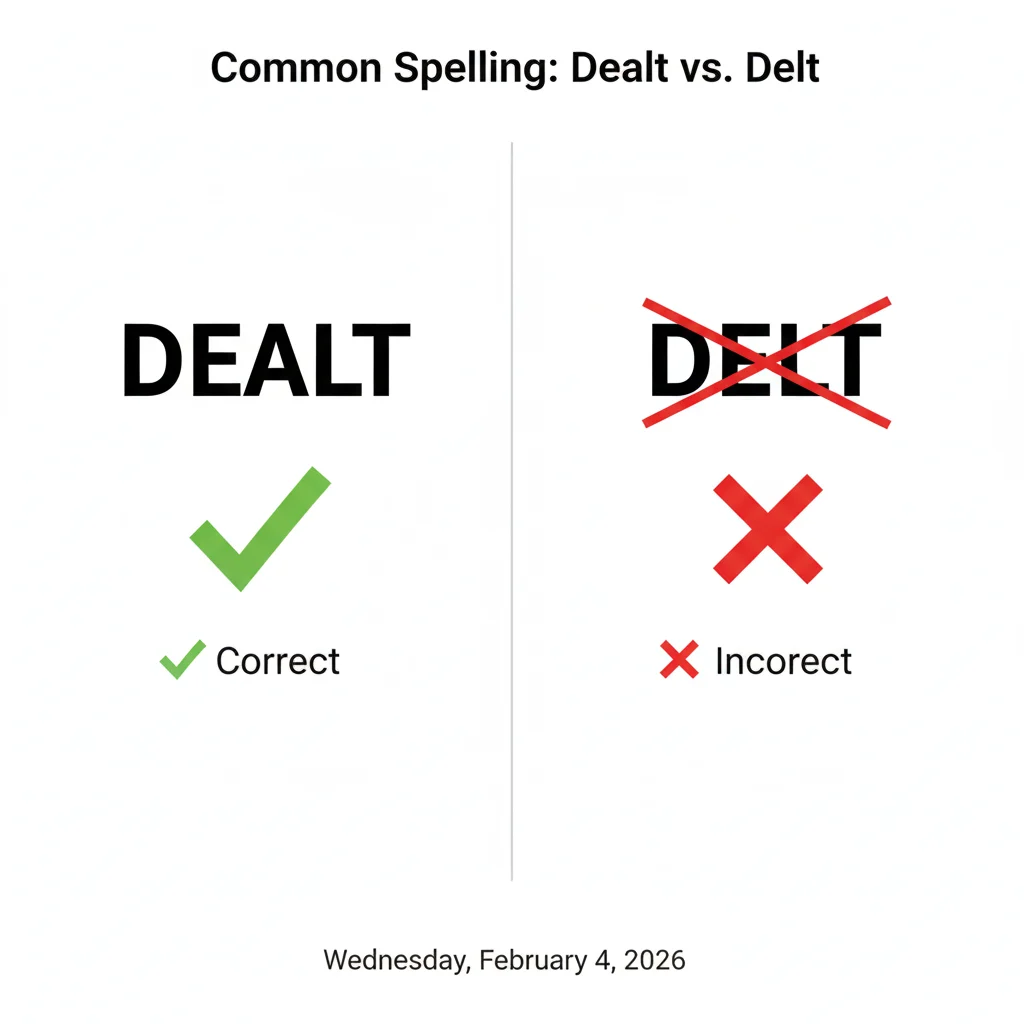
Dealt is the only correct spelling. Delt is not a standard English word.
✅ She dealt with the problem calmly.
❌ She delt with the problem calmly.
Dealt is the past tense and past participle of “deal.” The form “delt” does not exist in modern English dictionaries.
Deal past tense = dealt “Dealed” and “delt” are both incorrect.
The Origin of Dealt vs Delt
The verb deal comes from Old English dǣlan, meaning to divide or distribute. Over time, its past tense evolved into dealt, following historical sound changes rather than modern spelling rules.
So why does delt feel logical? Because English has similar patterns:
feel → felt
build → built
But deal → dealt is an exception created by history, not logic.
Delt definition? There isn’t one. Delt has no accepted meaning in standard English. It’s simply a spelling error caused by pronunciation habits.
British English vs American English Spelling
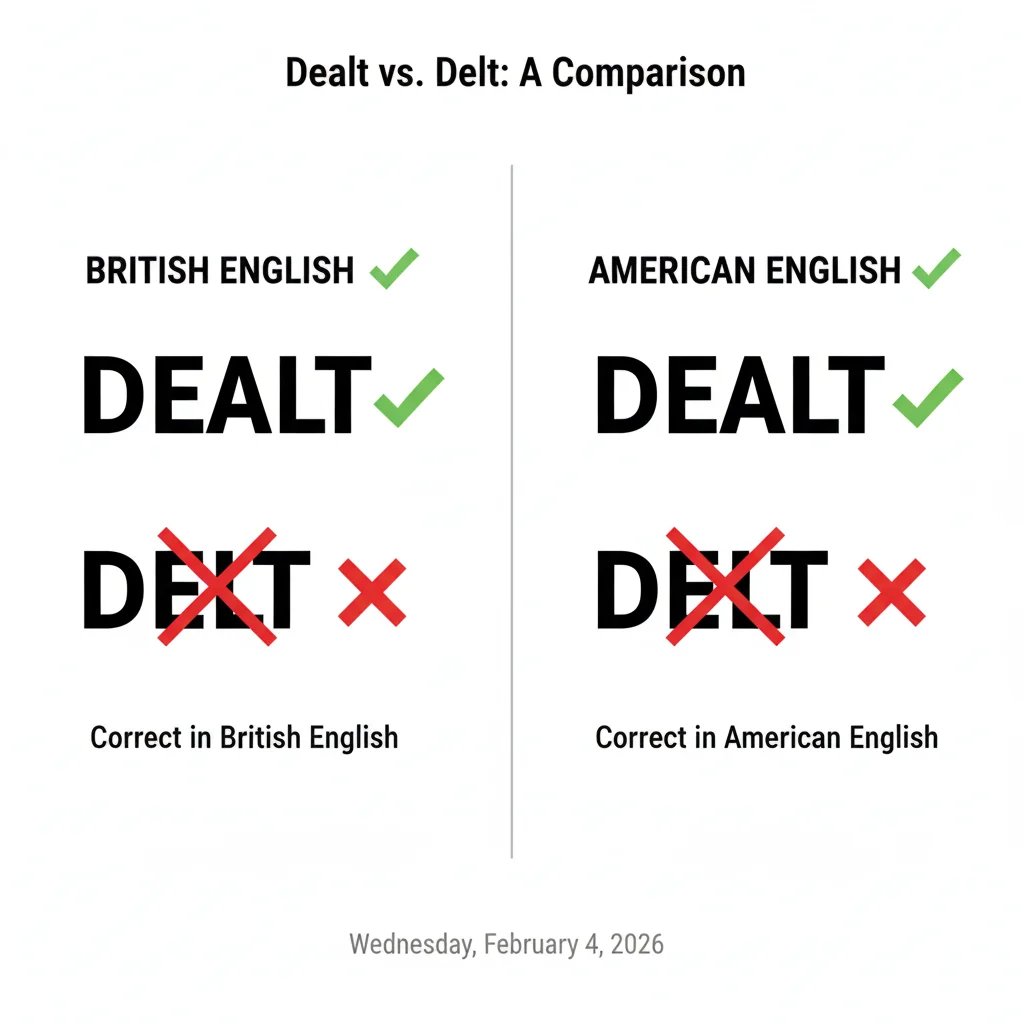
Here’s the good news: there is no difference between British and American English for this word.
Form
British English
American English
Correct
dealt
✅
✅
Yes
delt
❌
❌
No
dealed
❌
❌
No
No matter where your audience is—US, UK, Canada, Australia—dealt is always correct.
Using delt can damage credibility, especially in formal or published content. Google and readers both recognize dealt as the correct form.
Common Mistakes with Dealt vs Delt
Here are the most frequent errors:
❌ Is it delt or dealt? → ✅ It’s dealt ❌ What can delt mean? → ✅ Nothing—use dealt ❌ He dealed with it. → ✅ He dealt with it. ❌ She delt cards. → ✅ She dealt cards.
Dealt or delt synonym? There is no synonym for delt because it isn’t a real word.
Dealt vs Delt in Everyday Examples
Emails
I have dealt with your request already.
News
The court dealt harshly with repeat offenders.
Social Media
Life dealt me surprises this year.
Formal Writing
The issue was professionally dealt with by management.
Dealt pronunciation: /delt/ (This pronunciation is why people mistakenly spell it “delt.”)
Dealt vs Delt – Google Trends & Usage Data
Search data shows:
“dealt” appears millions of times in books, news, and academic writing.
“delt” spikes only in spelling-related searches like Is it delt or dealt?
Countries with high search volume:
United States
United Kingdom
India
Pakistan
Australia
This confirms delt is searched due to confusion, not usage.
Dealt means managed, handled, distributed, or given.
4. What can delt mean?
It doesn’t mean anything. Always use dealt.
5. Is “dealed” ever correct?
No. Dealed is incorrect in all forms of English.
6. How do you use “dealt with”?
Use it to mean handled or managed: She dealt with the issue.
7. Why do people spell dealt as delt?
Because dealt is pronounced like “delt.”
Conclusion
The confusion between dealt vs delt is understandable—but the rule is simple. Dealt is always correct. It is the proper past tense and past participle of deal, used across American, British, and global English. Delt has no definition, no grammatical role, and no place in correct writing.
This mistake usually happens because of pronunciation. Since dealt sounds like delt, many people assume the spelling must match the sound. But English spelling doesn’t always follow pronunciation rules, and this is one of those cases where history decides the form.
If you’re writing emails, academic work, SEO content, or professional documents, always choose dealt. Avoid delt and dealed, as both reduce clarity and credibility. Remember: when in doubt, check the verb tense—deal → dealt—and you’ll never get it wrong again.