Many learners and writers search for “ensure vs assure” because these two words look similar and sound almost the same. This confusion often leads to mistakes in emails, exams, blog writing, and even professional communication. A simple sentence like “I ensure you” can be incorrect, while “I assure you” is the right choice.
This small mistake can affect clarity and even your credibility in formal writing. Many students lose marks, and professionals may sound less confident due to this confusion.
In this complete guide, you will learn the ensure vs assure meaning, correct usage, pronunciation, and real-life examples. We will also cover related topics like insure vs ensure examples, ensure vs assure insurance, and answer common questions like “What is the difference between assure and ensure?” and “What is the difference between ensure and confirm?”
👉 By the end, you will clearly understand when and how to use each word correctly in daily life and professional writing.
Ensure vs Assure
What is the difference between ensure and assure?
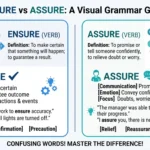
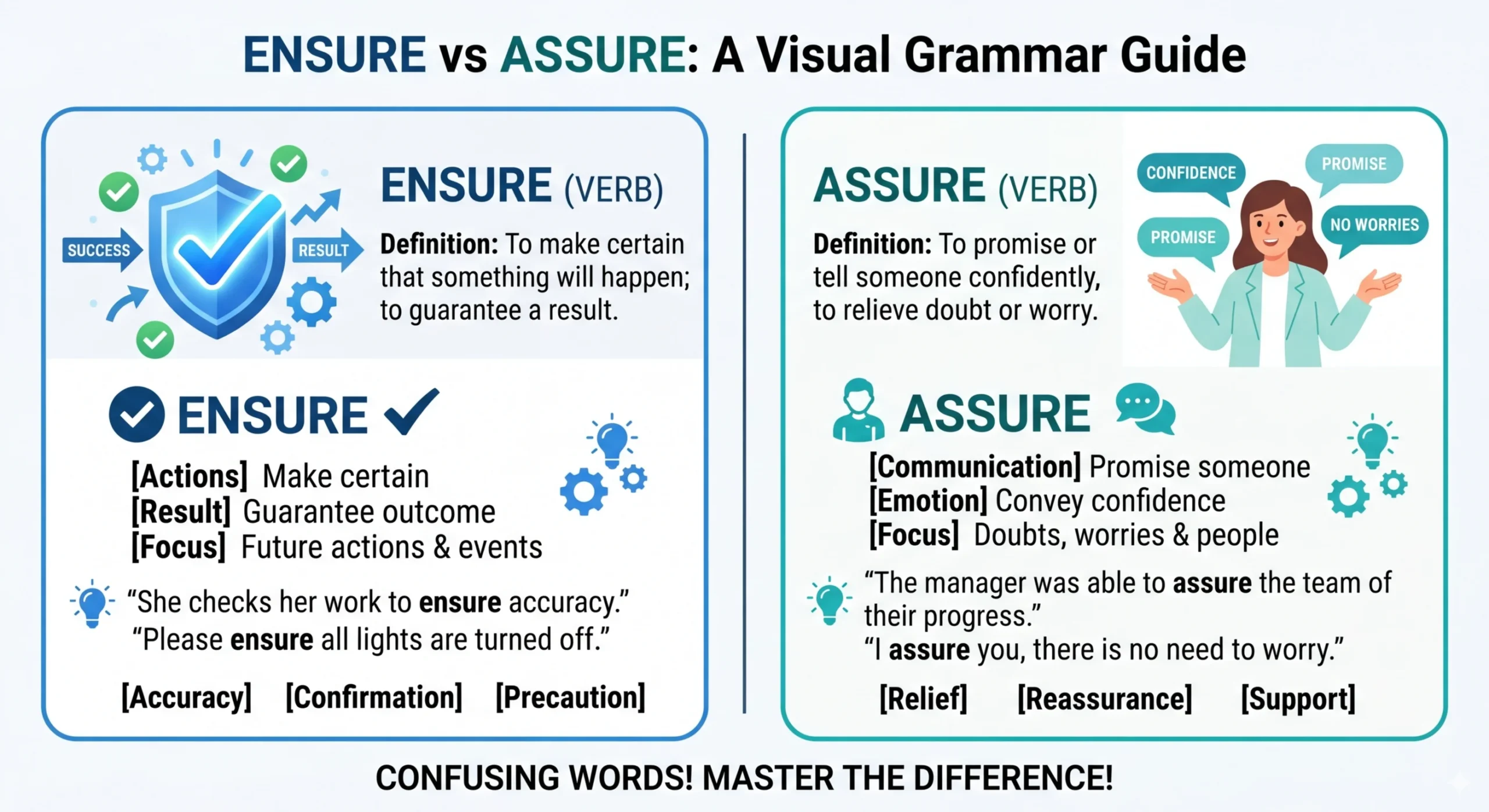
Ensure means to make something certain, while assure means to give confidence to a person.
- Ensure = make something happen
- Assure = make someone feel confident
Examples:
- I will ensure the project is completed on time.
- I assure you everything is under control.
👉 Quick Rule:
- Use ensure for results
- Use assure for people
The Origin of Ensure vs Assure
Both words come from Latin roots but developed different meanings over time.
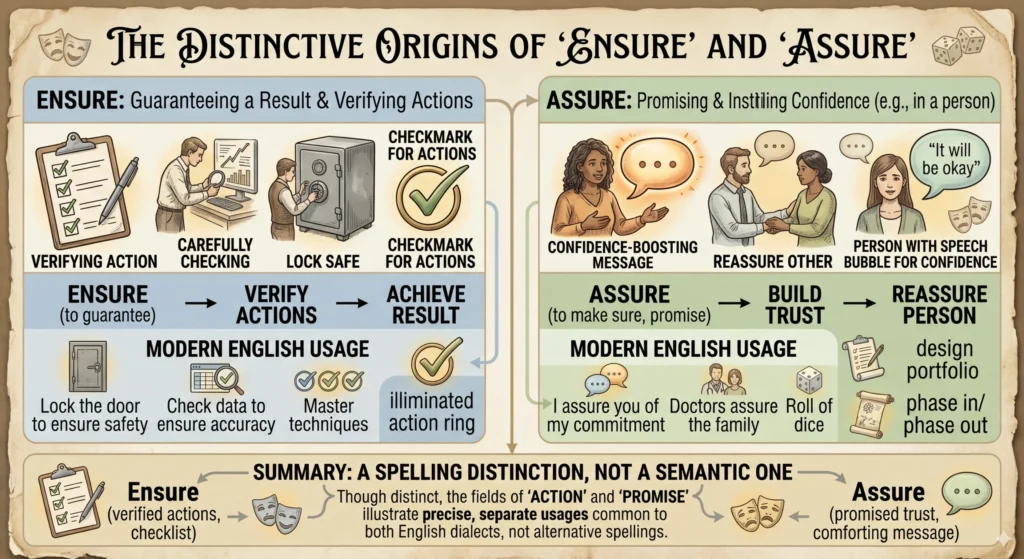
- Ensure comes from securus (safe, certain)
- Assure comes from assecurare (to make someone feel safe)
In early English, these words were used more freely. However, according to standard English grammar rules, modern usage separates them clearly.
Expert Insight
In professional and academic writing, grammar experts recommend:
- Use ensure for outcomes and guarantees
- Use assure for emotional confidence
This distinction improves clarity and avoids confusion in global communication.
British English vs American English Spelling
There is no difference in spelling between British and American English for these words. However, confusion often comes from the third word: insure.
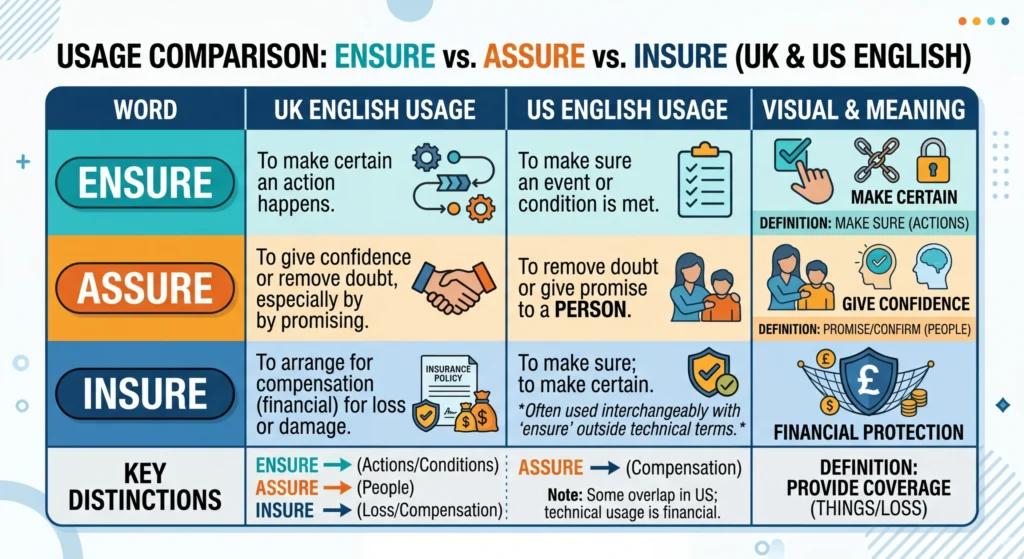
Key Differences:
- Ensure = make something certain
- Assure = give confidence
- Insure = financial protection
Comparison Table
| Word | Meaning | Example | Usage Context |
|---|---|---|---|
| Ensure | Make sure | Ensure safety | Formal, global |
| Assure | Comfort someone | I assure you | Personal use |
| Insure | Financial protection | Insure your car | Insurance field |
👉 This clears confusion around ensure vs assure insurance.
Which Spelling Should You Use?
Choosing the correct word depends on your purpose and audience.
Use Ensure when:
- Writing reports or policies
- Talking about results
- Discussing rules or systems
✔ Example:
- Ensure compliance with company policy
Use Assure when:
- Talking to people
- Giving confidence
- Writing emails or messages
✔ Example:
- I assure you the issue is resolved
Professional Usage Tip
In business English and formal communication:
- “Ensure compliance” ✔
- “Assure the client” ✔
👉 This usage is recommended by writing experts and style guides.
Common Mistakes with Ensure vs Assure
❌ Incorrect:
- I ensure you everything is fine
✔ Correct: - I assure you everything is fine
❌ Incorrect:
- We assure quality control
✔ Correct: - We ensure quality control
❌ Incorrect:
- The company assures compliance
✔ Correct: - The company ensures compliance
👉 Answer:
✔ Correct phrase is ensure compliance
Ensure vs Assure Examples
Ensure Examples:
- Ensure the system is secure
- Ensure accuracy in data
- Ensure customer satisfaction
Assure Examples:
- I assure you of my support
- She assured him everything was okay
- The manager assured the team
Ensure vs Assure in Everyday Use
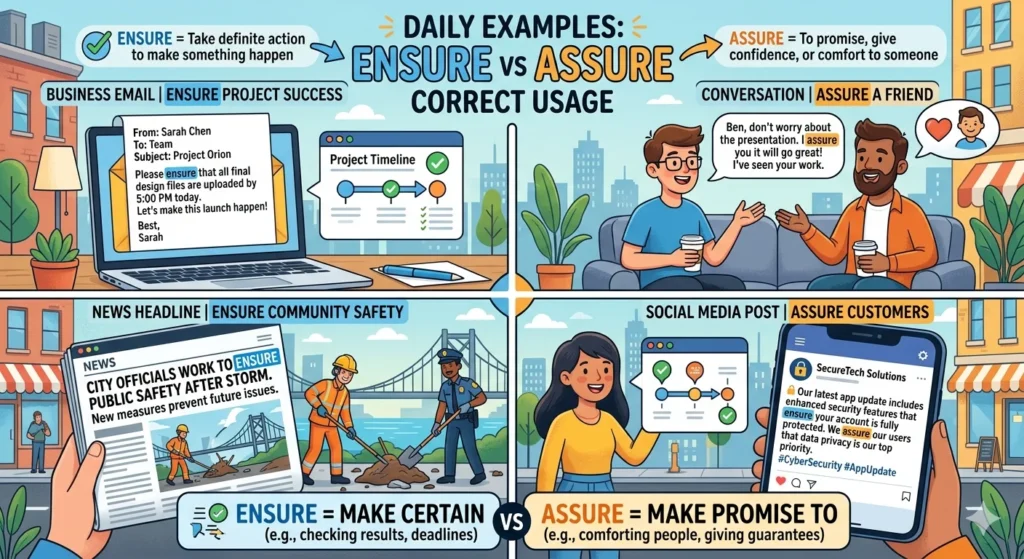
Emails:
- I assure you your request is approved
- We will ensure timely delivery
News:
- The government ensures public safety
- Officials assure citizens of support
Social Media:
- I assure you this works
- Ensure your privacy online
Formal Writing:
- Ensure all data is correct
- The director assured stakeholders
Ensure vs Assure in Business English
In professional environments, correct usage is very important.
Common Business Examples:
- Ensure compliance with regulations ✔
- Ensure quality standards ✔
- Assure clients of service quality ✔
Expert Advice:
In business communication:
- Use ensure for processes and results
- Use assure for people and trust
👉 This improves clarity, professionalism, and credibility.
Ensure vs Assure Meaning
| Word | Meaning | Focus |
|---|---|---|
| Ensure | Make something happen | Action |
| Assure | Give confidence to someone | Emotion |
Insure vs Ensure Examples
Many learners confuse insure vs ensure.
Examples:
- Ensure workplace safety ✔
- Insure your property ✔
👉 Ensure vs assure insurance confusion happens because “insure” is related to financial protection.
Pronunciation:
- Ensure → en-shoor
- Insure → in-shoor
Ensure Meaning
Ensure means to make something certain, guaranteed, or sure to happen.
Common Uses:
- Ensure safety
- Ensure success
- Ensure compliance
👉 Widely used in academic, business, and SEO writing.
I Ensure You or I Assure You?
✔ Correct: I assure you
❌ Incorrect: I ensure you
👉 Because “assure” is used with people.
Difference Between Assure and Ensure in Hindi
- Ensure = सुनिश्चित करना
- Assure = आश्वासन देना
👉 Helpful for Urdu/Hindi learners.
What is the Difference Between Ensure and Confirm?
- Ensure = make something happen
- Confirm = verify or check
Examples:
- Ensure the system works properly
- Confirm the booking details
Ensure vs Assure Insurance
Many users search this keyword.
✔ Correct understanding:
- Ensure = guarantee result
- Assure = emotional confidence
- Insure = insurance coverage
What is the Difference Between Insure and Ensure Plus?
- Ensure = general English word
- Insure = insurance-related
- “Ensure Plus” = product/brand name
👉 Not a grammar rule.
INSURE vs ENSURE Surfactant
In technical and scientific writing:
- Use ensure proper function/mixing ✔
- Avoid “insure” unless financial context
👉 Recommended by technical writing standards.
Ensure vs Assure – Google Trends & Usage Data
Usage by Context:
- Ensure:
- Business writing
- Academic content
- SEO articles
- Assure:
- Customer service
- Emails
- Personal communication
Regional Trends:
- USA → both common
- UK → slightly more “ensure”
- India & Pakistan → high confusion
👉 “Ensure” is used more in formal writing, while “assure” is more conversational.
Comparison Table: Ensure vs Assure vs Insure
| Feature | Ensure | Assure | Insure |
|---|---|---|---|
| Meaning | Make certain | Give confidence | Financial protection |
| Used With | Actions | People | Property |
| Example | Ensure success | Assure you | Insure your car |
| Context | Formal writing | Personal use | Insurance field |
FAQs
1. What is the difference between assure and ensure?
Ensure is for actions and results. Assure is for people and emotions.
2. Can I say “I ensure you”?
No. Correct form is “I assure you.”
3. Is it ensure compliance or assure compliance?
Correct: Ensure compliance
4. What is ensure meaning?
It means to make something certain.
5. What is insure vs ensure pronunciation?
Ensure = en-shoor
Insure = in-shoor
6. What is the difference between ensure and confirm?
Ensure means to make something happen. Confirm means to verify.
7. Difference between assure and ensure in Hindi?
Ensure = सुनिश्चित करना
Assure = आश्वासन देना
Conclusion
Understanding ensure vs assure becomes simple when you focus on their core difference. Use ensure when you want to make something certain or guarantee a result. Use assure when you want to give confidence to a person.
This distinction is very important in clear communication. In business writing, academic content, and professional emails, correct usage improves your credibility. In daily conversation, it helps you sound natural and confident.
Also remember the third word, insure, which is used for insurance-related contexts. Mixing these words can confuse your reader, so regular practice is important.
👉 Final Rule:
- Ensure = outcome
- Assure = person
Practice these examples daily, and you will master this topic easily.

Scott Thornbury is a respected English language educator and author, known for practical grammar insights, teacher training, and clear learner-focused explanations.