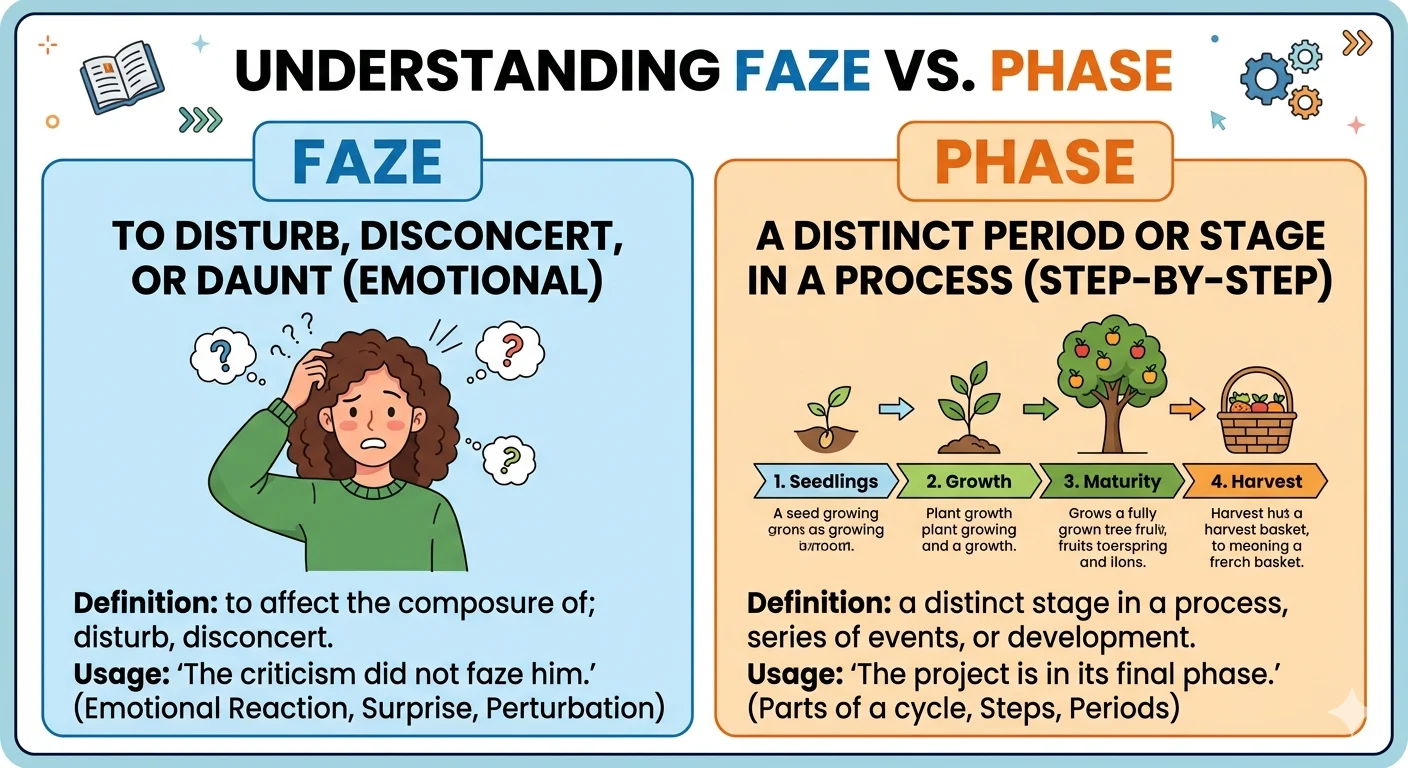
Millions of people write “nothing phases me” every day. But the correct phrase is “nothing fazes me.”
This mistake happens because faze and phase sound exactly the same. In English, words that sound alike but have different meanings and spellings are called homophones. These words often confuse learners and even native speakers.
Because of this confusion, many people search online for questions like:
- faze vs phase meaning
- are faze and phase the same
- I’m not fazed or phased
- it doesn’t faze me meaning
- is it faze out or phase out
Both words are common in everyday writing, emails, news, and social media. However, their meanings are completely different.
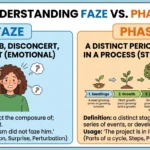
According to the Cambridge Dictionary, faze means to disturb or upset someone, while phase refers to a stage in a process or development.
For example:
- “The criticism didn’t faze her.”
- “The project entered the final phase.”
Understanding the difference helps avoid common grammar mistakes, improves writing clarity, and strengthens professional communication.
In this guide, you will learn the difference between faze vs phase, their origins, spelling rules, examples, common mistakes, and helpful memory tricks to remember them easily.
Faze vs Phase
The difference between faze and phase is simple.
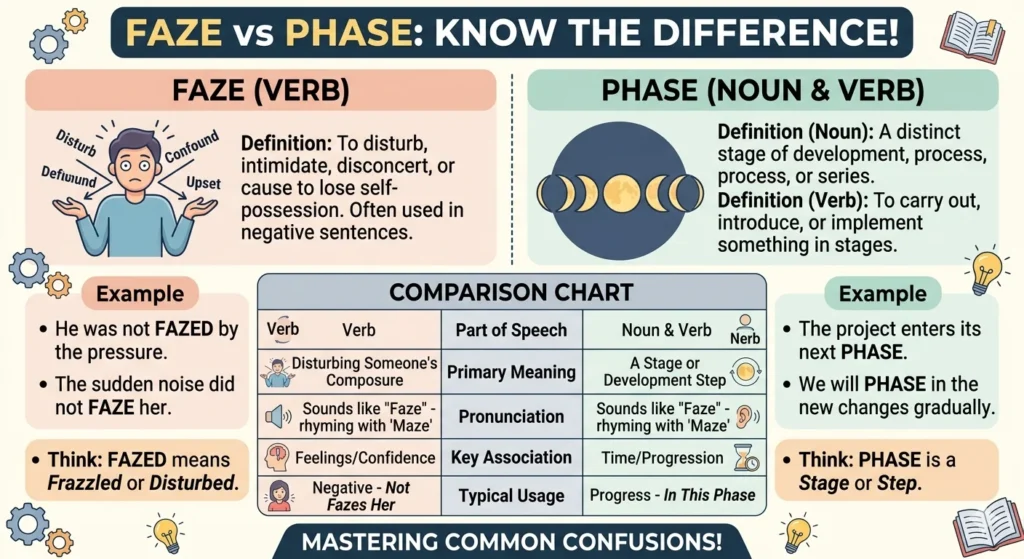
| Word | Meaning | Example |
|---|---|---|
| Faze | To disturb or upset someone | “The criticism didn’t faze him.” |
| Phase | A stage in a process or development | “The project entered the testing phase.” |
Simple Rule
You can remember it like this:
Faze = Feelings
Phase = Process
Examples:
✔ “The negative comment didn’t faze me.”
✔ “The company is in the planning phase.”
Because they sound identical, they are one of the most common confusing English words.
The Origin of Faze vs Phase
Image Prompt:
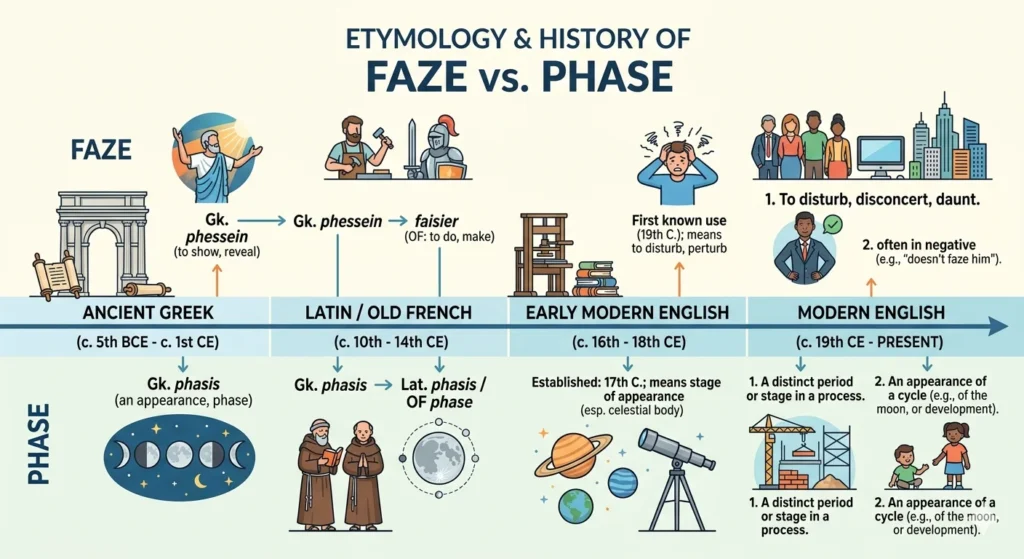
Learning the history of words can help understand their meanings.
Origin of Faze
The word faze appeared in English in the 19th century. It likely developed from dialect words meaning to frighten or disturb someone.
According to Merriam-Webster, faze means to disturb someone’s composure or confidence.
Example:
“The difficult question didn’t faze the student.”
Over time, expressions like “I’m not fazed” became very common.
Origin of Phase
The word phase comes from the Greek word “phasis”, meaning appearance or stage.
It entered English in the 1600s, especially in astronomy.
Examples:
- phases of the moon
- development phase
- testing phase
Later, it became widely used in business, science, and everyday language.
Linguistic Explanation
Linguists classify faze and phase as homophones, meaning words that share the same pronunciation but have different meanings and spellings.
English has many similar confusing word pairs such as:
- affect vs effect
- wary vs weary
- piece vs peace
Understanding homophones helps improve grammar and writing accuracy.
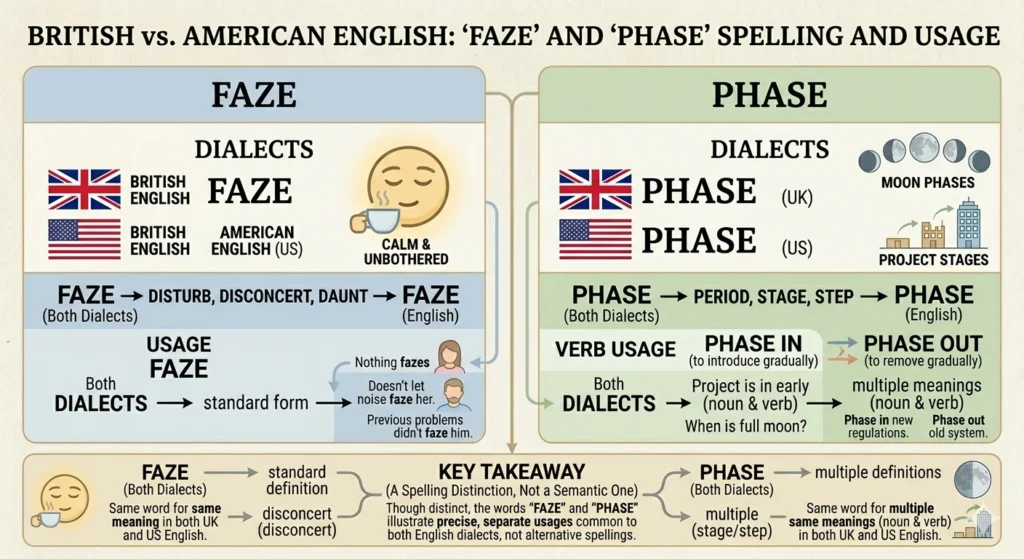
British English vs American English Spelling
Many people wonder if faze vs phase is a difference between UK and US English.
The answer is simple:
Both British English and American English use the same spelling.
There is no regional difference for these words.
Comparison Table
| Context | Correct Word | Example |
|---|---|---|
| Emotional reaction | Faze | “The criticism didn’t faze him.” |
| Stage in a process | Phase | “The next phase begins tomorrow.” |
| Gradual removal | Phase out | “The company will phase out old products.” |
| Calm reaction | Not fazed | “She was not fazed by the pressure.” |
Important rule:
✔ phase out
❌ faze out
Example:
“The government plans to phase out plastic bags.”
Which Spelling Should You Use?
The correct word depends on the meaning of your sentence.
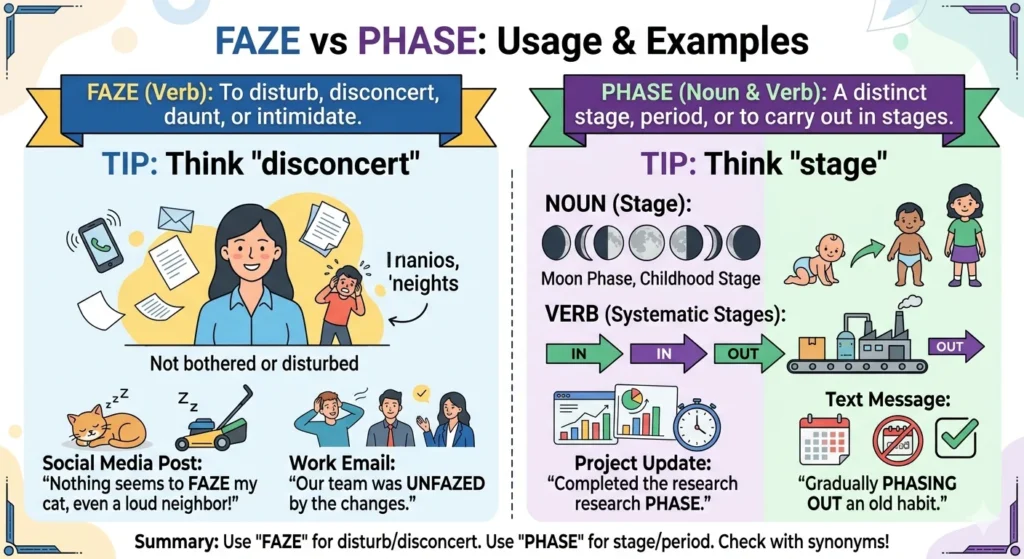
Use “Faze” for Emotions
Use faze when something disturbs or worries someone.
Examples:
- “The bad news didn’t faze me.”
- “The criticism didn’t faze the author.”
- “Nothing fazes her confidence.”
This explains the search query “faze you meaning.”
If something fazes you, it means it bothers or unsettles you emotionally.
Use “Phase” for Stages
Use phase when talking about steps, stages, or development.
Examples:
- “The project entered the second phase.”
- “Teenagers go through many emotional phases.”
- “The research has three phases.”
Memory Trick to Remember Faze vs Phase
A simple memory trick can help remember the difference.
Remember the Letter Z
Faze contains the letter Z.
Think of Z = Zap emotions.
If something zaps your emotions, it fazes you.
Example:
“The criticism didn’t faze him.”
Meanwhile, phase is related to process or stages, such as:
- project phase
- development phase
- moon phase
Common Phrases Using Faze and Phase
These common phrases help understand real usage.
Common Phrases with Faze
- not fazed
- doesn’t faze me
- faze someone
- nothing fazes me
Example:
“The criticism didn’t faze me.”
Common Phrases with Phase
- phase out
- development phase
- planning phase
- testing phase
Example:
“The company will phase out old technology.”
Common Mistakes with Faze vs Phase
Because these words sound the same, many writers make mistakes.
Mistake 1: Nothing phases me
❌ Incorrect
“Nothing phases me.”
✔ Correct
“Nothing fazes me.”
Mistake 2: I’m not phased
❌ “I’m not phased.”
✔ “I’m not fazed.”
So the correct answer to “I’m not fazed or phased?” is:
✔ fazed
Mistake 3: Faze out
People often ask:
Is it faze out or phase out?
Correct phrase:
✔ phase out
Example:
“The company plans to phase out outdated software.”
Mistake 4: Wrong spelling
Incorrect spellings include:
- fased
- phased (in emotional context)
Correct spelling:
✔ fazed
Faze vs Phase in Everyday Examples
Examples help make grammar clearer.
Workplace Example
“The manager was not fazed by the criticism.”
“The project entered the planning phase.”
Email Example
“The feedback didn’t faze me. Thank you for the suggestions.”
“The project has entered the next phase.”
News Example
“The government plans to phase out coal energy.”
“The athlete was not fazed by the pressure.”
Social Media Example
“It doesn’t faze me. I will try again.”
“This is just a temporary phase in life.”

Faze vs Phase – Google Trends & Online Discussions
Search data shows that many people struggle with these words.
Common searches include:
- faze vs phase meaning
- are faze and phase the same
- it doesn’t faze me meaning
- is it faze out or phase out
- is it nothing phases or fazes me
Reddit Discussions
In many faze vs phase reddit discussions, users ask questions like:
“Is it ‘nothing phases me’ or ‘nothing fazes me’?”
Grammar experts explain that faze means to disturb, so the correct phrase is:
✔ Nothing fazes me
These discussions show how common this grammar confusion is.
Comparison Table: Faze vs Phase
| Feature | Faze | Phase |
|---|---|---|
| Meaning | Disturb or upset | Stage of development |
| Part of speech | Verb | Noun / Verb |
| Example | “The criticism didn’t faze her.” | “The next phase begins tomorrow.” |
| Common phrase | Not fazed | Phase out |
| Common mistake | Phased | Faze |
Related Grammar Articles
If you are learning confusing English words, you may also like:
- Affect vs Effect
- Wary vs Weary
- Piece vs Peace
- Then vs Than
These common grammar topics also involve homophones and spelling confusion.
FAQs
Are faze and phase the same?
No. Faze means to disturb someone emotionally, while phase means a stage in a process.
What does it doesn’t faze me mean?
It means something does not bother or upset you.
Is it faze out or phase out?
The correct phrase is phase out, meaning to gradually stop using something.
Is it nothing phases or fazes me?
Correct sentence: Nothing fazes me.
I’m not fazed or phased?
Correct: I’m not fazed.
What does faze you meaning mean?
If something fazes you, it disturbs or unsettles your emotions.
Why do people confuse faze and phase?
Because they are homophones, meaning words that sound the same but have different meanings.
Conclusion
Understanding the difference between faze vs phase is simple once you know their meanings.
Faze refers to emotional reactions. If something fazes you, it disturbs or unsettles you. This is why expressions like “I’m not fazed” and “It doesn’t faze me” are commonly used.
Phase, however, refers to stages or steps in a process. It appears in many areas such as science, business, and daily life. Examples include project phases, life phases, and moon phases.
The confusion happens because these words are homophones, meaning they sound the same but have different meanings and spellings.
To remember the difference:
Faze = feelings
Phase = process
Using the correct word will help you avoid grammar mistakes and communicate more clearly in both professional and everyday writing.

Pam Peters is a linguist and grammar expert, known for clear explanations of modern English usage, style, and practical language rules.