Have you ever stopped while writing and wondered: icy or icey? You are not alone. Many people search “Which is correct, icy or icey?” because both spellings look possible. The confusion happens when we add -y to the word ice. Should we keep the “e” or drop it?
This article gives you a quick answer and a full explanation. We will cover spelling rules, word origin, British vs American English, common mistakes, Google Trends data, and real-life examples like icy drink, icey snack, and icy person meaning.
If you are a student, blogger, teacher, or content writer who cares about correct grammar and SEO writing, this guide will help. It follows simple English rules and clear examples.
By the end, you will know:
- Which spelling is correct
- Is icey a word?
- Does icy have an “e”?
- What does icey mean?
Let’s clear the confusion once and for all.
Icy vs Icey
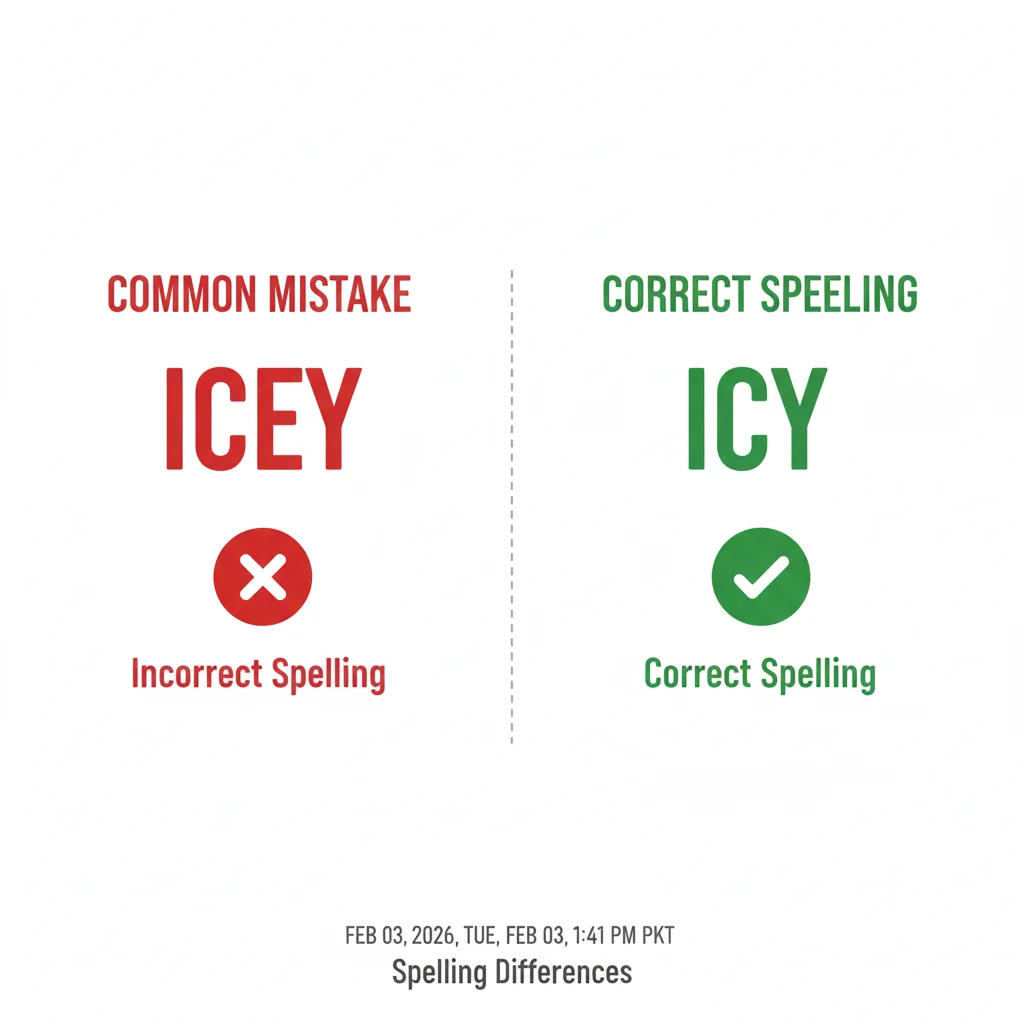
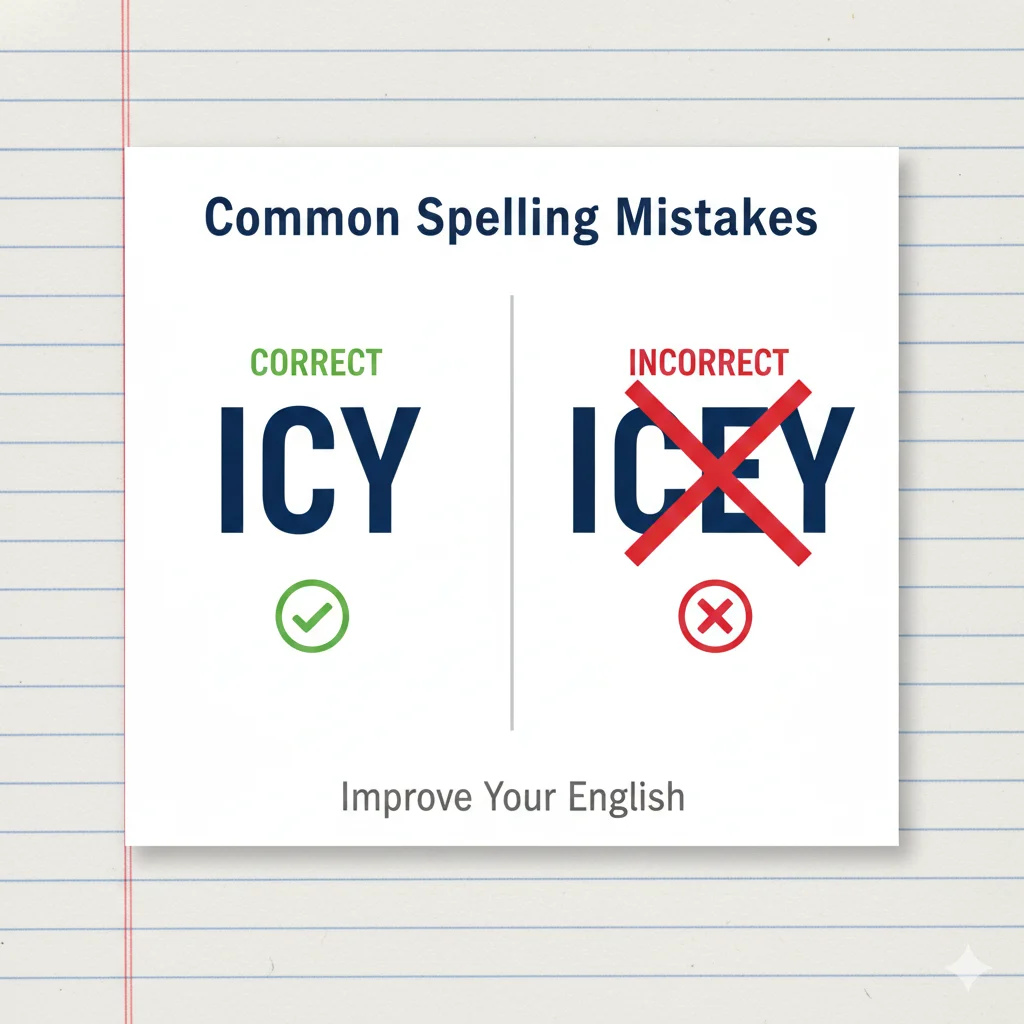
Correct spelling: Icy
Wrong spelling: Icey
The correct word is icy.
The spelling icey is incorrect in standard English.
Examples:
- The road is icy today. ✅
- She gave me an icy look. ✅
- The road is icey today. ❌
Does Icy Have an E?
No. When we add -y to the noun ice, we drop the silent “e.”
Ice → Icy
This follows a common English spelling rule.
The Origin of Icy vs Icey
The word ice comes from Old English īs. It means frozen water.
The word icy appeared later as an adjective. It means:
- Covered with ice
- Very cold
- Emotionally cold (icy person meaning)
Why Not Icey?
In English spelling rules, when a word ends in silent “e” and we add a suffix like -y, we remove the “e”.
Examples:
- Ice → Icy
- Shine → Shiny
- Smoke → Smoky
- Bone → Bony
So, icey breaks the spelling rule. That is why dictionaries do not accept it.
Is Icey a Word?
No. Icey is not a standard English word.
It may appear in brand names or online usernames, but it is not correct grammar.
British English vs American English Spelling
Many spelling differences exist between UK and US English. For example:
| American English | British English |
|---|---|
| Color | Colour |
| Favorite | Favourite |
| Organize | Organise |
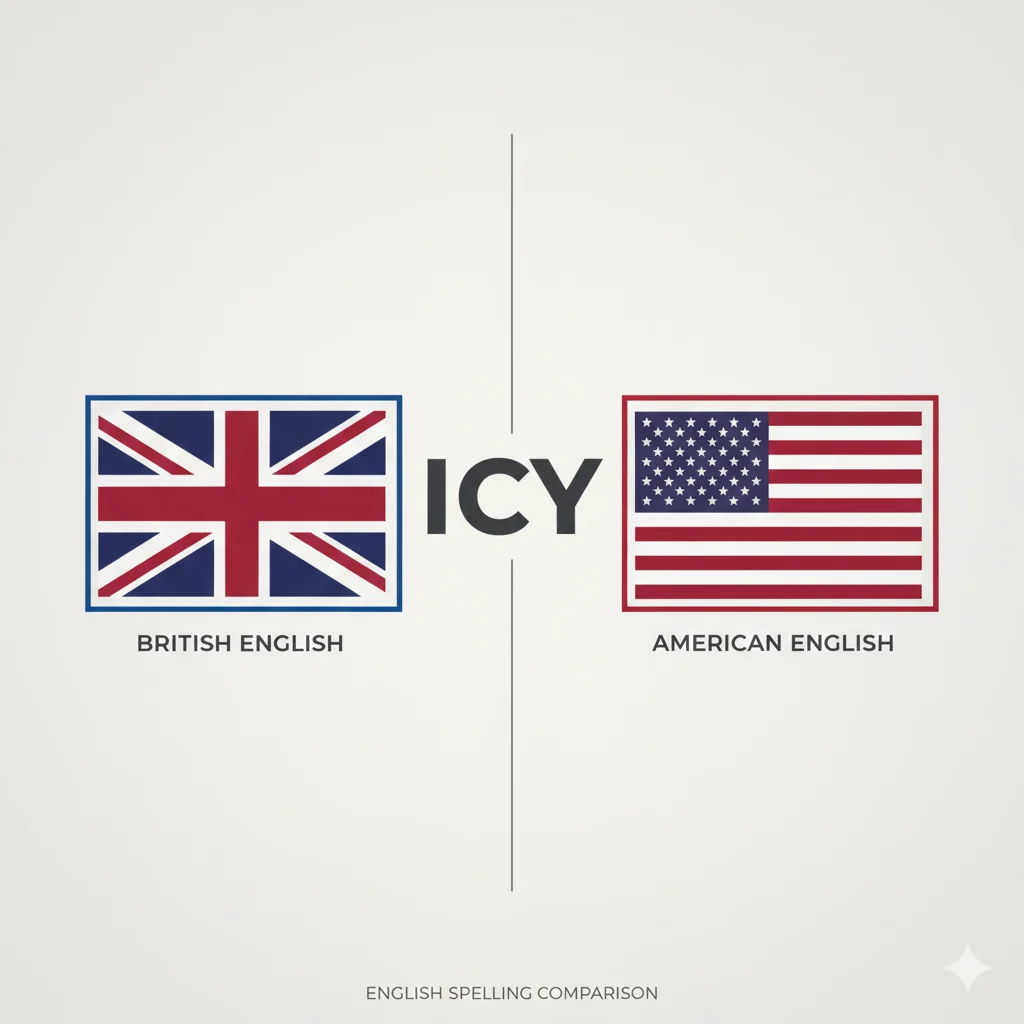
But in this case, both British and American English use the same spelling:
| Region | Correct Spelling |
|---|---|
| US | Icy |
| UK | Icy |
| Canada | Icy |
| Australia | Icy |
Icy or Icey UK?
In the UK, the correct spelling is also icy.
There is no difference between US and UK here.
So, whether you write for global SEO, academic writing, or business emails, always use icy.
Which Spelling Should You Use?
If You Are in the US:
Use icy. Never use icey in professional writing.
If You Are in the UK or Commonwealth:
Use icy.
If You Write for a Global Audience:
Use icy. It is internationally correct.
For SEO and Content Writers
Google recognizes icy as the correct keyword.
“Icey” may get search traffic because of spelling mistakes, but it is not correct grammar.
For EEAT (Experience, Expertise, Authority, Trust):
- Use correct spelling.
- Mention incorrect versions only for clarification.
- Do not use “icey” as main content spelling.
Common Mistakes with Icy vs Icey
Here are frequent spelling errors:
❌ Icey drink
✅ Icy drink
❌ Icey snack
✅ Icy snack
❌ Icey food
✅ Icy food
❌ Icey for kids
✅ Icy treats for kids
❌ Icey Pyramid
If referring to ice structures, correct form is:
✅ Icy pyramid
Why Do People Write Icey?
- They think the base word “ice” keeps the “e.”
- They are unsure of spelling rules.
- They see brand names using “Icey.”
- Autocorrect mistakes.
Icy vs Icey in Everyday Examples
Let’s see how icy is used in daily life.
In Emails
- The roads are icy, so I will work from home.
- Please be careful. The weather is very icy.
In News
- An icy storm hit the city last night.
- Drivers faced icy conditions on highways.
On Social Media
- This lemonade is super icy!
- That was an icy response 😄
In Formal Writing
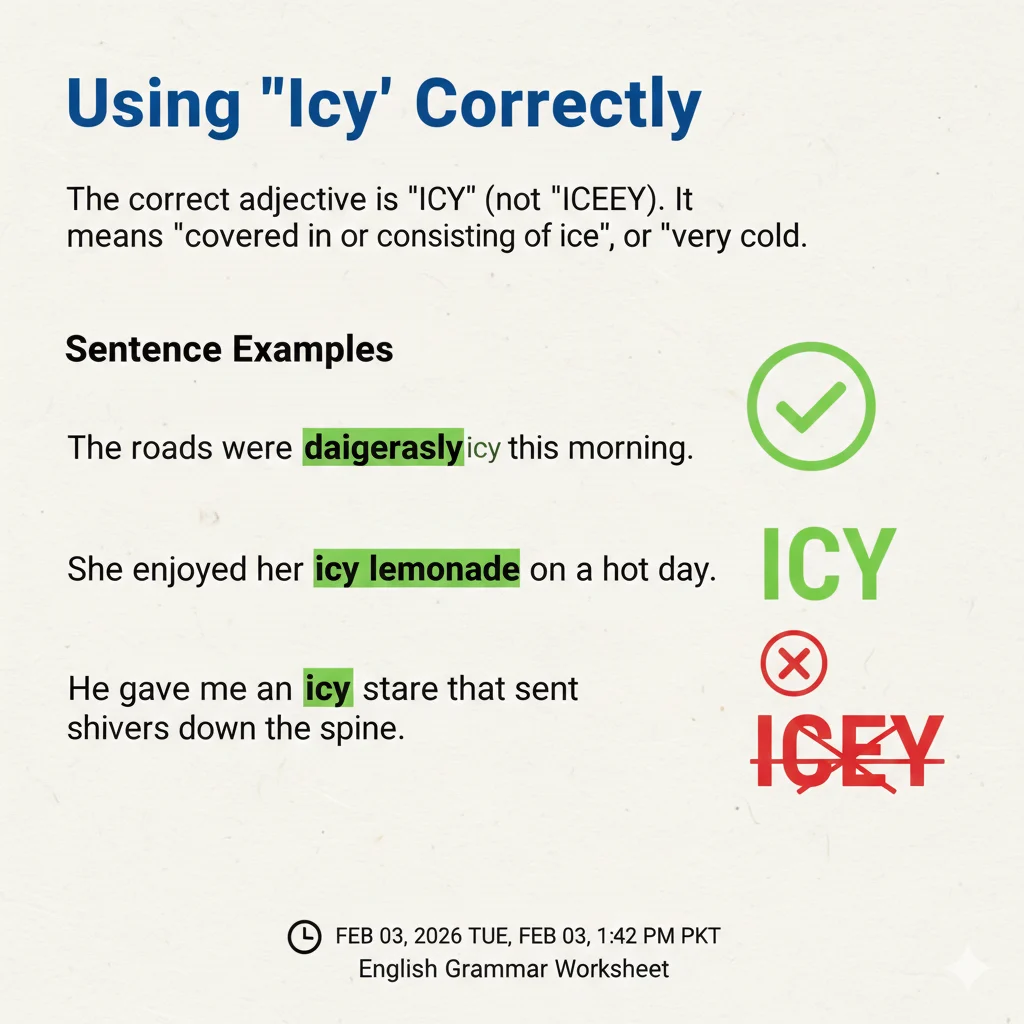
- The climbers walked across an icy surface.
- She gave him an icy stare, showing her anger.
What Is an Icy?
“Icy” is an adjective. It describes something cold or covered in ice.
Examples:
- Icy road
- Icy wind
- Icy drink
Icy Person Meaning
An icy person is someone who is emotionally cold.
They may seem unfriendly or distant.
Example:
- She gave me an icy look.
- His voice sounded icy and serious.
Icy vs Icey – Google Trends & Usage Data
Search data shows:
- Icy has very high usage worldwide.
- Icey is searched mostly due to spelling confusion.
- Countries searching “icy or icey UK” want correct grammar.
- Students often search: “Does icy have an e?”
In SEO content writing:
- Use “icy” naturally.
- Mention “icey” only once or twice for clarification.
- Avoid keyword stuffing.
Primary keyword: icy vs icey
Secondary keywords:
- Which is correct icy or icey
- Is icey a word
- Icy drink
- Icy person meaning
- Icey snack

Comparison Table: Icy vs Icey
| Feature | Icy | Icey |
|---|---|---|
| Correct spelling | ✅ Yes | ❌ No |
| Dictionary word | ✅ Yes | ❌ No |
| Used in US | ✅ Yes | ❌ No |
| Used in UK | ✅ Yes | ❌ No |
| SEO safe | ✅ Yes | ❌ No |
| Grammar correct | ✅ Yes | ❌ No |
FAQs About Icy vs Icey
1. Which is correct, icy or icey?
The correct spelling is icy.
2. What does icey mean?
“Icey” has no official meaning. It is a misspelling of icy.
3. Does icy have an E?
No. The “e” is dropped when adding “-y.”
4. What is an icy?
“Icy” is an adjective meaning very cold or covered in ice.
5. Is icey a word?
No. It is not accepted in dictionaries.
6. Icy or icey UK?
In the UK, the correct spelling is icy.
7. Can I use icey in branding?
Yes, brands may use creative spelling. But in grammar, it is wrong.
Conclusion
The spelling debate between icy vs icey is simple once you know the rule. The correct form is icy. When adding “-y” to the word ice, we remove the silent “e.” That is why icey is incorrect in standard English.
Both American and British English use the same spelling: icy. There is no regional difference. Whether you are writing emails, academic papers, blog posts, or social media captions, always choose icy.
Understanding this rule improves your grammar, writing clarity, and SEO quality. It also supports EEAT principles by showing language expertise and trust.
If you remember one thing from this guide, remember this:
Ice → Icy (drop the e).
Now you can write with confidence.

Scott Thornbury is a respected English language educator and author, known for practical grammar insights, teacher training, and clear learner-focused explanations.