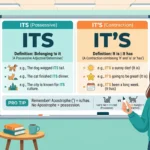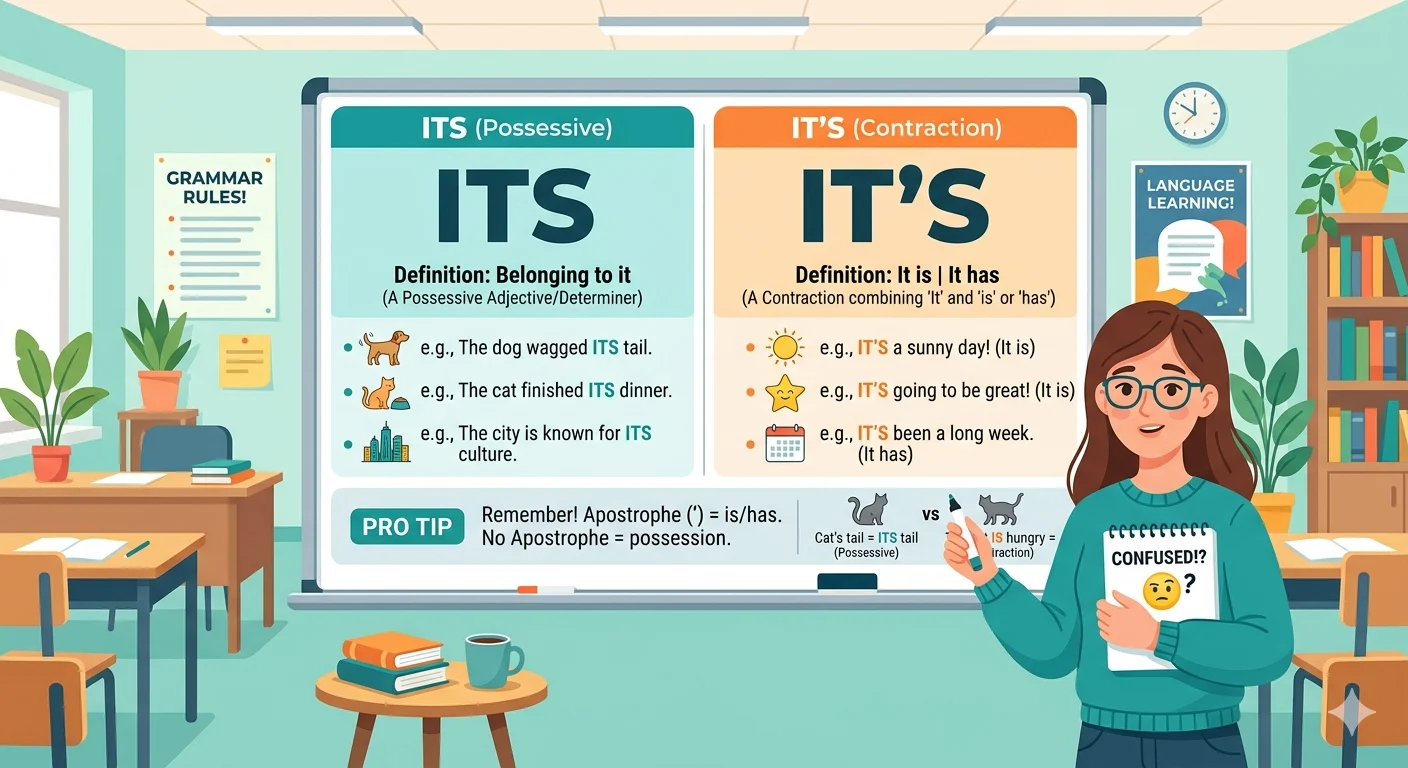
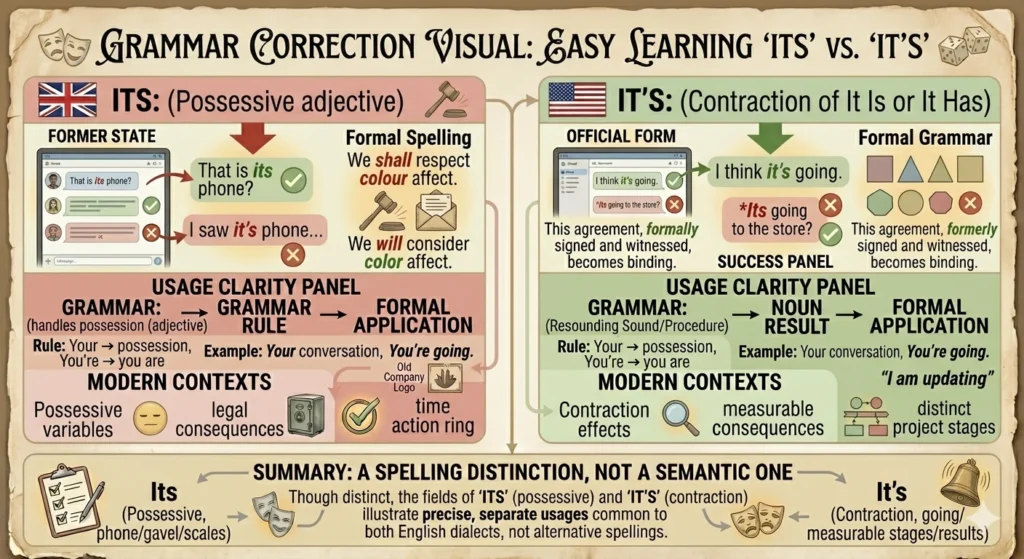
Its vs It’s: “Its” shows possession (belonging), while “it’s” is a contraction of “it is” or “it has.”
Many learners of English struggle with its vs it’s because the difference is small but very important. A single apostrophe changes the meaning completely. This is one of the most common grammar mistakes in writing, especially in emails, blogs, academic work, and professional communication.
According to standard English grammar rules followed in Cambridge and Oxford style English, apostrophes are usually used to show possession or missing letters. However, “its” is a special exception, which makes it confusing for learners worldwide.
This topic is highly searched because people want quick clarity, correct usage, and real examples. In this guide, you will learn the exact rule, simple memory trick, real-life usage, mistakes, and professional writing tips so you never confuse it again.
Its vs It’s
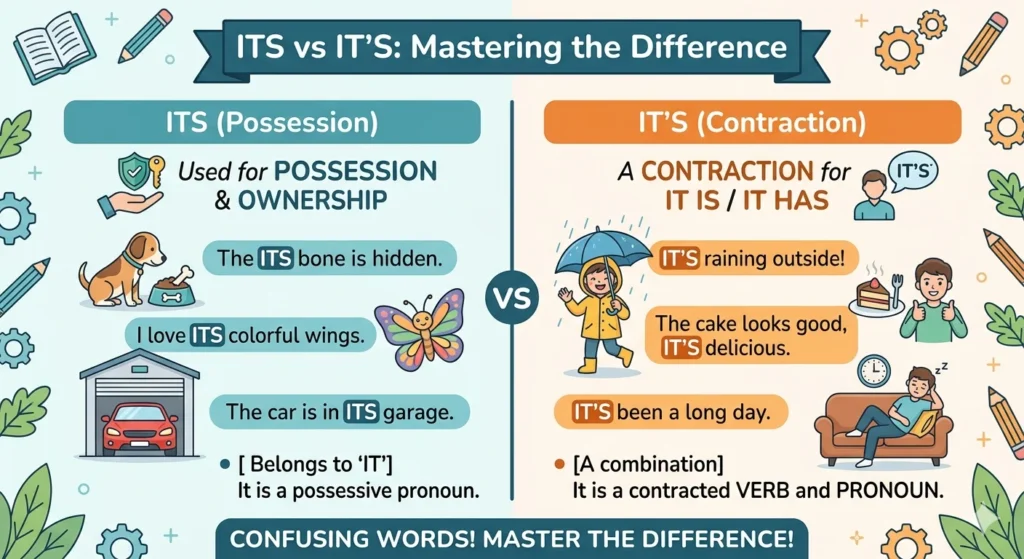
- Its = possession (belonging to something)
- It’s = short form of it is or it has
✔ Examples:
- The dog wagged its tail.
- It’s raining today.
💡 Easy Trick:
Replace with “it is”:
- If sentence works → it’s
- If not → its
Why Its vs It’s Is Confusing
The confusion comes from English apostrophe rules:
- Apostrophes normally show missing letters:
- it is → it’s
- Possession usually uses apostrophe:
- John’s book
BUT:
⚠ Important Rule (Oxford/Cambridge Style):
Possessive pronouns NEVER use apostrophes
✔ its
✔ his
✔ hers
✔ ours
👉 This exception is why learners get confused.
Its vs It’s – Comparison Table
| Feature | Its | It’s |
|---|---|---|
| Type | Possessive pronoun | Contraction |
| Meaning | Belonging to something | It is / It has |
| Apostrophe | No | Yes |
| Example | The cat licked its paw | It’s very cold |
British vs American English
Both follow the SAME grammar rule.
| Style | Usage |
|---|---|
| US English | Formal writing prefers “its” |
| UK English | Strict grammar usage in writing |
| Global English | Same rule everywhere |
When to Use Its or It’s
✔ Use ITS when:
- Showing possession
- Talking about animals, objects, things
Examples:
- The company improved its system.
- The dog moved its tail.
✔ Use IT’S when:
- You mean it is
- You mean it has
Examples:
- It’s a nice day.
- It’s been a long time.
💡 Memory Rule:
If you can replace with “it is” → use it’s
Common Mistakes
❌ Wrong:
- It’s tail is big
- The cat lost it’s toy
- Its raining
- The phone broke it’s screen
✅ Correct:
- Its tail is big
- The cat lost its toy
- It’s raining
- The phone broke its screen
Its vs It’s in Real Life Usage
📧 Emails:
- The company updated its policy
- It’s great to connect with you
📱 Social Media:
- It’s a sunny day
- My phone lost its charger
📰 News:
- The government announced its decision
- It’s expected to increase
🎓 Academic Writing:
- The study shows its importance
- It’s necessary to analyze data
Why This Grammar Matters
Correct usage of its vs it’s is important because:
- ❌ Wrong usage reduces writing credibility
- ❌ Affects academic marks
- ❌ Can weaken professional emails
- ✔ Correct usage improves trust and clarity
- ✔ Improves SEO content quality and readability
👉 Even small grammar mistakes can affect how professional your writing looks.
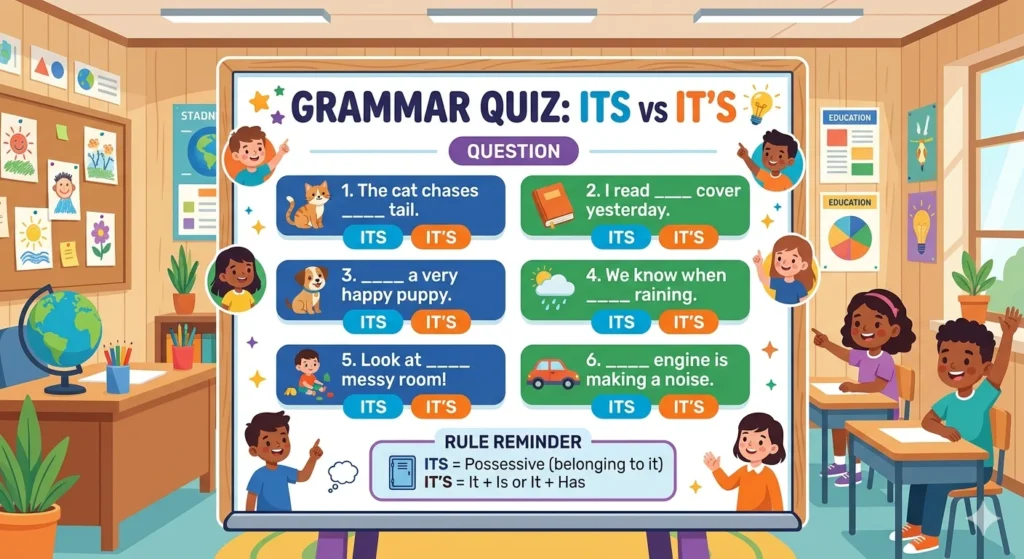
Its vs It’s Quiz
Fill in the blanks:
- ___ raining today
- The dog wagged ___ tail
- ___ important to learn grammar
- The company changed ___ logo
- ___ been a long journey
✔ Answers:
- It’s
- its
- It’s
- its
- It’s
FAQ
1. What is the difference between its and it’s?
“Its” shows possession, while “it’s” means “it is” or “it has.”
2. When should I use its?
Use it when something belongs to an object or animal.
3. Is its’ correct grammar?
No, “its’” is always incorrect.
4. It’s me or its me?
Correct form is It’s me.
5. Why is its confusing?
Because most possessive words use apostrophes, but “its” is an exception.
6. What are examples of its?
The dog moved its tail. The car lost its key.
7. How can I remember it easily?
Replace with “it is”—if it fits, use “it’s”.
Conclusion
Understanding its vs it’s is a fundamental English grammar rule. The confusion happens because English normally uses apostrophes for possession, but “its” is a special exception in grammar rules followed by Oxford and Cambridge English standards.
The simple rule is:
- Its = possession
- It’s = it is / it has
This rule is used in academic writing, business communication, blogging, SEO content, and daily English. Once you understand it, your writing becomes clearer, more professional, and more trustworthy.
Mastering this small grammar point improves your communication skills, reduces errors, and increases writing confidence.

Pam Peters is a linguist and grammar expert, known for clear explanations of modern English usage, style, and practical language rules.