The confusion between pealing vs peeling is very common in English. These two words sound the same, but they have completely different meanings. Because of this, many people make mistakes when writing about skin, paint, food, or everyday situations.
Users often search questions like: Is it peeling or pealing skin?, What is the meaning of pealing?, and Are eyes peeled or pealed? These mistakes may look small, but they can reduce the quality of your writing and affect your SEO performance.
In this complete guide, you will learn the correct meaning of pealing vs peeling, their origin, real-life usage, expert explanations, and how to avoid common mistakes. This article is written in simple language so you can understand and use these words correctly in any situation.
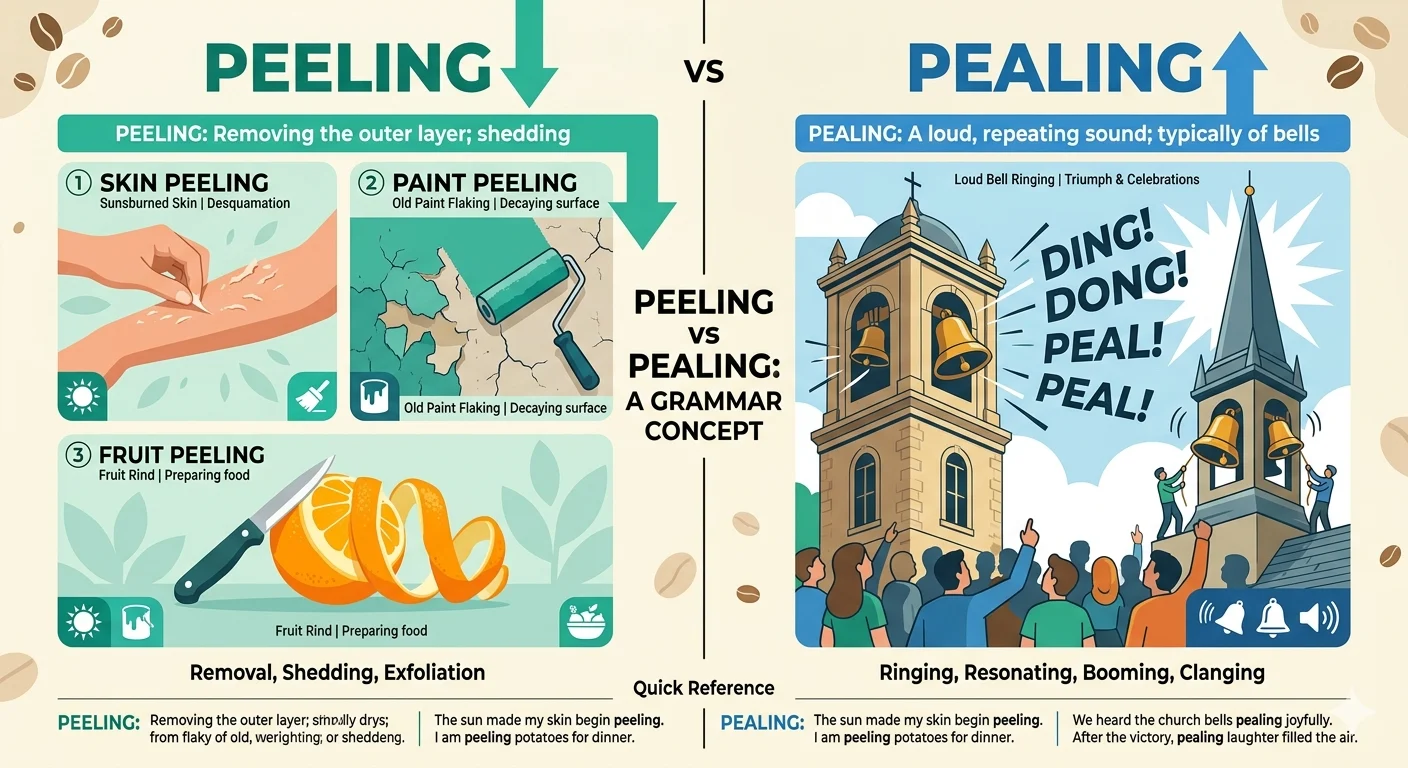
Pealing vs Peeling
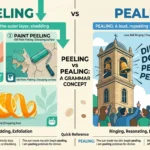
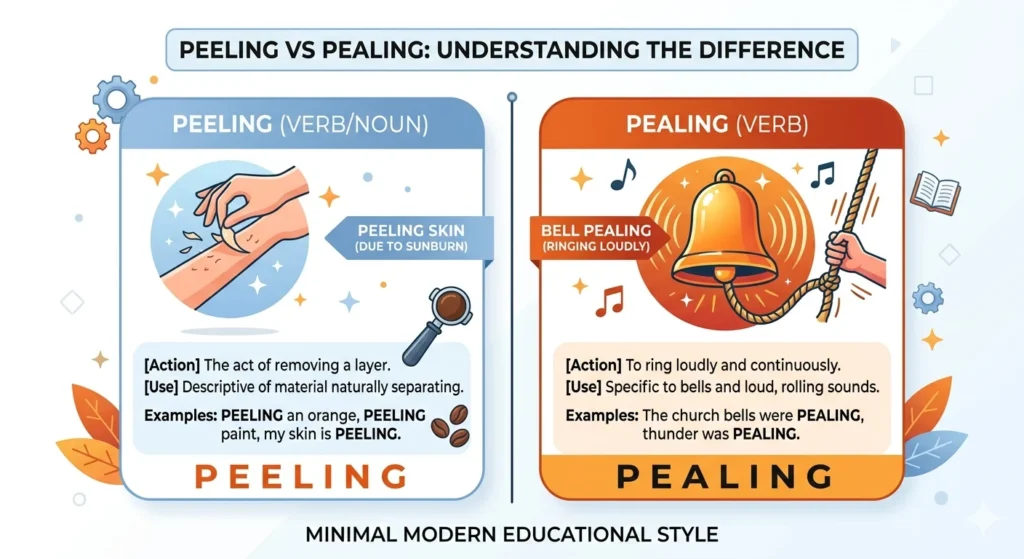
Peeling means removing or shedding an outer layer.
Pealing means a loud ringing sound, usually from bells.
Examples:
- My skin is peeling after sunburn
- The wall has peeling paint
- Church bells are pealing loudly
Pealing vs Peeling Definition:
- Peeling: removing the outer layer (skin, paint, fruit)
- Pealing: loud ringing sound (bells or thunder)
👉 Easy rule:
- If you can touch it → peeling
- If you can hear it → pealing
The Origin of Pealing vs Peeling
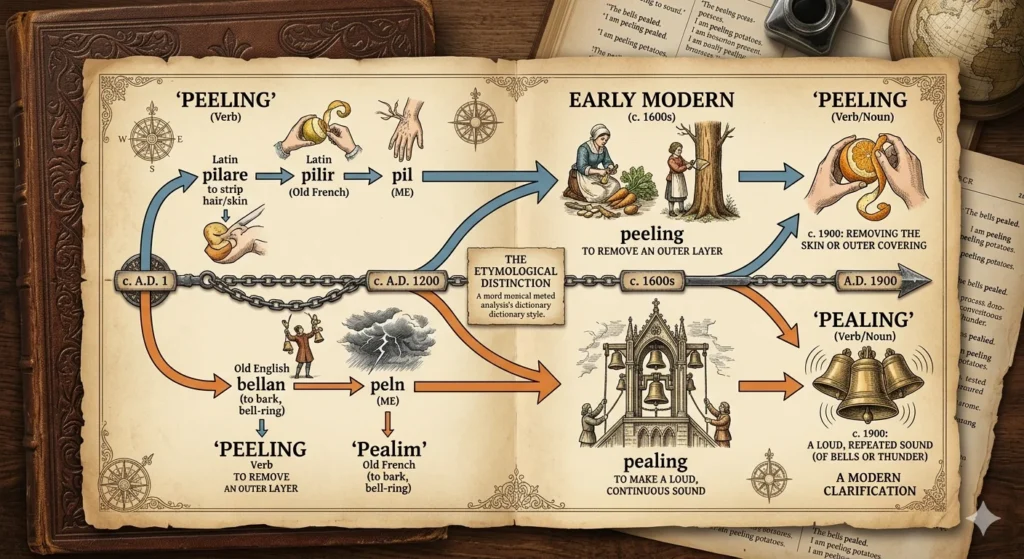
Peeling (Peel)
The word peel comes from Latin and Old French roots meaning to remove the outer layer. It is widely used in daily life.
Examples:
- peeling skin after sunburn
- peeling treatment in skincare
- peeling fruits and vegetables
👉 Expert Insight
In dermatology and professional skincare, chemical peeling is a standard treatment used to remove dead skin cells and improve skin texture. This shows that “peeling” is the correct and accepted term in real-world use.
Pealing (Peal)
The word peal comes from Old English and means a loud ringing sound.
Examples:
- Bells pealing in a church
- Thunder pealing in the sky
👉 This word is rare and mostly used in formal or literary writing.
British English vs American English Spelling
There is no difference in spelling between British and American English.
| Word | Meaning | UK English | US English |
|---|---|---|---|
| Peeling | Removing outer layer | Peeling | Peeling |
| Pealing | Loud ringing sound | Pealing | Pealing |
👉 This makes usage simple worldwide.
Which Spelling Should You Use?
Use Peeling when:
- Skin → peeling skin
- Beauty → peeling face treatment
- Paint → peeling paint
- Food → peeling vegetables
Use Pealing when:
- Sound → bells pealing
Professional Writing Advice
In standard English dictionaries and professional writing, peeling is the correct and widely accepted form for physical actions like skin, paint, or food. The word pealing is limited to sound-related contexts.
👉 In 95% of real-world writing, peeling is correct.
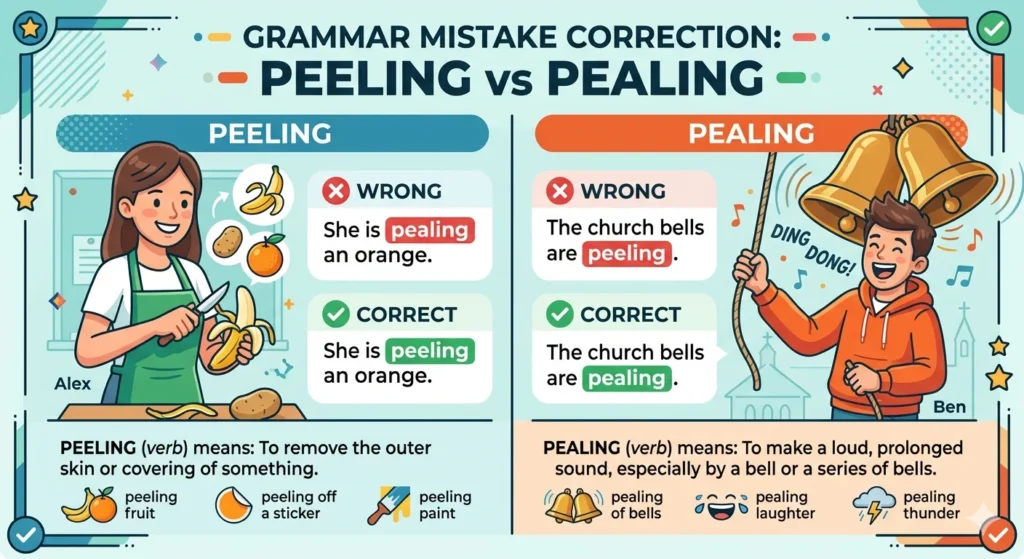
Common Mistakes with Pealing vs Peeling
| Wrong Sentence | Correct Sentence |
|---|---|
| My skin is pealing | My skin is peeling |
| Pealing face treatment | Peeling face treatment |
| Eyes pealed | Eyes peeled |
| Pealing paint | Peeling paint |
Why These Mistakes Happen
- Both words sound the same (phonetic confusion)
- Typing errors or autocorrect
- Lack of grammar clarity
Pealing vs Peeling in Everyday Examples
Emails
- “My skin is peeling after treatment.”
- “We noticed peeling paint in the office.”
Social Media
- “Sunburn 😭 my peeling skin hurts!”
- “The bells are pealing today.”
News
- “Old buildings show peeling paint.”
- “Festival bells were pealing loudly.”
Formal Writing
- “Chemical peeling treatment improves skin texture.”
- “The sound of bells pealing echoed across the valley.”
Pealing vs Peeling – Google Trends & Usage Data
Search Intent
People search pealing vs peeling for:
- Meaning and difference
- Correct spelling
- Writing accuracy
Why Confusion Happens
- Same pronunciation
- Autocorrect mistakes
- Lack of awareness
Comparison Table: Pealing vs Peeling
| Feature | Peeling | Pealing |
|---|---|---|
| Meaning | Remove outer layer | Loud ringing sound |
| Usage | Skin, paint, food | Bells, sound |
| Frequency | Very common | Rare |
| Blogging Value | High | Low |
Peal Peel Meaning
- Peel means to remove the outer layer of something
- Peal means a loud ringing sound
Example:
- She is peeling an orange
- Bells are pealing loudly
👉 This difference is important for correct writing.
Peal vs Peel Paragraph
Peal and peel are often confused because they sound alike, but their meanings are completely different. The word peel refers to removing the outer layer of something, such as fruit, skin, or paint. For example, you peel an apple or notice peeling paint on a wall. In contrast, peal refers to a loud ringing sound, usually from bells or thunder. For example, church bells may be pealing during a celebration. Understanding this difference helps improve writing accuracy and avoids common grammar mistakes.
FAQs
What is the meaning of pealing?
Pealing means a loud ringing sound, usually from bells.
Is it peeling or pealing skin?
Correct: peeling skin
What do you mean by peeling?
Peeling means removing the outer layer.
Are eyes peeled or pealed?
Correct: eyes peeled
Pealing vs peeling reddit – what is correct?
Most users confirm peeling is correct in daily use.
Pealing vs peeling treatment?
Correct: peeling treatment
Pealing vs peeling face?
Correct: peeling face
Pealing or peeling paint?
Correct: peeling paint
Peal or peel off?
Correct: peel off
Peel and peal in a sentence?
- I am peeling an apple
- Bells are pealing loudly
Quick Summary
- Peeling = removing outer layer
- Pealing = ringing sound
- Use peeling in most situations
- Use pealing only for sound
Conclusion
Understanding pealing vs peeling is simple when you know their meanings. The word peeling is used for removing or shedding an outer layer, such as skin, paint, or fruit. It is very common in daily life and widely used in skincare, cooking, and writing.
On the other hand, pealing refers to a loud ringing sound, usually from bells. It is rarely used and mostly appears in formal or literary contexts.
👉 Final rule:
- Removing → peeling
- Sound → pealing
Follow this rule, and you will never make this mistake again.

Scott Thornbury is a respected English language educator and author, known for practical grammar insights, teacher training, and clear learner-focused explanations.