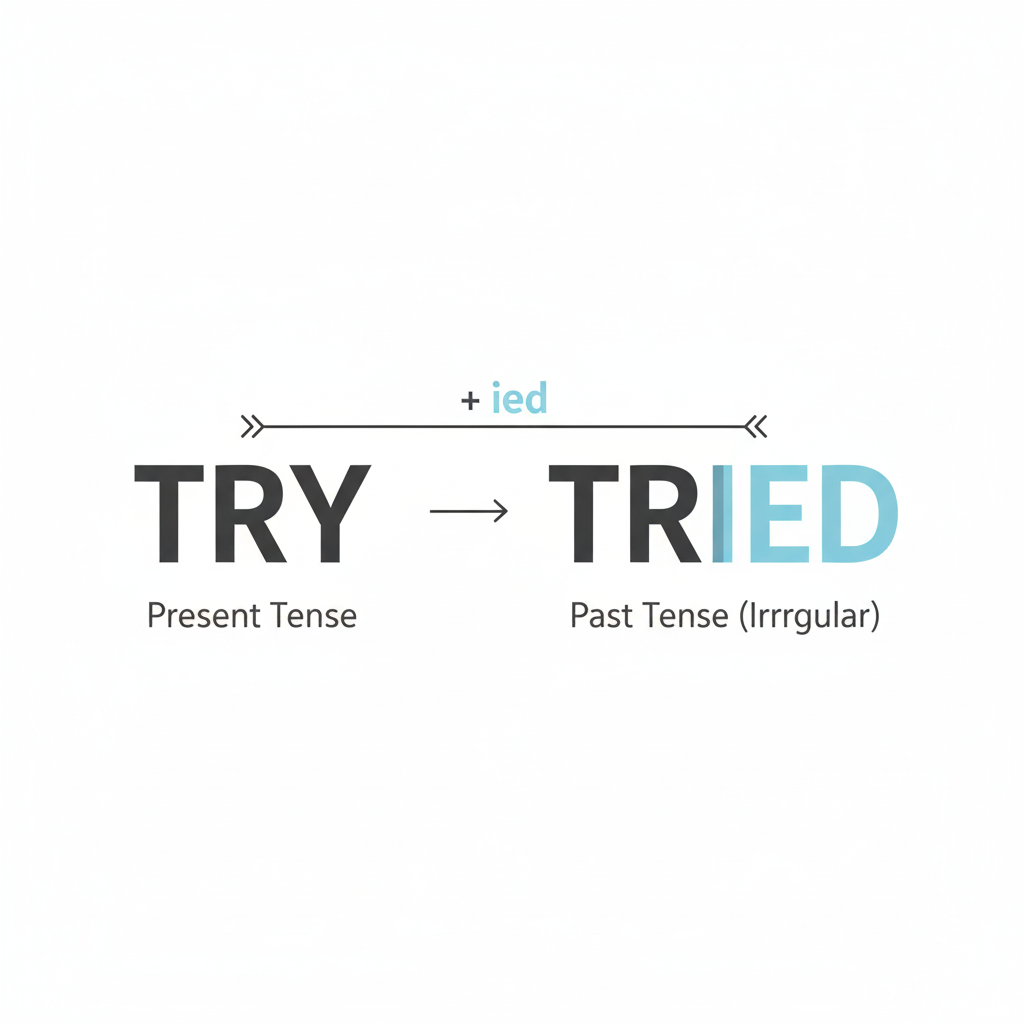
Many people ask: “Is it tryed or tried?”
This confusion is very common, especially for learners of English, writers, students, and even professionals. You may see tryed written online, in comments, or on social media, and wonder if it is correct. You might also ask, “Why tried and not tryed?” or “How do you spell ‘I tried’?”
The problem happens because English spelling rules are not always simple. The verb try changes form in the past tense, and many people apply the wrong rule. Some think adding -ed always makes the past tense, so they write tryed. Others wonder if British or American English uses a different spelling.
This article solves all of that confusion. You’ll get a quick answer, a clear explanation, real-life examples, spelling rules, usage data, and expert advice. By the end, you will know the correct spelling, the meaning of tried, how to pronounce tried, and why tryed is incorrect in standard English.
Tried vs Tryed
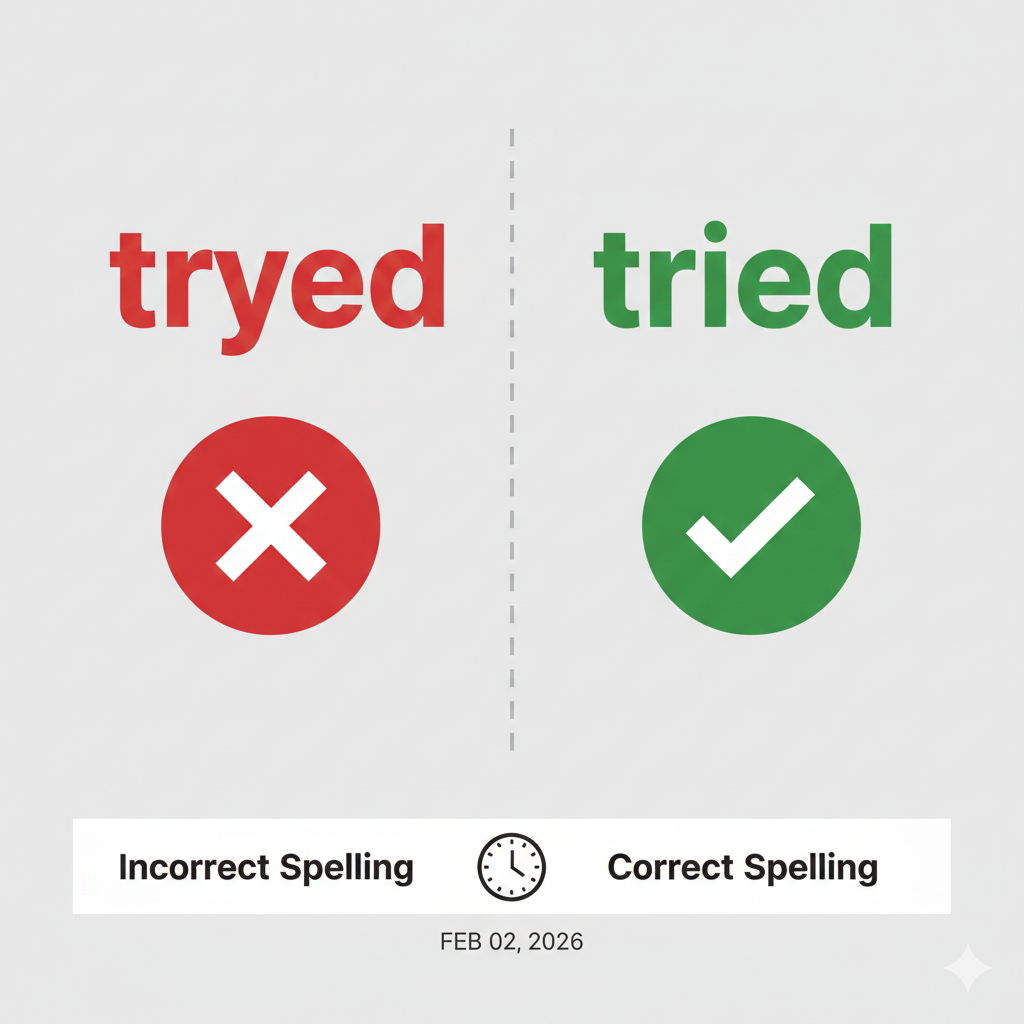
Tried is correct. Tryed is incorrect.
- ✅ I tried my best.
- ❌ I tryed my best.
Why?
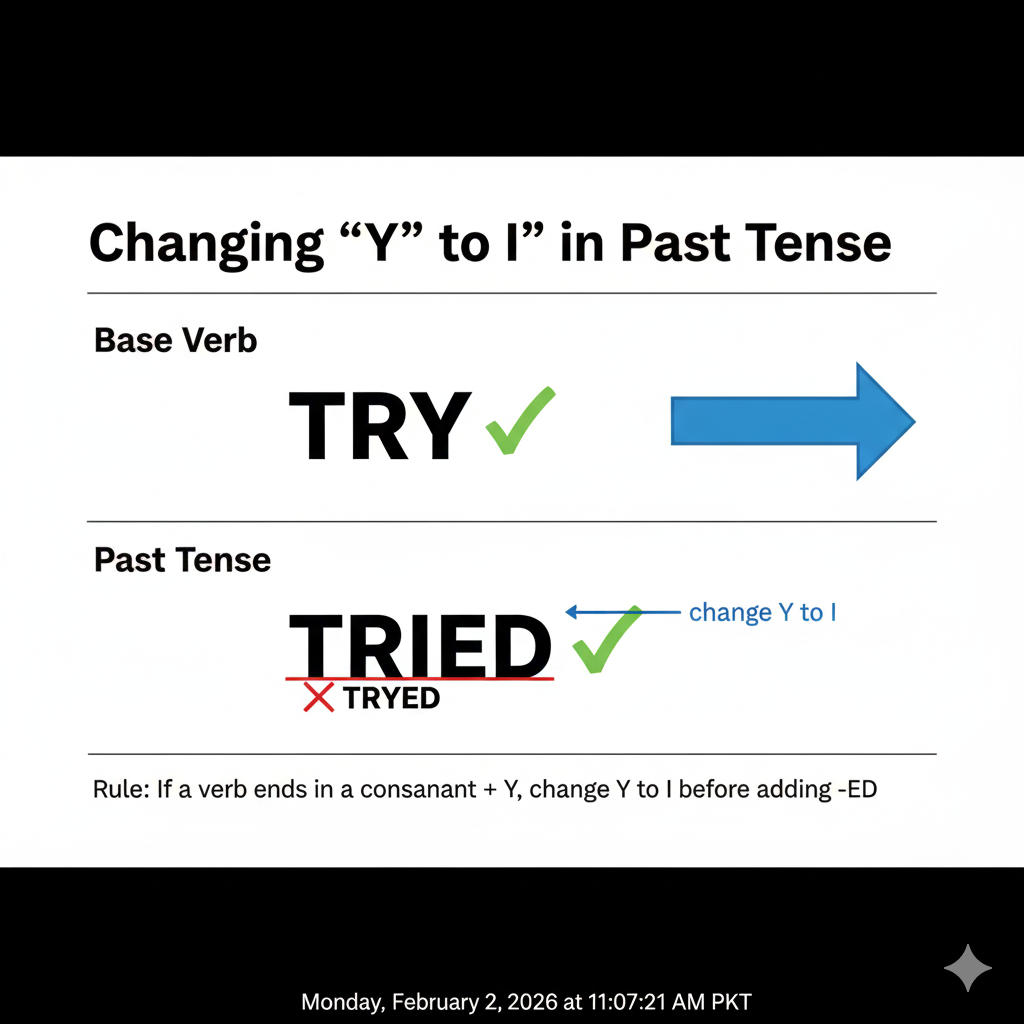
Because try → tried follows a spelling rule where “y” changes to “i” before adding -ed.
Quick rule:
If a verb ends in a consonant + y, change y to i and add -ed.
Examples:
- try → tried
- cry → cried
- study → studied
There is no correct meaning of “tryed” in modern English.
The Origin of Tried vs Tryed
The verb try comes from Middle English trien, meaning to test or attempt. Over time, English developed spelling rules to make writing more consistent.
One important rule is for verbs ending in -y:
- If y comes after a consonant, change it to i before adding -ed
- This rule exists to make words easier to read and pronounce
That’s why tried became standard English, and tryed was never accepted in dictionaries.
So when people ask “What is the meaning of tryed?”, the answer is simple:
👉 It has no accepted meaning because it is not a correct word.
British English vs American English Spelling
Many users ask if this is a UK vs US difference. It is not.
Both British English and American English use “tried.”
| Form | British English | American English |
|---|---|---|
| tried | ✅ Correct | ✅ Correct |
| tryed | ❌ Incorrect | ❌ Incorrect |
There is no variation here.
Tried is correct worldwide.

Sherbet vs Sherbert: The Spelling Mistake Everyone Makes
Which Spelling Should You Use?
Your audience does not matter in this case.
- US audience → use tried
- UK audience → use tried
- Global audience → use tried
Whether you are writing:
- Emails
- Exams
- Court documents (“tried in court”)
- News articles
- Blogs
- Social media posts
👉 Always use “tried.”
Common Mistakes with Tried vs Tryed
Here are frequent errors people make:
❌ How to spell tryed
✔️ Correct spelling: tried
❌ Is it tryed or tried?
✔️ Correct answer: tried
❌ Tried or tryed in court
✔️ Legal usage: “He was tried in court.”
❌ Tried and tired confusion
✔️ Tried = attempted
✔️ Tired = feeling sleepy or weak
Tried vs Tryed in Everyday Examples
Emails
- ✅ I tried calling you yesterday.
- ❌ I tryed calling you yesterday.
News
- The suspect was tried in court.
Social Media
- I tried this new app. It works great!
Formal Writing
- The team tried multiple solutions before choosing the final one.
Tried vs Tryed – Google Trends & Usage Data
Search data shows:
- “Is it tryed or tried?” is searched globally
- “Why tried and not tryed?” is common among students
- “Try past tense” is popular in ESL regions
Key insight:
👉 Tried appears millions of times in books, news, and legal texts
👉 Tryed appears mainly as a spelling mistake
Tried vs Tryed Comparison Table
| Feature | Tried | Tryed |
|---|---|---|
| Correct spelling | ✅ Yes | ❌ No |
| Past tense of try | ✅ Yes | ❌ No |
| Dictionary word | ✅ Yes | ❌ No |
| Used in court/legal text | ✅ Yes | ❌ No |
| Accepted worldwide | ✅ Yes | ❌ No |
FAQs: Tried vs Tryed
1. Is it tryed or tried?
Tried is correct. Tryed is wrong.
2. Why tried and not tryed?
Because verbs ending in consonant + y change y to i before -ed.
3. How do you spell “I tried”?
I tried (never I tryed).
4. What is the meaning of tryed?
There is no meaning. Tryed is not a real word.
5. Tried or tryed in court?
Correct usage is “tried in court.”
6. What is the meaning of tried?
Tried means attempted, tested, or examined.
7. How do you pronounce tried?
Pronounced as /traɪd/ (rhymes with pride).
Conclusion
The confusion between tried vs tryed is common, but the rule is simple. Tried is the correct spelling, and tryed is always wrong. This applies to American English, British English, and global English. There is no exception.
Remember this easy rule:
👉 Try → tried (change y to i, then add -ed)
Whether you are writing an email, taking an exam, posting online, or using English professionally, choosing tried shows accuracy and credibility. Understanding this also helps you avoid similar mistakes with words like cried, studied, and applied.
If you ever wonder “How to spell tryed”, the answer is simple:
👉 You don’t. Use tried instead.