Have you ever written “be weary of scams” when you actually meant “be wary of scams”? If yes, you are not alone. The confusion between weary vs wary is one of the most common English grammar mistakes made by students, bloggers, and even native speakers.
These two words look almost identical and sound very similar. However, their meanings are completely different. The word weary describes tiredness or exhaustion, while wary describes caution or carefulness. Because of this similarity, people often search for weary vs wary meaning, weary vs wary pronunciation, and weary vs wary examples to understand the correct usage.
For example:
❌ Be weary of strangers.
✔ Be wary of strangers.
The first sentence suggests being tired of strangers, which does not make sense. The second sentence correctly means being careful around strangers.
In this complete grammar guide, you will learn the difference between weary vs wary, their pronunciation, origins, synonyms, and real-life examples. We will also explain weary vs wary vs leery, show common mistakes, and provide a short quiz to test your understanding.
By the end of this article, you will clearly understand the weary vs wary meaning and use both words confidently in everyday English writing and conversation.
Weary vs Wary
Image Prompt:
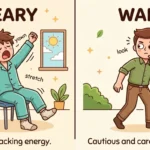
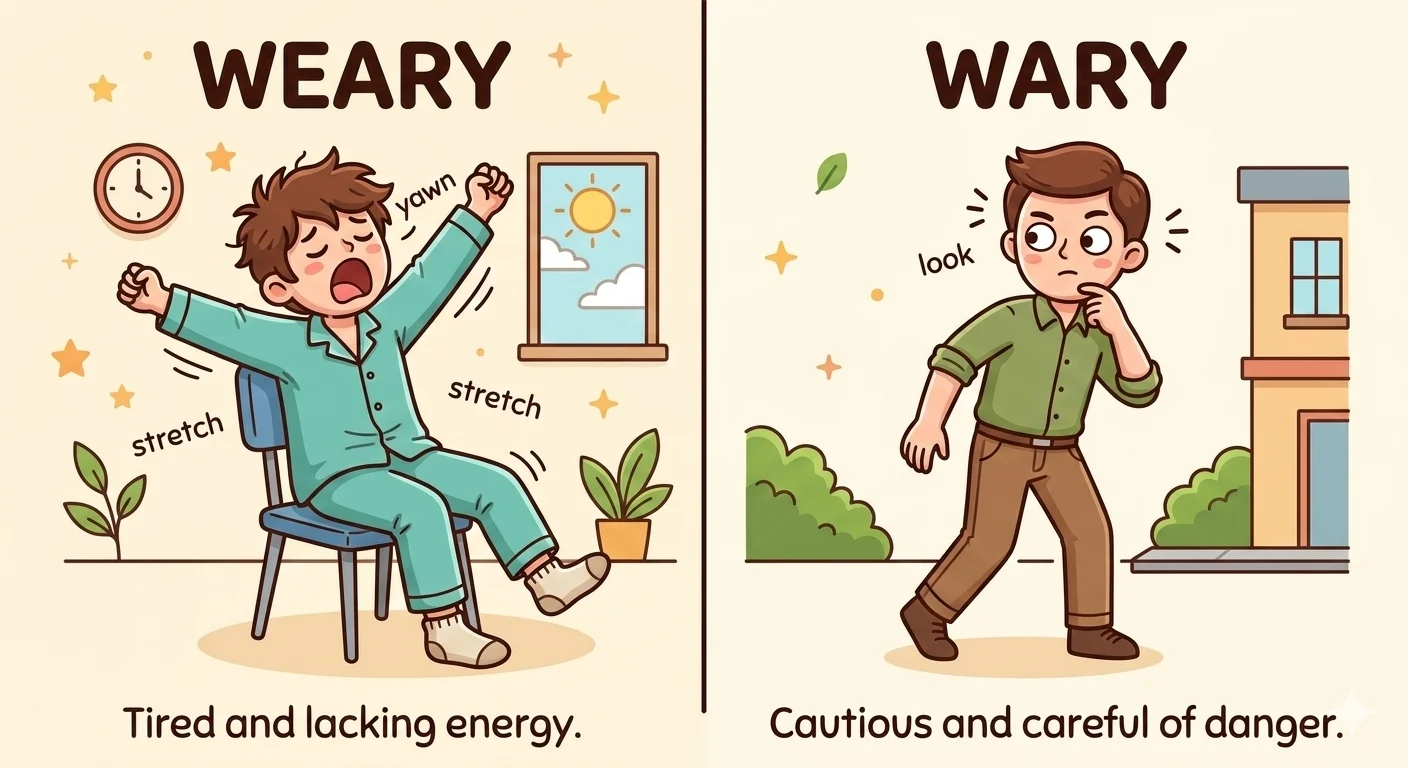
A simple educational illustration showing two characters side by side: one exhausted labeled “weary” and one cautious looking around labeled “wary”.
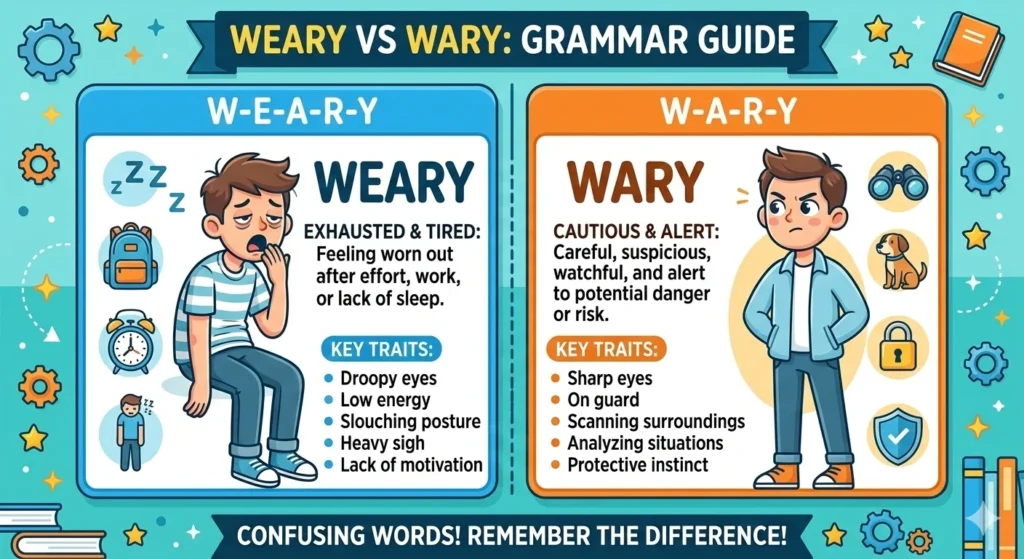
The difference between weary vs wary is simple.
| Word | Meaning | Example |
|---|---|---|
| weary | extremely tired | She felt weary after work |
| wary | cautious or careful | He was wary of strangers |
Simple Rule
- Weary = tired
- Wary = careful
Quick Examples
Weary vs wary examples
Weary:
- I feel weary after working all day.
- The travelers looked weary after the long flight.
- She gave a weary sigh.
Wary:
- Be wary of suspicious emails.
- The cat remained wary of strangers.
- Investors are wary of risky markets.
Easy Memory Trick
Remember this simple idea:
Weary → Weak from tiredness
Wary → Watching carefully
This trick helps you remember the difference between weary and wary instantly.
Weary vs Wary Meaning and Origin
Image Prompt:
Old English manuscripts and dictionary pages showing the historical origin of English words.
Understanding the history of these words helps explain the weary vs wary meaning.
Origin of Weary
The word weary comes from the Old English word “wērig.”
It meant:
- tired
- exhausted
- worn out
According to traditional dictionary definitions used by major language references such as Oxford English Dictionary, the word describes mental or physical fatigue.
Example:
After the long journey, the travelers became weary.
Over centuries, the meaning has remained almost the same.
Origin of Wary
The word wary comes from the Old English word “wær.”
It meant:
- cautious
- alert
- careful
Example:
The fox remained wary of the trap.
Today, the word still describes someone who stays alert to possible danger.

Why People Confuse Weary and Wary
The confusion happens for three main reasons:
- The spelling is very similar.
- The pronunciation sounds close.
- Both words describe human emotions or reactions.
Because of this, many people search online discussions such as weary vs wary Reddit conversations to understand the correct usage.
Weary vs Wary Pronunciation Guide
Image Prompt:
Phonetic pronunciation chart showing weary and wary with sound waves.
Pronunciation is one reason people confuse these words.
| Word | Pronunciation | IPA |
|---|---|---|
| weary | WEER-ee | /ˈwɪəri/ |
| wary | WAIR-ee | /ˈweəri/ |
Simple Pronunciation Tip
- Weary sounds like “weer-ee.”
- Wary sounds like “wair-ee.”
Learning the correct weary vs wary pronunciation can help prevent writing mistakes.
British English vs American English Spelling
Image Prompt:
Educational graphic comparing British and American spelling with flags.
Unlike many English words, weary and wary are spelled the same in both American and British English.
| Meaning | British English | American English |
|---|---|---|
| tired | weary | weary |
| cautious | wary | wary |
There is no spelling difference between the dialects.
This makes the weary vs wary confusion purely a meaning issue, not a spelling rule difference.
Which Spelling Should You Use?
Choosing between weary vs wary depends on the context of the sentence.
Use Weary When Talking About Tiredness
Examples:
- The nurse looked weary after a long shift.
- The teacher sounded weary after teaching all day.
- The workers were weary after months of hard work.
- The travelers felt weary after the long journey.
The word describes fatigue, exhaustion, or emotional tiredness.
Use Wary When Talking About Caution
Examples:
- Consumers are wary of online scams.
- Travelers remain wary of travel fraud.
- Investors stay wary during economic uncertainty.
- Parents are wary of unsafe websites.
The word describes alertness and careful thinking.
Common Mistakes with Weary vs Wary
Image Prompt:
Student editing grammar mistakes on a laptop highlighting weary vs wary corrections.
Here are some common grammar mistakes.
Mistake 1
❌ Be weary of strangers.
✔ Correct:
Be wary of strangers.
Mistake 2
❌ After the marathon he felt wary.
✔ Correct:
After the marathon he felt weary.
Mistake 3
❌ She became weary of the suspicious offer.
✔ Correct:
She became wary of the suspicious offer.
Editing Tip
Ask yourself:
Is the sentence about tiredness or caution?
- tired → weary
- careful → wary
When NOT to Use Weary or Wary
Sometimes neither word is correct.
Example:
❌ I am weary about the policy.
Better:
✔ I am concerned about the policy.
Another example:
❌ She is wary after working all day.
✔ She is weary after working all day.
Choosing the right word improves clear communication.
Weary vs Wary vs Leery
Many people also search weary vs wary vs leery.
These words describe different emotions.
| Word | Meaning |
|---|---|
| weary | extremely tired |
| wary | cautious |
| leery | suspicious |
Example Sentences
- I feel weary after the meeting.
- She remained wary of the new website.
- He felt leery about the business deal.
Leery vs Wary
Both words show caution, but leery suggests stronger distrust.
Weary vs Wary Examples in Daily Life
Image Prompt:
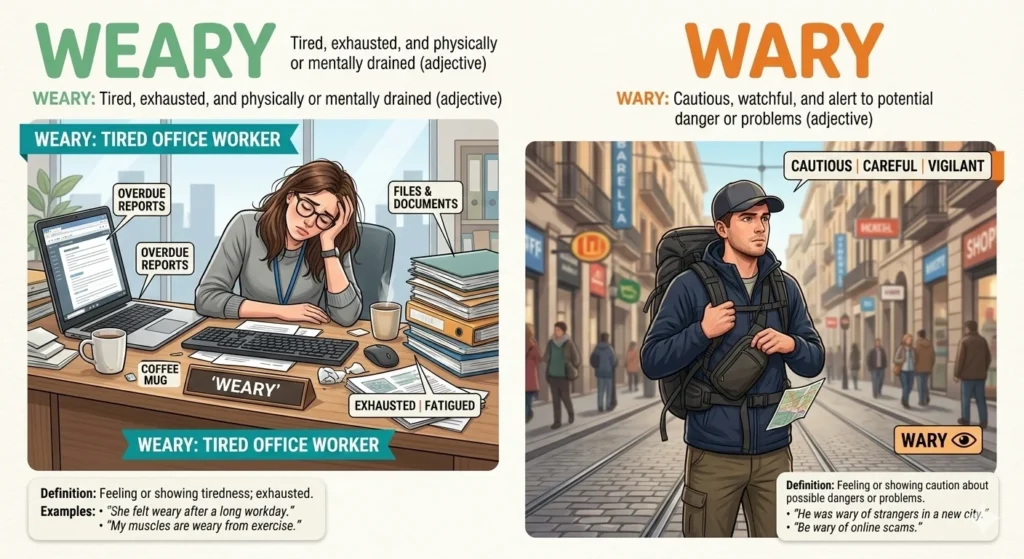
Illustration showing everyday situations with a tired worker (weary) and a cautious traveler (wary).
Email Example
Weary:
I am a little weary after traveling today.
Wary:
Our team is wary about signing the agreement.
News Example
- Investors remain wary of inflation risks.
- Healthcare workers feel weary after long hospital shifts.
Social Media Example
- I am so weary after this week.
- People are wary of fake news online.
Academic Writing Example
Researchers remain wary of inaccurate data.

Weary vs Wary – Comparison Table
| Feature | Weary | Wary |
|---|---|---|
| Meaning | tired | cautious |
| Emotion | exhaustion | alertness |
| Example | I feel weary | She is wary |
| Synonyms | exhausted | cautious |
| Opposite | energetic | trusting |
Weary vs Wary Synonyms
Weary Synonyms
- tired
- exhausted
- fatigued
- drained
- worn out
Example:
She felt exhausted and weary after the long trip.
Wary Synonyms
- cautious
- careful
- alert
- suspicious
- watchful
Example:
Travelers remain cautious and wary of scams.
Weary vs Wary – Google Trends and Usage
Search data shows strong interest in weary vs wary meaning worldwide.
People often search this topic because:
- English learners study confusing words
- students prepare for grammar exams
- bloggers edit articles and check word usage
- content writers verify correct English phrases
Popular searches include:
- weary vs wary pronunciation
- weary vs wary examples
- weary vs wary quiz
- weary vs wary reddit discussion
This shows that the topic is important for clear English writing and grammar learning.
Weary vs Wary Quiz
Choose the correct word.
- I feel ______ after working all night.
- She was ______ of the suspicious website.
- The hikers looked ______ after climbing the mountain.
- Investors remain ______ of risky markets.
Answers:
- weary
- wary
- weary
- wary
FAQs
What does feel wary mean?
To feel wary means to feel cautious or careful about something that might be risky.
Does weary mean careful?
No. Weary means tired, not careful.
What does it mean to be weary?
To be weary means to feel extremely tired physically or mentally.
Why do people confuse weary and wary?
Because they look similar, sound similar, and describe emotions.
What is the difference between leery and wary?
Both mean cautious, but leery shows stronger suspicion.
Is it “be weary of” or “be wary of”?
The correct phrase is be wary of, which means to be careful.
Can wary describe a person?
Yes. A person can be wary when they behave cautiously.
Is weary an emotion?
Yes. It can describe emotional exhaustion or mental fatigue.
What part of speech are weary and wary?
Both are adjectives used to describe feelings or states.
Can weary describe mental tiredness?
Yes. The word can describe physical or emotional fatigue.
Conclusion
Understanding the difference between weary vs wary is important for clear and accurate English writing. Although the words look very similar, their meanings are completely different.
The word weary describes tiredness or exhaustion. People feel weary after long workdays, difficult journeys, or emotional stress. It refers to both physical and mental fatigue.
The word wary, however, describes caution and alertness. A wary person stays careful because they believe a situation may be risky or dangerous. This word commonly appears in news articles, safety advice, and professional communication.
The confusion between these words happens because their spelling and pronunciation are very similar. However, remembering one simple rule can help:
Weary means tired.
Wary means careful.
By learning the meanings, practicing examples, and understanding the context of each word, you can easily avoid this common grammar mistake. With this knowledge, you will confidently use weary, wary, and related words like leery in everyday English conversations and writing.

Scott Thornbury is a respected English language educator and author, known for practical grammar insights, teacher training, and clear learner-focused explanations.