Many learners make this mistake: “I wonder in the park.” It looks correct—but it is wrong. This common confusion between wonder vs wander happens because both words sound similar but have completely different meanings.
People often search for the difference between wonder and wander, how to use them in sentences, and which one is correct in phrases like “wander off” or “mind wandering.” A small mistake can change your meaning and reduce clarity in writing.
This guide gives a clear answer, simple rules, and real examples. It follows standard English grammar used in academic and professional writing. By the end, you will understand the wonder vs wander meaning, pronunciation, and correct usage with confidence.
Wonder vs Wander
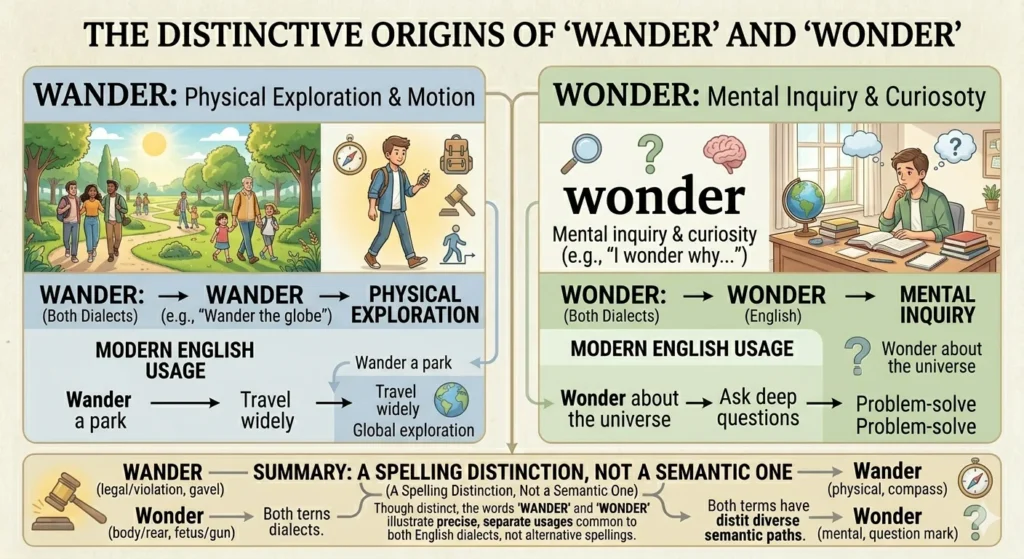
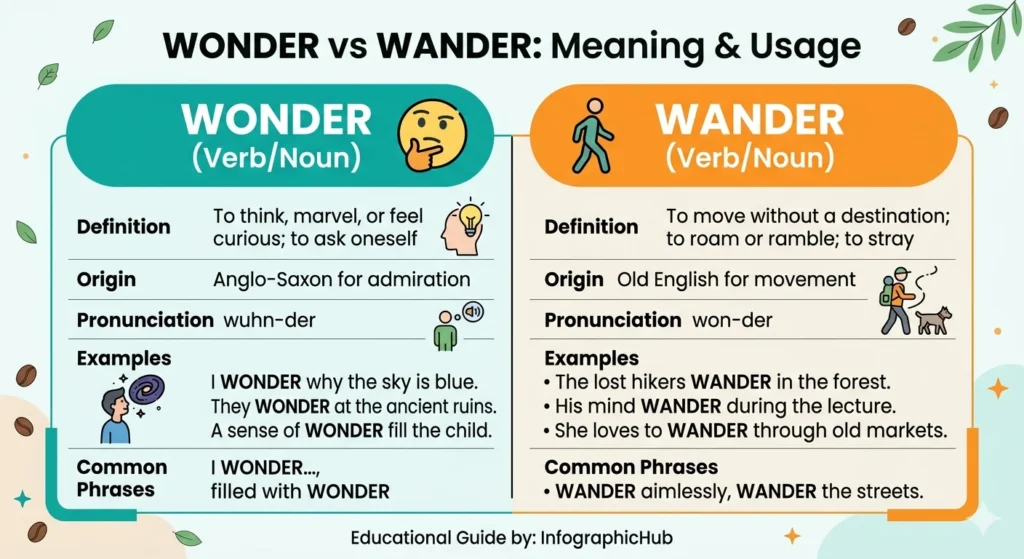
Difference between wonder and wander:
- Wonder = to think, feel curious, or feel amazed
- Wander = to move around without a clear direction
Examples:
- I wonder what she is doing.
- I wander through the streets.
👉 Simple rule:
- Wonder = thinking (mind)
- Wander = moving (body)
The Origin of Wonder vs Wander
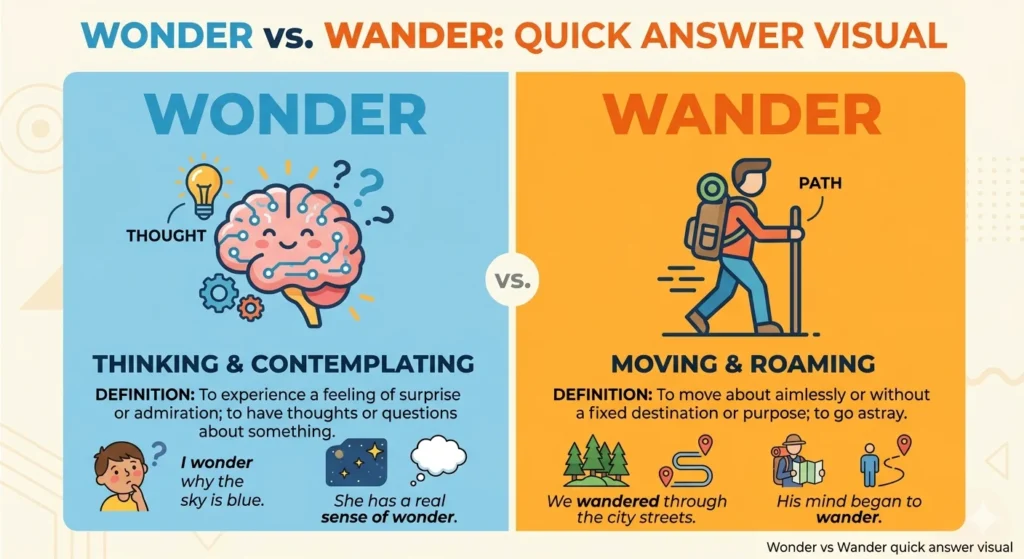
Wonder comes from Old English wundor, meaning marvel or surprise. It later developed the meaning of thinking with curiosity.
Wander comes from Old English wandrian, meaning to move without direction. It has always been connected to movement.
Even though their origins are different, their similar sound causes confusion today.
British English vs American English Spelling
There is no spelling difference between British and American English.
| Word | British English | American English | Meaning |
|---|---|---|---|
| Wonder | Wonder | Wonder | Thinking or curiosity |
| Wander | Wander | Wander | Moving without direction |
Breach vs Breech: Which One Is Actually Correct?
Which Spelling Should You Use?
Choose based on meaning, not region.
- Use wonder for thoughts, curiosity, or questions
- Use wander for movement or directionless action
Who Should Care?
- Students: Helps in exams and essays
- Writers & bloggers: Improves clarity and SEO
- Professionals: Builds clear communication
If you want to improve further, you can also study similar word pairs like affect vs effect.
Common Mistakes with Wonder vs Wander
❌ I wonder in the forest.
✅ I wander in the forest.
❌ My mind is wondering in class.
✅ My mind is wandering in class.
❌ She wander what happened.
✅ She wonders what happened.
❌ Let’s wonder off.
✅ Let’s wander off.
👉 Key idea:
- Thinking → wonder
- Movement → wander
Faze vs Phase: Which Word Is Actually Correct?
Wonder vs Wander in Everyday Examples
In Emails
- I wonder if you received my message.
- We wandered around the city yesterday.
In News
- Experts wonder about future trends.
- Tourists wander through historic areas.
In Social Media
- I wonder why things change so fast.
- Just wandering around today.
In Formal and Professional Writing
- Researchers wonder about long-term results.
- Visitors wander through different departments during events.
Wonder vs Wander Pronunciation
- Wonder → /ˈwʌn-dər/
- Wander → /ˈwɑːn-dər/ (US), /ˈwɒn-dər/ (UK)
The slight difference in sound often leads to confusion.
Does the Mind Wonder or Wander?
The correct phrase is: The mind wanders.
“Wander” can describe mental movement as well.
Example:
- My mind wanders during long lectures.
Is It Wonder Off or Wander Off?
The correct phrase is: wander off.
Meaning: to move away slowly without direction.
Example:
- The child wandered off in the market.
Comparison Table
| Feature | Wonder | Wander |
|---|---|---|
| Meaning | Think or feel curious | Move without direction |
| Type | Mental action | Physical or mental movement |
| Example | I wonder why | I wander around |
| Common Error | Used for movement | Used for thinking |
| Memory Tip | Mind | Movement |
FAQs
1. What is the difference between wonder and wander?
Wonder means thinking or curiosity. Wander means moving without direction.
2. How do you use wonder and wander in a sentence?
- I wonder about the future.
- I wander through the park.
3. Does the mind wonder or wander?
The mind wanders, not wonders.
4. Is it wonder off or wander off?
The correct phrase is wander off.
5. What is the meaning of wonder vs wander?
Wonder relates to thinking and curiosity, while wander relates to movement without direction.
6. Why do people confuse wonder and wander?
Because they sound similar and have close spelling.
Conclusion
Understanding the difference between wonder and wander becomes easy when you remember one idea: thinking vs moving. Wonder is about curiosity, questions, and thoughts, while wander is about moving without direction.
Using the correct word improves your writing clarity and helps you avoid common grammar mistakes. This is important for students, bloggers, and professionals who want clear and effective communication. Correct usage also improves readability and supports better content quality.
👉 Final tip: Before you choose the word, ask yourself—Is it about thinking or movement?
Now try this: can you write one sentence using both wonder and wander correctly?

Scott Thornbury is a respected English language educator and author, known for practical grammar insights, teacher training, and clear learner-focused explanations.