Imagine sending a lease agreement to a client — and they notice the word “tennant” spelled incorrectly. One extra letter. One small mistake. But it can instantly reduce your professional image.
That is why many people search for tenant vs tennant. They want to know the correct spelling before writing:
- Rental agreements
- Property contracts
- Legal notices
- Real estate blog posts
- Landlord-tenant documents
Spelling matters in professional writing. It affects trust, authority, and even SEO rankings.
The truth is simple: only one spelling is correct in property law and rental agreements.
In this guide, you will learn:
- Is it tenant or tennant?
- What does tennant mean?
- What is a tenet vs tenant?
- Tenant vs landlord
- Tenant vs lessee
- Renter vs tenant
- Principal tenant vs tenant
Let’s clear this confusion once and for all.
Tenant vs Tennant
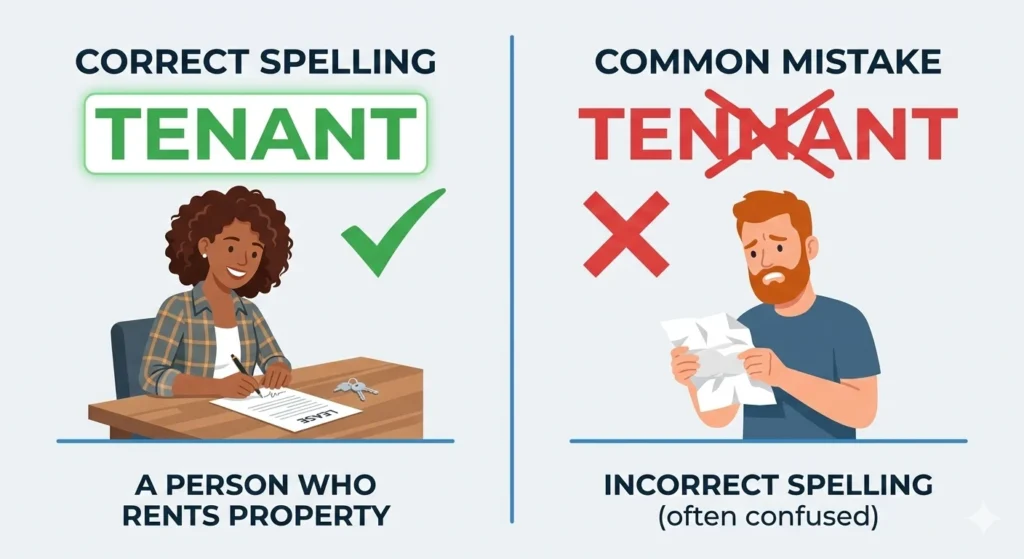
Tenant is the correct spelling in real estate and legal writing.
A tenant is a person who rents or occupies property owned by someone else under a lease agreement.
Examples:
- The tenant pays rent every month.
- The landlord signed a contract with the tenant.
- The tenant must follow the rental terms.
Tennant is not a legal or grammatical variation.
It is usually:
- A spelling mistake
- A surname, such as David Tennant
- A company name like Tennant Company
When discussing rental property, always use tenant.
The Origin of Tenant vs Tennant
The word tenant comes from Old French tenant, meaning “holding.”
It also comes from the Latin word tenere, meaning “to hold.”
This origin explains the meaning clearly. A tenant is someone who holds property temporarily under a rental contract.
The word has been used for centuries in:
- Property law
- Lease agreements
- Government housing regulations
- Real estate documentation
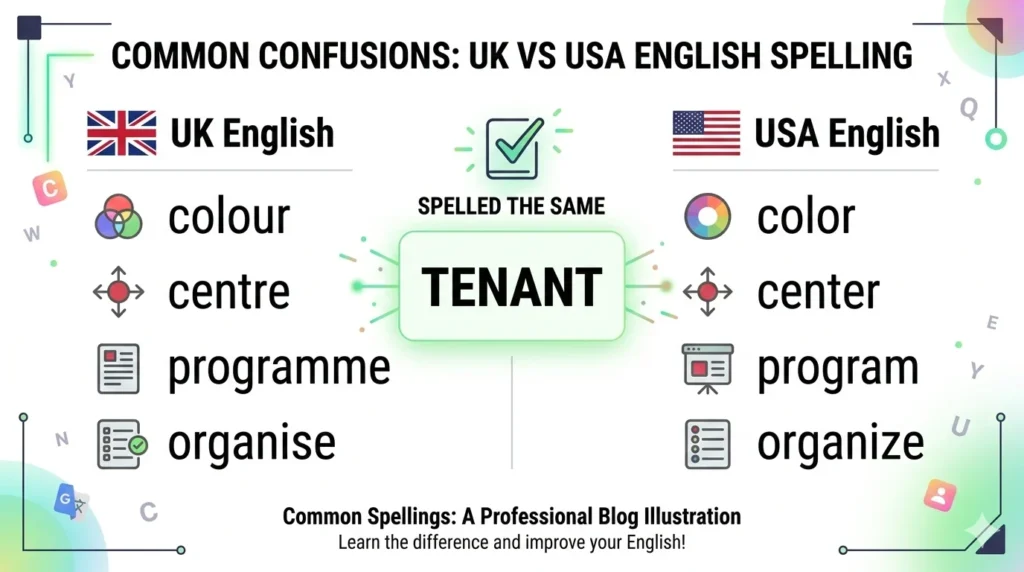
Importantly, the spelling has remained the same in both American and British English.
The word “tennant” never developed as a language variation. It became known mainly as:
- A family name
- A brand name
- A typing error
There is no official grammar rule that supports “tennant” as a rental term.

British English vs American English Spelling
Many words change spelling between UK and US English.
Examples:
| American English | British English |
|---|---|
| color | colour |
| organize | organise |
| center | centre |
But tenant does not change.
Spelling Comparison Table
| Word | US Spelling | UK Spelling | Correct in Rental Law? |
|---|---|---|---|
| tenant | tenant | tenant | ✅ Yes |
| tennant | ❌ Incorrect | ❌ Incorrect | ❌ No |
Even official housing laws and tenancy agreements in the UK use the spelling tenant.
So if you searched “Tennant spelling UK,” the answer is clear: it is incorrect.
Michael vs Micheal: One Spelling Is Always Correct
Which Spelling Should You Use?
Always use tenant in professional and legal contexts.
Use it in:
- Rental contracts
- Lease agreements
- Property management documents
- Housing policies
- Landlord-tenant disputes
- Real estate writing
Audience-Based Guidance
- United States → tenant
- United Kingdom → tenant
- Canada → tenant
- Australia → tenant
- Global audience → tenant
Correct spelling:
- Builds credibility
- Strengthens authority
- Improves search engine trust
- Supports strong E-E-A-T signals
Clear grammar builds confidence. Professional writing improves ranking.
Common Mistakes with Tenant vs Tennant
1. Using “Tennant” in Legal Documents
Incorrect:
The tennant agrees to pay rent monthly.
Correct:
The tenant agrees to pay rent monthly.
In legal and real estate writing, spelling errors reduce professionalism.
Confusing Tenant with Tenet
This is another common confusion.
| Word | Meaning |
|---|---|
| tenant | Person who rents property |
| tenet | A belief or guiding principle |
Tenet Definition
A tenet is a principle or belief.
Example:
- Fair treatment is a key tenet of ethical leadership.
Remember:
- Tenant → rent, housing, lease
- Tenet → belief, values, principle
What Is a Tennet?
“Tennet” is not a real English word. It is a spelling mistake.
Tenant vs Landlord
| Role | Meaning |
|---|---|
| Tenant | Rents the property |
| Landlord | Owns the property |
The landlord owns the property.
The tenant pays rent to use it.
This legal relationship forms the base of rental law worldwide.
Dilemma vs Dilemna: Why One Form Is Incorrect
Tenant vs Lessee
A lessee is someone who signs a lease contract.
In most residential agreements:
Tenant = Lessee
In commercial real estate or corporate contracts, “lessee” is more formal legal terminology.
Renter vs Tenant
Both words describe someone who rents property.
Difference:
- Renter → informal everyday word
- Tenant → formal and legal term
In contracts and official documents, use tenant.
Principal Tenant vs Tenant
A principal tenant is the main person listed on the lease agreement.
Other occupants may be co-tenants, but the principal tenant carries primary responsibility.
Example:
- Fatima is the principal tenant.
- Ali is a co-tenant.
Tenant vs Tennant in Real-World Usage
In Emails
Correct:
Dear Tenant, your rent payment is due on June 1.
In Legal Contracts
The tenant must maintain the premises according to lease terms.
In Government Housing Policies
The word “tenant” appears in housing acts, tenancy laws, and property regulations across multiple countries.
On Social Media
Correct:
I am a tenant looking for a rental apartment.
Incorrect:
I am a tennant looking for an apartment.
Small spelling errors can affect professional credibility.

Tenant vs Tennant – Search Trends and Usage Data
Search behavior shows clear patterns:
- “Tenant” has strong global search volume.
- “Tennant” appears mostly in spelling-related searches.
- Common related queries include:
- Is it tenant or tennant?
- What does tennant mean?
- Tenant vs landlord
- Tenant vs lessee
- Tenet definition
- Renter vs tenant
Search interest is high in:
- United States
- United Kingdom
- Canada
- Australia
- India
Google often autocorrects “tennant” to “tenant,” confirming that “tenant” is the recognized spelling in real estate, lease law, and housing documents.
Using the correct term improves:
- Content authority
- Reader trust
- SEO performance
- Professional image
Complete Comparison Table
| Term | Meaning | Correct Spelling | Used in Legal Contracts? |
|---|---|---|---|
| tenant | Person renting property | ✅ Yes | ✅ Yes |
| tennant | Misspelling or surname | ❌ No | ❌ No |
| tenet | Belief or principle | ✅ Yes | ❌ No |
| lessee | Person signing lease | ✅ Yes | ✅ Yes |
| renter | Informal tenant | ✅ Yes | Sometimes |
| landlord | Property owner | ✅ Yes | ✅ Yes |
FAQs
1. What does tennant mean?
It is usually a misspelling of tenant. It can also be a surname.
2. Is it tenant or tennant?
The correct spelling for someone renting property is tenant.
3. What is a tennet?
“Tennet” is not a real English word. It is a typo.
4. What is a tenet vs tenant?
Tenant refers to a renter. Tenet refers to a belief or principle.
5. Is Tennant spelling UK?
No. British English also uses tenant.
6. Tenant vs lessee — what is the difference?
In residential property, they often mean the same. “Lessee” is more formal in legal contracts.
7. Renter vs tenant — which is correct?
Both are correct. “Tenant” is preferred in professional and legal writing.
Conclusion
The difference between tenant vs tennant is clear. The correct spelling in real estate, lease agreements, and housing law is tenant. This spelling is used globally in both American and British English.
“Tennant” is not a rental term. It is usually a spelling mistake or a surname. Using it in contracts, property blogs, or legal documents can reduce trust and affect SEO performance.
It is also important not to confuse tenant with tenet. One relates to renting property. The other relates to beliefs and principles.
Correct spelling builds authority. Clear writing builds trust. Professional language improves ranking and credibility.
Now you can confidently use the correct term in all rental and real estate contexts.