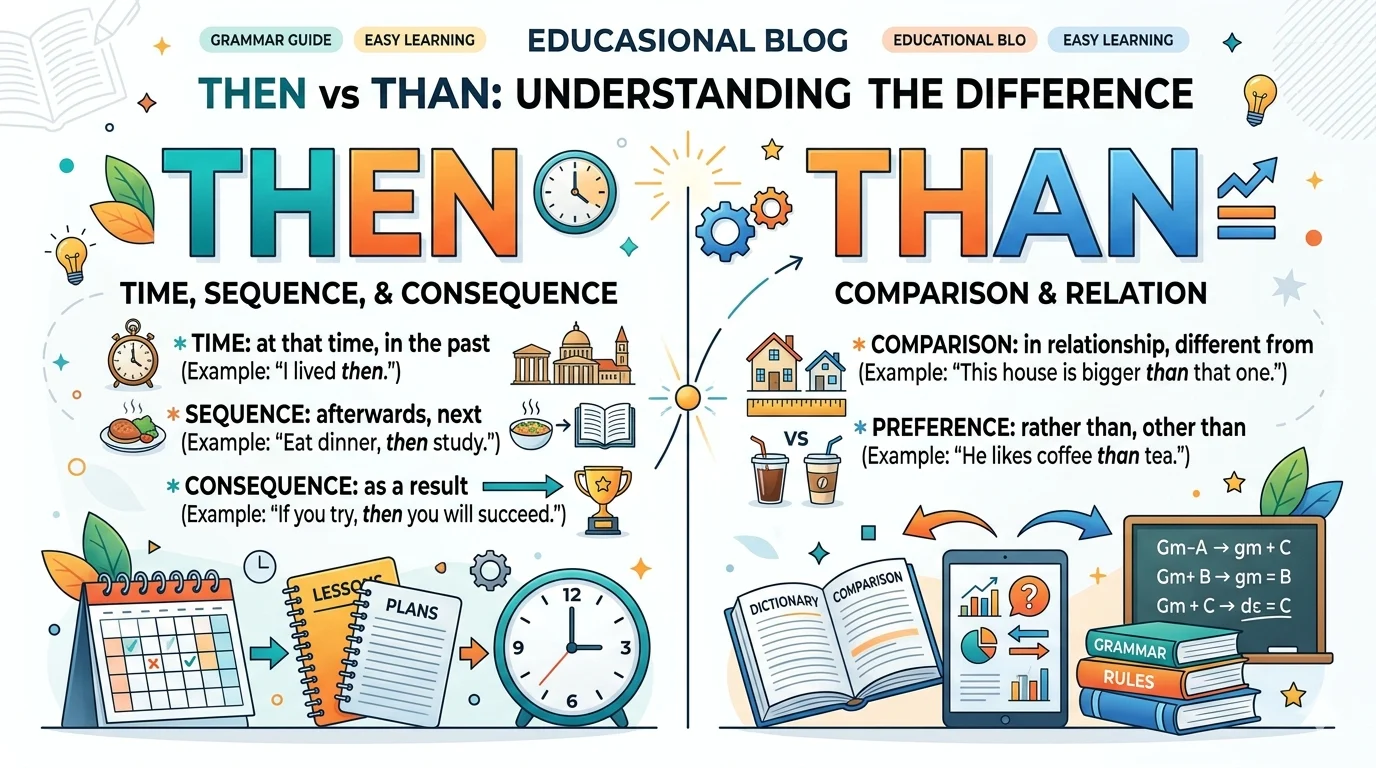
Have you ever written a sentence like “She is better then me” and suddenly stopped because it did not look right? This tiny grammar mistake confuses millions of people every day. Students make it in school assignments, bloggers use the wrong spelling in articles, and even native English speakers sometimes mix these two words while typing quickly.
The confusion between then vs than happens because the words look similar and sound almost the same in pronunciation. But their meanings are completely different. One word talks about time, while the other is used for comparison. A single wrong letter can change the meaning of an entire sentence.
For example:
- “We went home and then slept.” ✅
- “She is taller than her brother.” ✅
But:
- “We went home and than slept.” ❌
- “She is taller then her brother.” ❌
If you have ever searched:
- when to use then or than
- then vs than grammar
- then and than examples
- okay then or than
- I love you more then or than
- then vs than pronunciation
you are definitely not alone.
According to grammar experts and educational guides like Cambridge English and Grammarly, understanding the difference between these words improves writing clarity, sentence structure, and professional communication.
Then vs Than
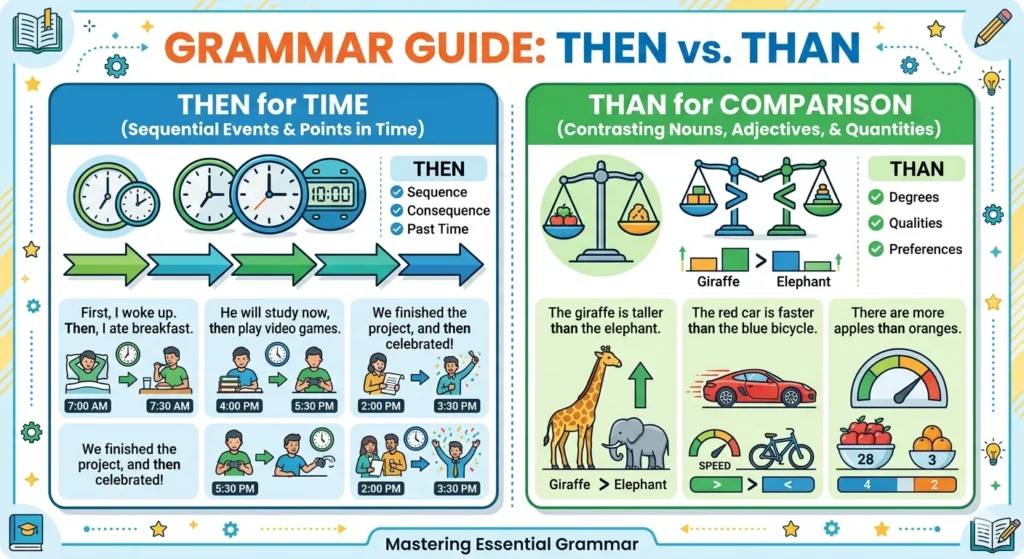
Here is the easiest way to remember the difference:
Then is related to time.
Than is used for comparison.
Quick Examples
- Finish your homework, then play games.
- My phone is better than yours.
Quick Memory Chart
| If your sentence talks about… | Use |
|---|---|
| Time, sequence, next action | Then |
| Comparison between two things | Than |
This small rule solves most grammar mistakes instantly.
What Does “Then” Mean?
The word then usually talks about:
- time
- sequence
- what happens next
- afterward
- a specific moment in the past
You can think of then as a timeline word.
Examples of Then
- We ate dinner and then watched a movie.
- Finish your work, then relax.
- Back then, life was simpler.
- First make tea, then start studying.
In all these examples, then connects actions or time.
What Does “Than” Mean?
The word than is used when comparing two things, people, ideas, or numbers.
Examples of Than
- Sara is taller than Ali.
- This bag is cheaper than that one.
- I like tea more than coffee.
- He runs faster than me.
Whenever your sentence compares something, you usually need than.
Then vs Than – Simple Grammar Rule
Many English teachers explain the difference using one simple trick:
- Then = Time
- Than = Comparison
That is all you really need to remember.
Easy Test
Ask yourself:
- Is my sentence talking about time or sequence? → Use then
- Is my sentence comparing two things? → Use than
Example 1
- We studied and then went home.
This sentence describes sequence.
Example 2
- Mathematics is harder than English.
This sentence compares subjects.
The Origin of Then vs Than
The confusion between these words is very old. Both words came from Old English and originally looked more similar than they do today.
Origin of “Then”
The word then came from the Old English word þanne. It was used for:
- time
- sequence
- next actions
People used it to describe what happened after something else.
Example
- Finish dinner, then wash the dishes.
Over time, the spelling became the modern word then.
Origin of “Than”
The word than also developed from Old English, but its meaning slowly became connected with comparison.
It was mainly used after words like:
- more
- less
- better
- bigger
Example
- This book is better than that one.
English speakers eventually separated the spellings to avoid confusion in writing.
Why Do People Confuse Then and Than?
There are several reasons why these words confuse English learners.
1. Similar Spelling
The words differ by only one letter.
- then
- than
This small difference is easy to miss.
2. Similar Pronunciation
In fast spoken English, the words often sound similar.
For example:
- better than
- and then
Many learners hear the sound correctly but choose the wrong spelling while writing.
3. Fast Typing and Autocorrect
People often type quickly on phones and computers. Autocorrect can also change the wrong word automatically.
That is why mistakes like:
- better then
- okay than
- more then
are extremely common online.
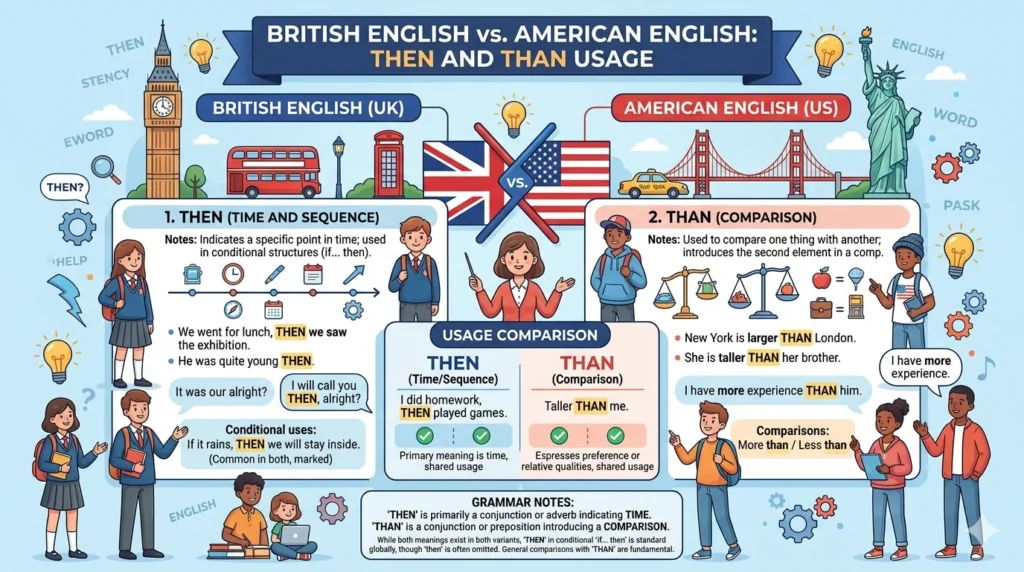
British English vs American English Spelling
Unlike many English words, then and than have the same spelling in both British and American English.
However, there are small differences in formal writing style.
| Usage | British English | American English |
|---|---|---|
| Informal comparison | She is taller than me. | She is taller than me. |
| Formal comparison | She is taller than I am. | She is taller than I am. |
| Time sequence | Finish work, then relax. | Finish work, then relax. |
Both styles are accepted today, especially in everyday communication.
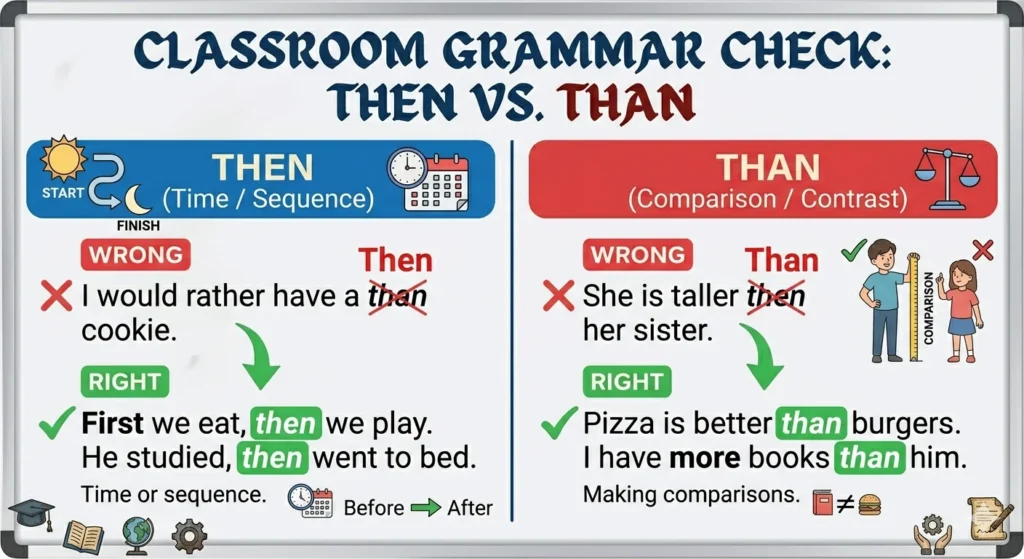
Common Mistakes with Then vs Than
This is one of the most common grammar mistakes in English writing.
Mistake 1: Using “Then” for Comparison
Wrong
- My car is faster then yours.
Correct
- My car is faster than yours.
Because the sentence compares two cars.
Mistake 2: Using “Than” for Time
Wrong
- Finish your homework than sleep.
Correct
- Finish your homework then sleep.
Because the sentence describes sequence.
Mistake 3: “Okay Then or Than”
Correct:
- Okay then
Because it means:
- “in that case”
- “next”
Mistake 4: “I Love You More Then or Than”
Correct:
- I love you more than anything.
Because the sentence compares feelings.
Mistake 5: “Less Than vs Then”
Correct:
- Less than 10 minutes
Wrong:
- Less then 10 minutes
Words like:
- more
- less
- bigger
- smaller
- better
usually use than after them.
Commonly Confused Sentences
Many people search these exact phrases on Google.
| Incorrect Phrase | Correct Phrase |
|---|---|
| Better then | Better than |
| More then | More than |
| Rather then | Rather than |
| Other then | Other than |
| Bigger then | Bigger than |
| Sooner then | Sooner than |
Real-Life Examples
- I would rather stay home than go outside.
- Other than Ahmed, everyone arrived early.
- This movie is better than the last one.
- Summer is hotter than winter.
These examples sound natural because they use comparison correctly.
Then vs Than in Everyday Life
Learning grammar becomes easier when you see real-life examples.
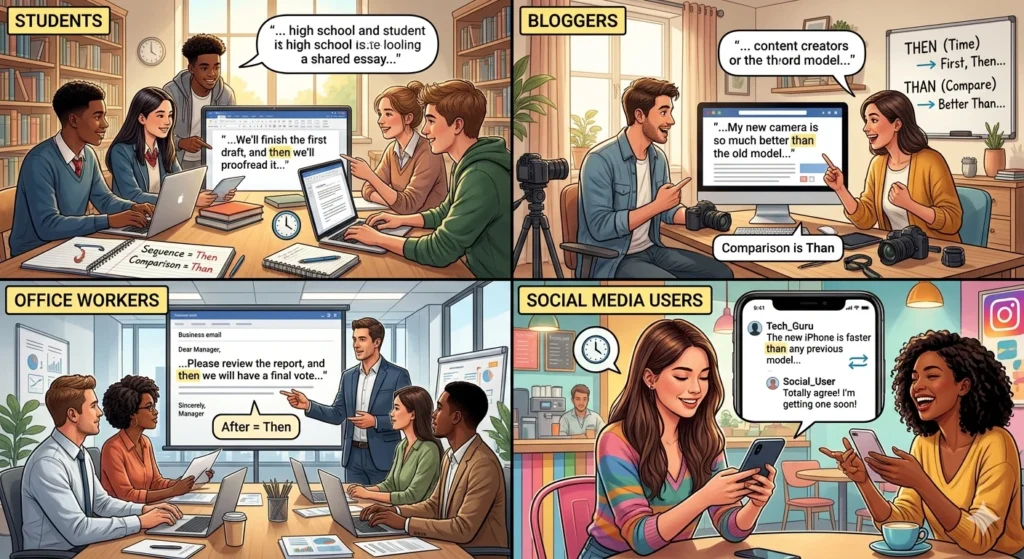
In Text Messages
- Call me when you finish dinner, then we can talk.
- I like pizza more than burgers.
In School Writing
- Water is heavier than oil.
- Read the lesson and then answer the questions.
In Emails
- Please complete the report, then send it to me.
- This option is better than the previous plan.
In Office Communication
- Sales increased more than expected this month.
- We will discuss the project and then finalize the budget.
In Social Media Captions
- Finish work, then relax.
- Winter is colder than summer.
Using the correct spelling makes your writing look more professional and polished.
Then vs Than Pronunciation
Many learners search for then vs than pronunciation because the words sound close in spoken English.
| Word | Pronunciation |
|---|---|
| Then | “THEN” |
| Than | “THAN” or soft “thən” |
Pronunciation Tip
- Then usually sounds stronger.
- Than often becomes softer in fast speech.
Even native speakers sometimes pronounce them similarly, but the spelling rules are different.
Then vs Than in Urdu
Understanding the Urdu meaning can make grammar easier for many learners.
| English Word | Urdu Meaning |
|---|---|
| Then | پھر / اس کے بعد |
| Than | سے |
Urdu Examples
Then
We ate food and then slept.
ہم نے کھانا کھایا پھر سو گئے۔
Than
She is taller than me.
وہ مجھ سے لمبی ہے۔
This simple translation trick helps many students remember the difference quickly.
Then vs Than Worksheet
Practice is one of the best ways to improve grammar skills.
Fill in the Blanks
- She is smarter ___ her brother.
- Finish your tea and ___ start studying.
- This phone is cheaper ___ that one.
- We watched TV and ___ went to sleep.
- I love you more ___ words can say.
Answers
- than
- then
- than
- then
- than
English teachers recommend practicing grammar daily to improve sentence structure and writing confidence.
Mini Grammar Quiz
Choose the correct word.
1. He is older ___ me.
a) then
b) than
✅ Answer: than
2. Finish your homework and ___ go outside.
a) then
b) than
✅ Answer: then
3. This movie is better ___ the last one.
a) then
b) than
✅ Answer: than
4. We went shopping and ___ returned home.
a) then
b) than
✅ Answer: then
5. I would rather read a book ___ watch TV.
a) then
b) than
✅ Answer: than
Small quizzes help learners remember grammar rules more easily.
Teacher Tips for Remembering Then and Than
Many English teachers use these simple tricks.
Trick 1: Then = Time
Both words contain the letter “E”.
- thEn
- timE
Trick 2: Than = Comparison
The letter “A” in than reminds you of comparison.
Examples
- bigger than
- faster than
- smarter than
Trick 3: Look for Comparison Words
If your sentence includes:
- more
- less
- better
- bigger
- smaller
you probably need than.
Trick 4: Look for Sequence Words
If your sentence talks about:
- next
- afterward
- later
- after that
you probably need then.
These small tricks make grammar much easier to remember.
Then vs Than – Google Trends & Usage Data
Search interest for then vs than stays high throughout the year because this grammar confusion affects millions of English learners.
Countries With High Search Interest
- Pakistan
- India
- United States
- Philippines
- United Kingdom
- Canada
Why Searches Increase
People often search this keyword:
- during school exams
- while proofreading blog posts
- when writing office emails
- during English grammar practice
- after making typing mistakes on mobile phones
Many users accidentally type:
- better then
- okay than
- more then
and later search Google to check the correct grammar.
Popular Google Searches
- Then and than examples
- Then vs than worksheet
- Then vs than grammar
- How to remember than and then?
- Okay then or than
- I love you more then or than
- When to use then or than?
- Where do we use then?
This keyword remains popular because it affects daily communication and writing skills.
Related Grammar Topics
People who confuse then vs than also commonly search for:
- your vs you’re
- affect vs effect
- advice vs advise
- to vs too
- accept vs except
Learning these commonly confused words improves English vocabulary and professional writing.
Expert Grammar Advice
Grammar experts and English teachers recommend reading your sentence slowly before sending or publishing it.
Ask yourself:
- Is this sentence talking about time? → then
- Is this sentence comparing things? → than
Grammar tools like Grammarly can help, but manual proofreading is still important because software does not catch every mistake.
With regular practice, these grammar rules become natural.
FAQs About Then vs Than
When to use then or than?
Use then for time, order, or sequence. Use than when comparing people, objects, ideas, or numbers.
Do you say “OK then” or “OK than”?
The correct phrase is:
- OK then
because it refers to the next response or action.
Is “better then” correct?
No. The correct phrase is:
- better than
because the sentence compares two things.
Is “more then” correct?
Usually no. The correct phrase is:
- more than
because it shows comparison.
Why do people confuse then and than?
People confuse them because they look similar, sound similar, and are often typed quickly.
How can I remember the difference easily?
Remember:
- then = time
- than = comparison
This simple rule solves most mistakes.
Where do we use then?
We use then when talking about:
- sequence
- next actions
- afterward
- time references
Example:
- We studied and then went home.
Conclusion
Understanding then vs than becomes much easier once you learn the basic grammar rule. Use then when talking about time, order, sequence, or what happens next. Use than when comparing people, things, ideas, feelings, or numbers.
Even though these words look and sound similar, their meanings are completely different. That is why many English learners accidentally write:
- “better then”
- “more then”
- “okay than”
But now you know the correct forms are:
- “better than”
- “more than”
- “okay then”
This small grammar improvement can make your school assignments, blog posts, emails, social media captions, and professional writing look more accurate and polished.
Whenever you feel confused, remember this simple rule:
Then = Time
Than = Comparison
With regular practice, examples, and grammar exercises, using these words correctly will become natural and easy.