Many English learners search for “wavered vs waivered” because the two words look and sound very similar. This small spelling confusion often causes big mistakes in exams, emails, legal writing, and professional communication.
Users also ask questions like:
- Is it wavered or waivered?
- What does waivered mean?
- What does wavered mean in grammar?
- Is it waivered or waived?
The confusion happens because English contains similar words like waver, waiver, and waive, which are often mixed incorrectly. Many people assume “waivered” is a correct past tense form, but in standard English grammar, it is not accepted.
In reality, only “wavered” is correct when talking about hesitation, doubt, or instability. The word “waivered” is commonly a spelling mistake, while “waived” is a completely different legal term meaning to give up a right or fee.
This guide explains the full difference using simple grammar rules, pronunciation help, examples, tables, and real-world usage. You will clearly understand wavered vs waivered meaning, mistakes, and correct usage in just a few minutes.
Wavered vs Waivered
🖼️ Image Prompt:
“Correct vs incorrect English grammar comparison showing ‘wavered’ green tick and ‘waivered’ red cross, minimal modern infographic style”
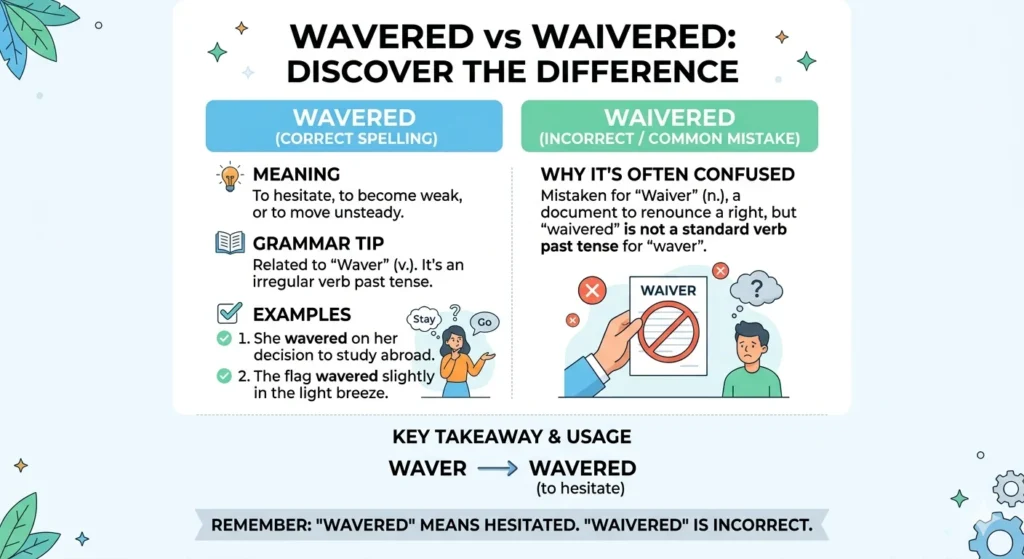
✔ Quick Answer:
- Wavered = Correct
- Waivered = Incorrect
📘 Meaning of Wavered
Wavered means:
- To hesitate
- To become uncertain
- To lose confidence or stability in a decision
Examples:
- She wavered before answering the question.
- His confidence wavered during the interview.
❌ Meaning of Waivered
- “Waivered” is not a standard English word
- It is a common spelling mistake
- It is often confused with “waived”
Word Origin – The History of Wavered vs Waivered
🖼️ Image Prompt:
“Old English manuscript evolving into modern dictionary pages, showing word ‘waver’, historical language evolution theme, warm sepia tone”
Origin of “Waver”
- Comes from Old English wafian
- Means to shake, move uncertainly, or hesitate
- Later developed into emotional uncertainty meaning
Why “Waivered” Exists
People wrongly create “waivered” because:
- They think “waiver” is a verb
- They add “-ed” automatically
- It sounds natural in speech
But grammar rule:
👉 Not all nouns can become verbs by adding “-ed”
✔ Correct form: waver → wavered
❌ Incorrect form: waiver → waivered

Pronunciation Guide
🖼️ Image Prompt:
“English pronunciation chart showing phonetic symbols for wavered and waived, clean classroom board style”
Wavered:
/ˈweɪvərd/
Waived:
/weɪvd/
👉 Key insight:
They sound similar but are completely different in meaning
British English vs American English Usage
🖼️ Image Prompt:
“UK and USA flags with English grammar words floating between them, educational comparison infographic”
Good news:
👉 There is NO spelling difference between UK and US English for this word.
Comparison Table
| Word | Meaning | UK English | US English | Correct |
|---|---|---|---|---|
| Wavered | Hesitated / unsure | ✔ | ✔ | ✔ Yes |
| Waivered | Incorrect form | ❌ | ❌ | ❌ No |
| Waived | Forgave / removed rule | ✔ | ✔ | ✔ Yes |
Wavered vs Waivered vs Waived – Clear Grammar Difference
🖼️ Image Prompt:
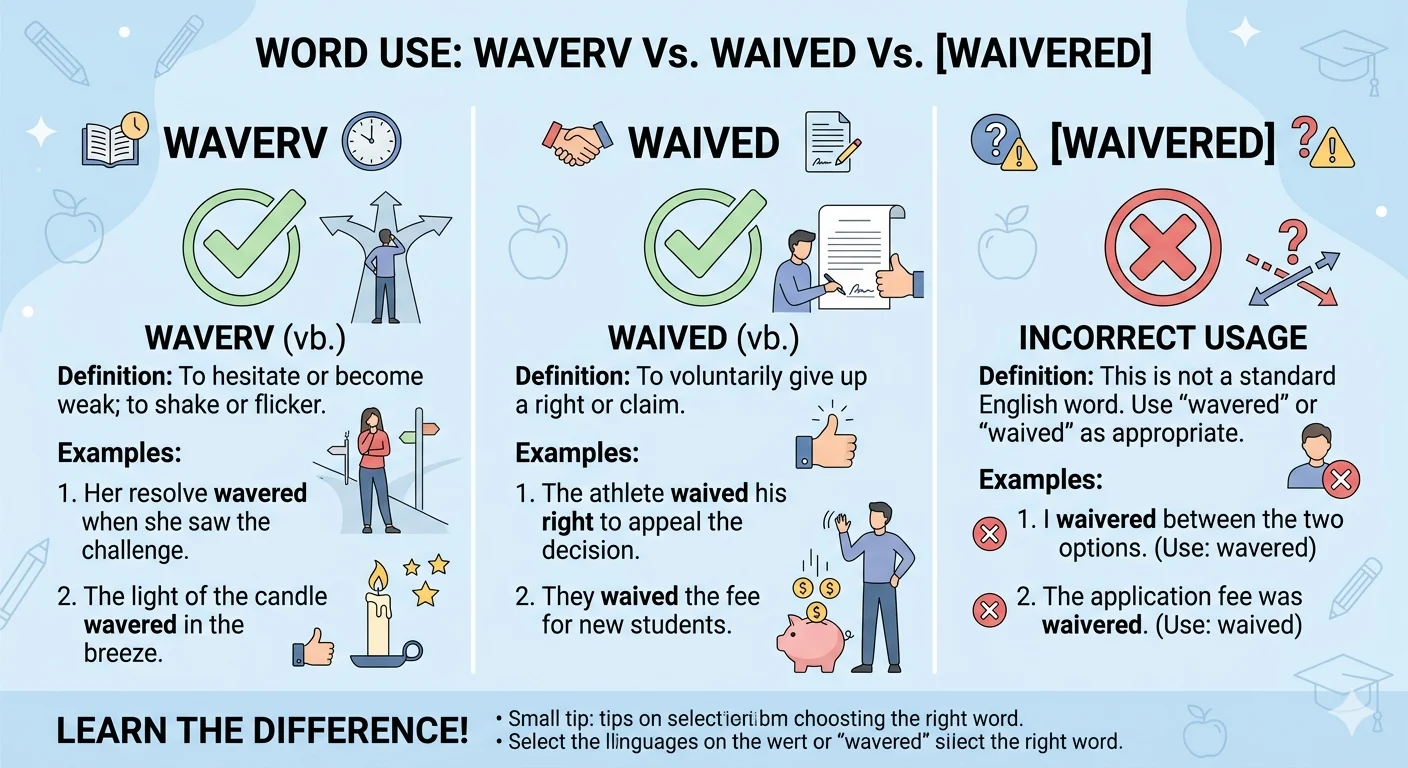
“Three-column comparison infographic showing wavered, waivered, waived with meanings and icons”
✔ Wavered
- Emotional or mental hesitation
- Uncertainty in decision
❌ Waivered
- Not a real standard word
✔ Waived
- To cancel or remove a rule, fee, or condition
Examples:
- He wavered in his decision.
- The fee was waived by the company.
Which Spelling Should You Use?
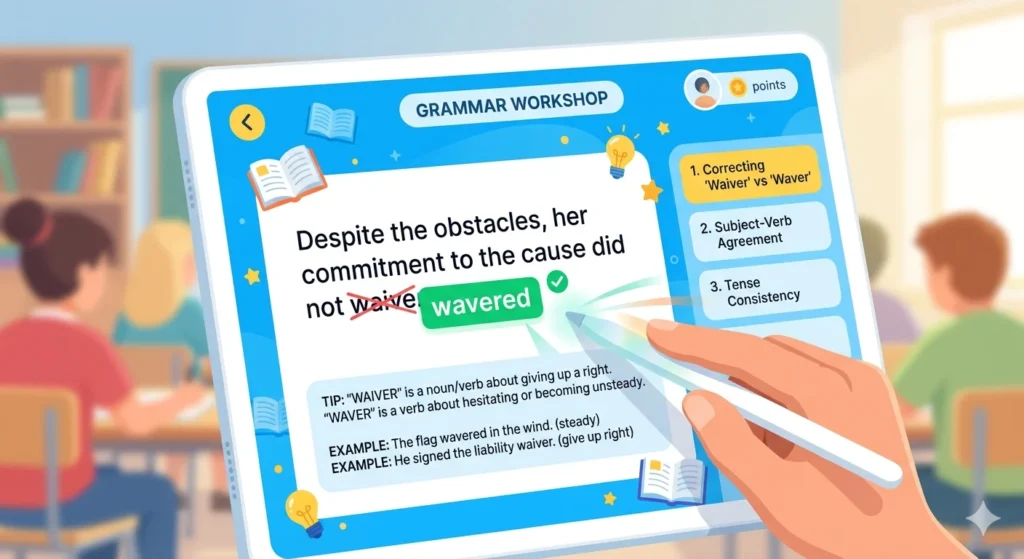
🖼️ Image Prompt:
“A student choosing correct grammar on a digital screen with green checkmarks and red crosses, modern learning UI”
Always use:
✔ Wavered
Never use:
❌ Waivered
Use “waived” only when:
- Legal context
- Fees or rights are removed
Audience advice:
- USA → wavered
- UK → wavered
- Global English → wavered
Common Mistakes with Wavered vs Waivered
❌ Frequent Errors:
- Using “waivered” instead of “wavered”
- Mixing “waived” with “wavered”
- Treating “waiver” as a verb
- Confusing meanings in legal writing
✔ Correct Forms:
- She wavered before speaking.
- The rule was waived officially.
- He showed no wavering confidence.
Synonyms and Related Words
Wavered Synonyms:
- hesitated
- doubted
- fluctuated
- faltered
- paused
👉 These improve SEO semantic depth and NLP relevance.
Wavered in Everyday Examples
Emails:
- “I wavered before approving your request.”
Social Media:
- “I wavered… but I finally decided 😂”
News Writing:
- “The leader wavered under pressure.”
Formal Writing:
- “The witness wavered during questioning.”
Wavered vs Waivered – Google Trends & Usage Insight
🖼️ Image Prompt:
“Digital analytics dashboard showing word search trends comparison worldwide map, SEO data visualization”
Key Insights:
- “Wavered” = high correct usage globally
- “Waivered” = mostly mistake-based searches
- “Waived” = high legal/financial usage
User intent keywords:
- is it wavered or waivered
- wavered vs waivered grammar
- wavered vs waived difference
- wavered definition
Do / Don’t Grammar Box
✔ DO:
- Use wavered for hesitation
- Use waived for legal removal
- Use correct verb forms
❌ DON’T:
- Don’t use “waivered”
- Don’t treat “waiver” as a verb
- Don’t mix meanings
FAQs – Wavered vs Waivered
1. Is it wavered or waivered?
✔ Correct: wavered
2. What does wavered mean?
It means to hesitate or lose confidence.
3. Is waivered a real word?
❌ No, it is not standard English.
4. Is it waivered or waived?
✔ Correct: waived
5. What is wavered definition?
To become uncertain or indecisive.
6. Never waver meaning?
It means stay strong and confident.
7. Waver vs waiver difference?
- waver = verb (hesitate)
- waiver = noun (legal exemption)
Conclusion
Understanding the difference between wavered vs waivered is essential for clear and professional English writing. Many learners mistakenly use “waivered,” but this form is not accepted in standard English grammar. The correct word is “wavered,” which describes hesitation, doubt, or a lack of confidence in a decision or action.
A major source of confusion is the word “waiver,” which is a noun used in legal or formal contexts. People incorrectly assume it can become a verb, but grammar rules do not support this formation. That is why “waivered” is considered incorrect. On the other hand, “waived” is a valid verb meaning to give up a right, fee, or condition.
By learning these differences, you can improve your grammar accuracy, avoid common mistakes, and write more confidently in academic, professional, and online communication. Always remember: if you are talking about hesitation, use wavered; if you are talking about removing a rule or fee, use waived.
Mastering this small but important distinction will make your English clearer, more natural, and more SEO-friendly for digital writing.

David Crystal is a renowned English linguist and author, known for making English grammar, linguistics, and language history clear and engaging.