Did a spell checker ever mark your word as wrong even though you were sure it was correct? If so, you are not alone. The confusion between recognize vs recognise is one of the most common spelling questions in English. Students, bloggers, business professionals, writers, and even native speakers often wonder: Which is correct, recognize or recognise? Is recognise spelled with S or Z? Does the UK use Z or S? Is recognise just a British spelling?
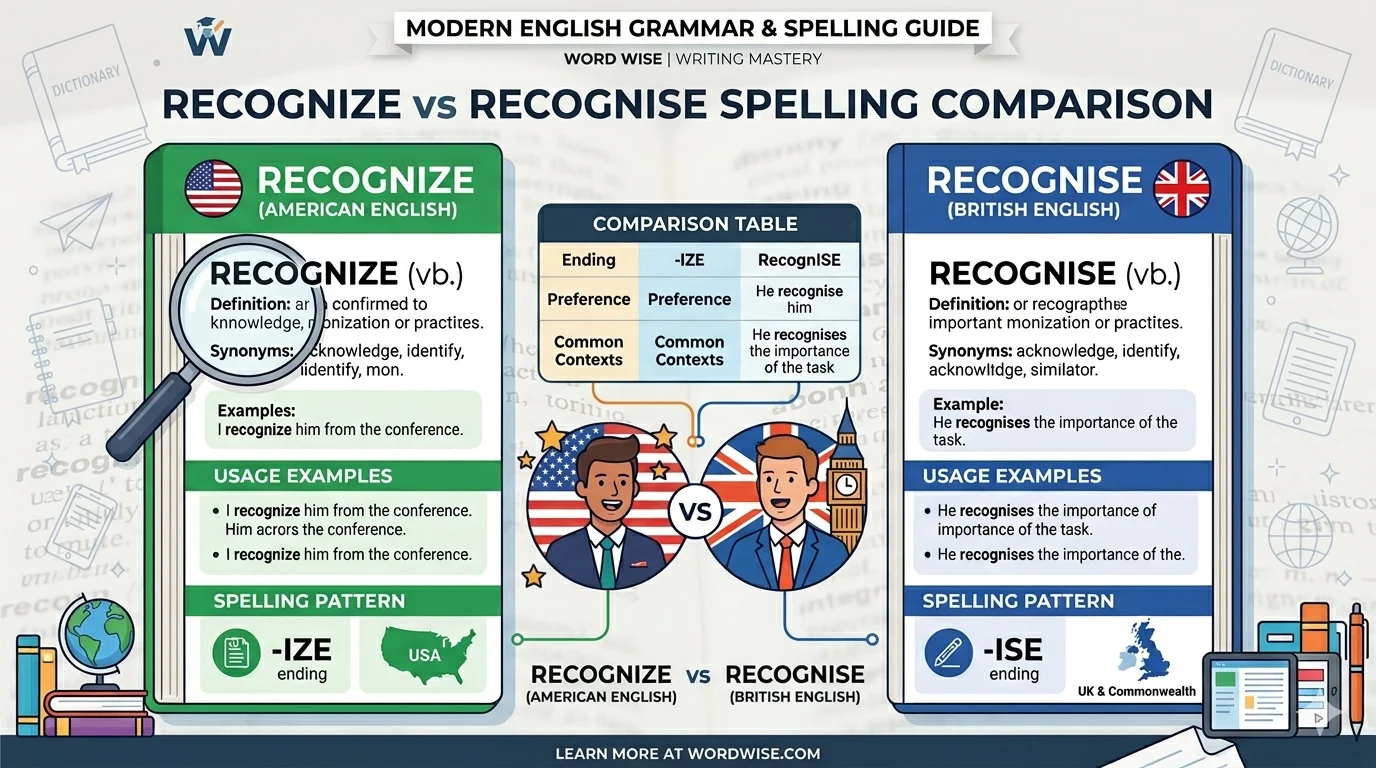
The good news is simple: both spellings are correct. The difference comes from regional spelling conventions rather than grammar or meaning. Recognize is the preferred spelling in American English, while recognise is commonly used in British English and many Commonwealth countries. Because both versions appear in books, websites, dictionaries, and academic writing, many people search for recognize vs recognise meaning, recognize vs recognise grammar, recognize vs recognise Oxford Dictionary, and recognise or recognize UK spelling.
This guide provides a quick answer, explains the history behind both spellings, compares British and American English rules, explores Oxford Dictionary preferences, highlights common mistakes, shows real-world examples, and helps you choose the correct spelling for your audience.
Recognize vs Recognise
Featured Snippet Answer
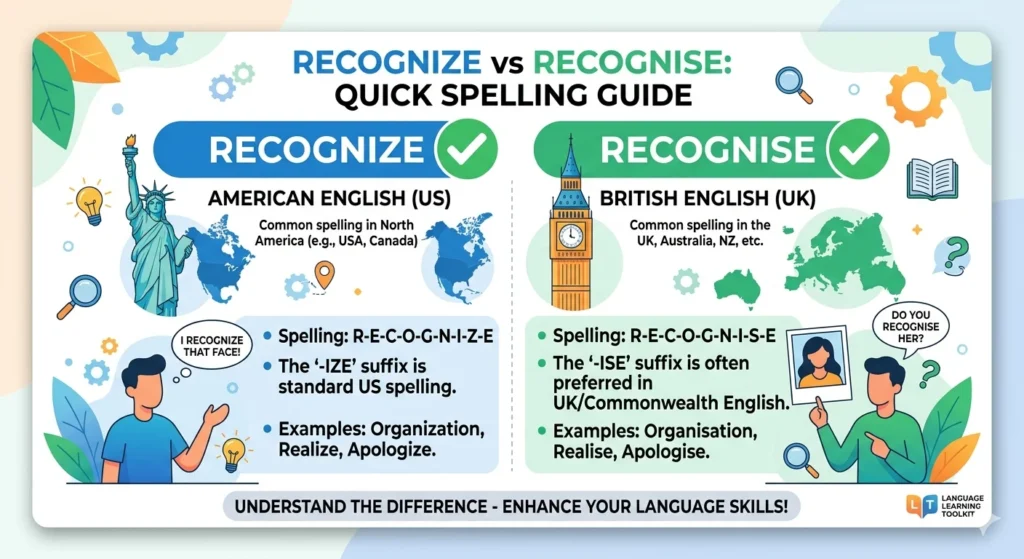
Recognize and recognise have the same meaning. “Recognize” is the preferred American English spelling, while “recognise” is commonly used in British English and many Commonwealth countries.
Examples
✅ I recognize your voice. (American English)
✅ I recognise your voice. (British English)
✅ The company recognized her achievements.
✅ The company recognised her achievements.
Both sentences are grammatically correct and have exactly the same meaning.
What Does It Mean?
Both words mean:
- To identify someone or something
- To acknowledge achievements
- To realize or understand something
- To officially accept something
More Examples
- I recognize that logo from television.
- I recognise that logo from television.
- She recognized the mistake immediately.
- She recognised the mistake immediately.
The meaning never changes. Only the spelling does.
The Origin of Recognize vs Recognise
The history of recognize vs recognise goes back hundreds of years.
The word comes from the Latin term recognoscere, meaning “to know again” or “identify.” It later entered Old French before becoming part of English vocabulary.
Many people believe that the -ize ending is purely American, but that is not true. Historically, -ize existed in British English long before modern American English developed.
Over time, British publishers adopted different style preferences. Some continued using -ize, while others switched to -ise. This created the spelling variation we see today.
Why Do Both Spellings Exist?
The main reason is publishing tradition.
- American English standardized recognize
- Many British publishers standardized recognise
- Oxford style continued preferring recognize
Because of these different traditions, both spellings remain accepted today.
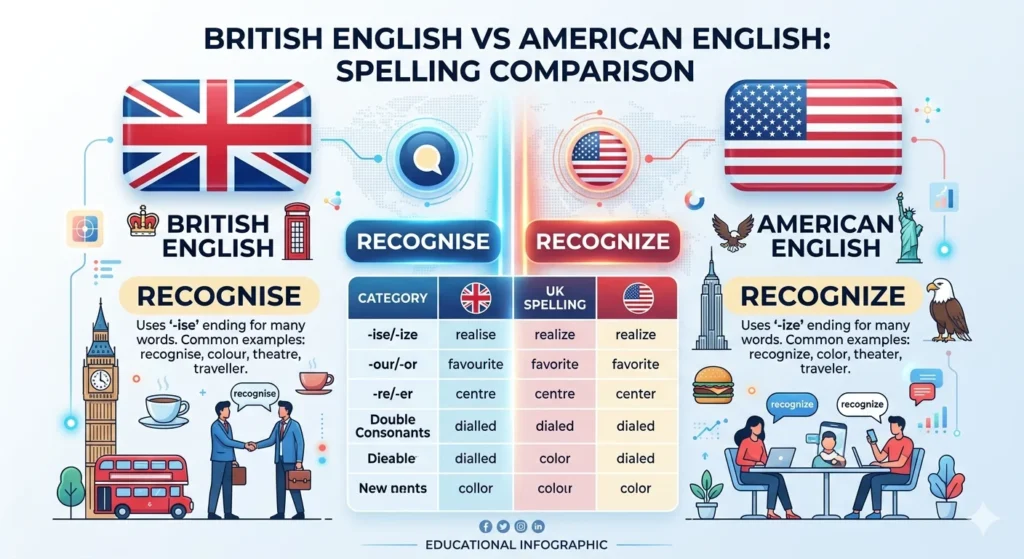
British English vs American English Spelling
The debate around recognize vs recognise grammar is actually a spelling issue rather than a grammar issue.
Comparison Table
| Feature | Recognize | Recognise |
|---|---|---|
| Meaning | Same | Same |
| Pronunciation | Same | Same |
| Grammar | Same | Same |
| American English | Preferred | Rare |
| British English | Accepted | Common |
| Oxford Style | Preferred | Accepted |
| Formal Writing | Correct | Correct |
Similar Spelling Differences
| American English | British English |
|---|---|
| Recognize | Recognise |
| Organize | Organise |
| Realize | Realise |
| Apologize | Apologise |
| Customize | Customise |
Does the UK Use Z or S?
A common question is:
Does the UK use Z or S?
The answer is both.
Many British newspapers and publishers prefer -ise, while Oxford publications often use -ize. Therefore, both spellings can be found in the United Kingdom.
Which Spelling Should You Use?
Choosing between recognize and recognise depends on your audience.
For American Readers
Use recognize.
Examples:
- US businesses
- American universities
- US publications
- American websites
For British Readers
Use the style guide preferred by your organization.
Many UK publishers use recognise, while Oxford style prefers recognize.
For Commonwealth Countries
Countries such as:
- Australia
- New Zealand
- South Africa
- India
often use recognise more frequently.
For Global Audiences
Either spelling works.
The most important rule is consistency.
Expert Writing Tip
Professional editors recommend following a single style guide throughout a document. Mixing recognize and recognise in the same article can make writing look inconsistent and less professional.
Final Recommendation
- US audience → Recognize
- UK audience → Recognise or Recognize
- Oxford style → Recognize
- Global audience → Choose one style and stay consistent
Common Mistakes with Recognize vs Recognise
Many writers make avoidable mistakes.
Mistake #1: Mixing Both Spellings
❌ We recognise the issue and recognize the solution.
✅ We recognise the issue and recognise the solution.
✅ We recognize the issue and recognize the solution.
Mistake #2: Thinking One Is Wrong
❌ Recognise is incorrect.
✅ Recognise is a valid British spelling.
Mistake #3: Confusing Grammar
❌ Recognize vs recognise grammar is different.
✅ The grammar is exactly the same.
Mistake #4: Using Different Styles in One Document
Switching between spellings makes writing look inconsistent.
Choose one spelling and use it throughout:
- Articles
- Emails
- Reports
- Academic papers
Mistake #5: Assuming Different Meanings
Both words have exactly the same definition.
The spelling changes, but the meaning remains identical.
Recognize vs Recognise Meaning Explained
Many users search for recognize vs recognise meaning because they think the words have different definitions.
They do not.
Recognize Meaning
To identify, acknowledge, realize, or accept.
Recognise Meaning
Exactly the same meaning.
Examples
- I recognize her face.
- I recognise her face.
- They recognized the danger.
- They recognised the danger.
- We recognize the importance of education.
- We recognise the importance of education.
The meaning never changes regardless of spelling.
Recognize vs Recognise in Everyday Examples
Understanding real-life usage makes the difference easier to remember.
In Emails
American English:
We would like to recognize your contribution to the project.
British English:
We would like to recognise your contribution to the project.
In News Reports
US Style:
Officials recognized the athlete’s achievement.
UK Style:
Officials recognised the athlete’s achievement.
On Social Media
- I recognize that trend.
- I recognise that trend.
Both are correct.
In Academic Writing
Universities usually follow a specific style guide.
American institutions generally prefer recognize, while many UK institutions prefer recognise.
In Business Communication
Use whichever spelling matches your company’s writing style guide.
Recognise or Recognize Pronunciation
A common question is:
Recognise or recognize pronunciation — is it different?
No.
The pronunciation is identical.
Pronunciation
REK-ug-nize
Whether you write recognize or recognise, the spoken word sounds exactly the same.
Important Fact
The spelling changes.
The pronunciation does not.
Recognize vs Recognise Oxford Dictionary
Many people search for:
- Recognize vs recognise Oxford Dictionary
- Recognise or recognize Oxford English Dictionary
This is because Oxford follows a unique spelling preference.
Oxford Dictionary Preference
The Oxford English Dictionary traditionally prefers:
✅ recognize
instead of:
✅ recognise
Why Does Oxford Prefer -ize?
The -ize ending has historical roots in Greek and Latin. Oxford believes this spelling more closely reflects the word’s origin.
Does Oxford Accept Recognise?
Yes.
Oxford recognizes both spellings as correct, but generally recommends recognize as its preferred style.
Recognize vs Recognise Reddit Discussions
Searches for recognize vs recognise Reddit have increased because users often want real-world opinions.
Common Reddit discussions reveal:
American Users
Most prefer:
- recognize
because it is the standard American spelling.
British Users
Many prefer:
- recognise
because it is more familiar in British publishing.
General Consensus
Most Reddit users agree that:
- Both spellings are correct.
- Neither spelling is wrong.
- Audience matters more than spelling preference.
- Consistency is the most important rule.
Recognize vs Recognise – Google Trends & Usage Data
Google search patterns show interesting differences around the world.
Countries Where “Recognize” Is More Popular
- United States
- American-focused websites
- Many international SEO publications
Countries Where “Recognise” Is More Popular
- United Kingdom
- Australia
- New Zealand
- South Africa
Online Usage Trends
Because American English dominates much of the internet, recognize often appears more frequently in global search results.
Why People Search This Keyword
Common searches include:
- Which is correct, recognize or recognise?
- Is recognise spelled with S or Z?
- Does the UK use Z or S?
- Recognise meaning
- Recognize vs recognise grammar
- Recognise or recognize pronunciation
- Recognize vs recognise Oxford Dictionary
These searches show that most users want clarity on spelling rather than meaning.

Comparison Table: Recognize vs Recognise
| Factor | Recognize | Recognise |
|---|---|---|
| Meaning | Same | Same |
| Grammar | Same | Same |
| Pronunciation | Same | Same |
| American English | Standard | Rare |
| British English | Accepted | Common |
| Oxford Preference | Yes | No |
| Formal Writing | Correct | Correct |
| Informal Writing | Correct | Correct |
| SEO Impact | Audience Dependent | Audience Dependent |
People Also Ask
Why does Oxford use recognize instead of recognise?
Oxford prefers the historical -ize ending because it reflects the word’s Greek and Latin origins.
Can I use recognize in the UK?
Yes. Recognize is accepted in British English, especially in Oxford style.
Is recognise wrong in America?
It is not wrong, but it is uncommon. Most American readers expect recognize.
Which spelling should students use?
Students should follow the style guide required by their school, university, or publication.
Is recognize more common online?
Generally yes, because American English dominates much of online content.
Frequently Asked Questions
Which is correct, recognize or recognise?
Both are correct. The choice depends on whether you use American or British English.
Is recognise spelled with S or Z?
Recognise uses S, while recognize uses Z.
Does the UK use Z or S?
The UK uses both, depending on the publisher and style guide.
Is “recognise” just a British spelling?
Yes. Recognise is generally considered the British spelling.
What is the difference between recognize and recognise?
There is no difference in meaning, grammar, or pronunciation.
Which spelling does Oxford Dictionary prefer?
Oxford traditionally prefers recognize.
Is recognize used in Canada?
Canada uses both spellings, although recognize is often seen more frequently.
Is recognise accepted in academic writing?
Yes. Many British universities and publications accept recognise.
Which spelling is more common worldwide?
Recognize often appears more frequently because of the global influence of American English.
Can I switch between recognize and recognise?
No. Choose one spelling style and use it consistently.
Conclusion
The confusion between recognize vs recognise comes from regional spelling preferences rather than differences in meaning or grammar. Both spellings are correct, both are widely accepted, and both communicate exactly the same message. The only difference is where they are most commonly used.
If you write for an American audience, recognize is the preferred spelling and will look natural to readers. If your audience is British or based in many Commonwealth countries, recognise may be the more familiar choice. However, even within the United Kingdom, respected style guides such as Oxford often prefer recognize.
The best approach is to understand your audience and remain consistent throughout your writing. Avoid mixing both spellings in the same document, article, report, or email. Consistency improves professionalism, readability, and trust.
Whether you choose recognize or recognise, you can write confidently knowing that both spellings are correct. By understanding their history, Oxford preferences, grammar rules, pronunciation, usage trends, and audience expectations, you can always select the spelling that best fits your readers and writing goals.

Scott Thornbury is a respected English language educator and author, known for practical grammar insights, teacher training, and clear learner-focused explanations.