You are writing an email. You type: “Please secure the pipe in the vice.” Then you stop. Should it be vice or vise? You pause. You are not alone.
Every day, thousands of people search for “vice vs vise” because these two words sound identical but have different meanings depending on where you live and what you are talking about.
Here is the simple truth:
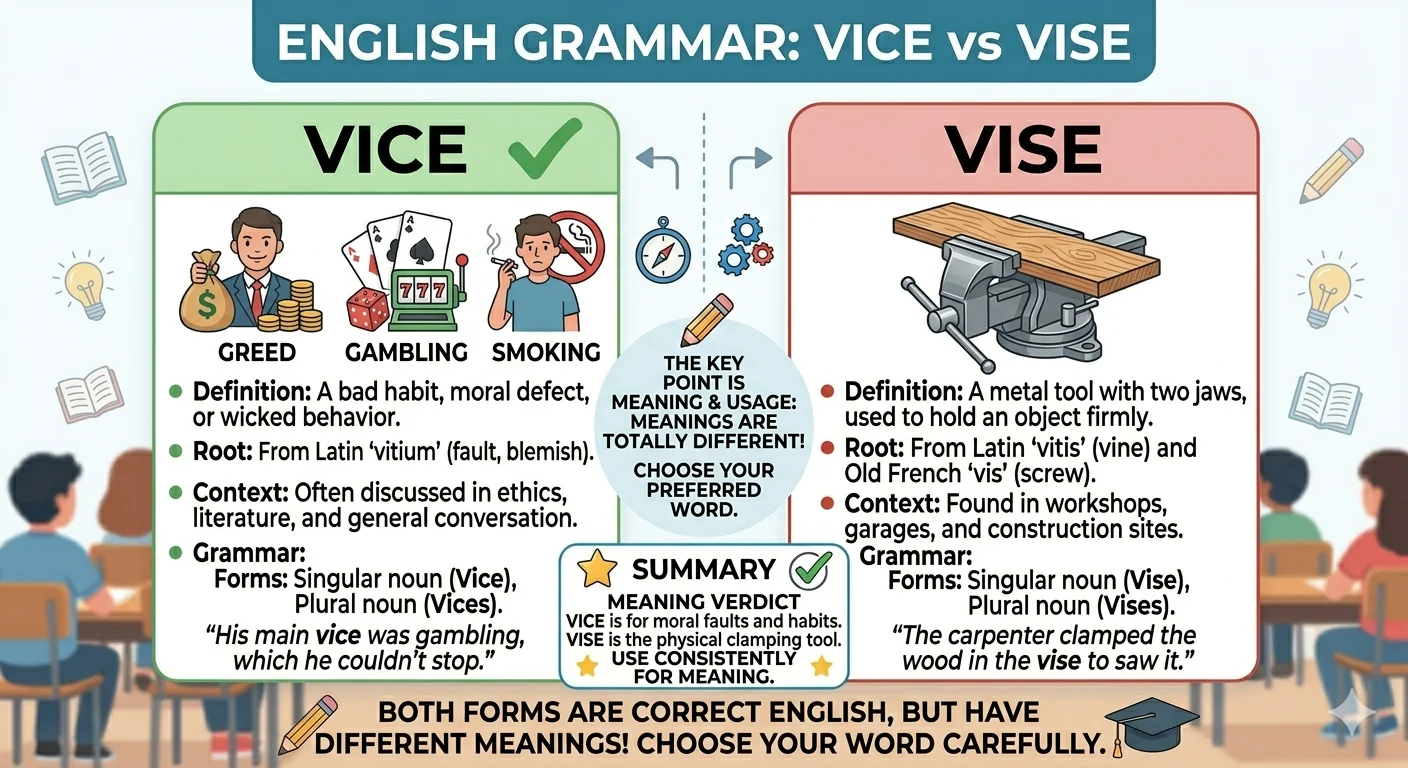
- Vice (with a C) = a bad habit, moral failing, or in British English, a workshop tool.
- Vise (with an S) = a clamping tool used in workshops (American English).
✅ Gambling is a vice.
✅ Tighten the pipe in the vise.
❌ Gambling is a vise.
❌ Tighten the pipe in the vice. (If writing for American audience)
In this guide, you will learn:
- ✅ The quick difference (30-second rule)
- ✅ American vs British spelling rules
- ✅ Real-world examples (emails, news, sports)
- ✅ Common mistakes to avoid
- ✅ How to choose the right spelling for your audience
By the end of this guide, you will never confuse vice and vise again — whether you are writing a thesis, a business report, or a simple email.
Let us begin.
Vice vs Vise
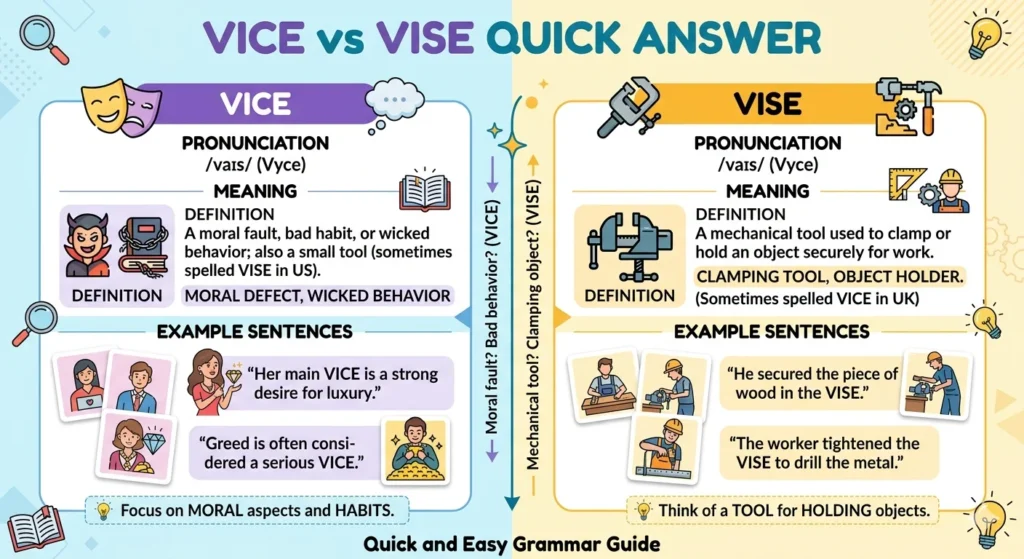
What is the difference between vice and vise?
The difference depends on the meaning and location.
| Word | Meaning | Used In |
|---|---|---|
| Vice | A bad habit, immoral behavior, or a metal-clamping tool (British English) | UK & Commonwealth |
| Vise | A metal-clamping tool used to hold objects firmly | American English |
Quick Examples
✅ His gambling became a serious vice.
✅ The mechanic tightened the pipe in a vise.
✅ The carpenter secured the wood in a vice. (British English)
Is it vise or vice UK?
In the UK, the tool is usually spelled vice.
Is the tool a vice or vise?
- Vice = British English
- Vise = American English
Is it like a vise or vice?
Both can be correct depending on your audience and country.
The Origin of Vice vs Vise
Understanding the history makes the spelling difference easier to remember.
Origin of Vice
The word vice comes from the Latin word vitium, meaning fault, defect, or moral failing. Over time, it entered Old French and then English, where it became associated with bad habits, immoral behavior, or wrongdoing.
Examples:
- Greed is a vice.
- Smoking was considered a vice.
- Gambling can become a harmful vice.
Origin of Vise
The tool spelling vise developed mainly in American English. It refers to a mechanical device used for gripping and holding materials firmly while work is performed on them.
Examples:
- Put the metal rod in the vise.
- Tighten the vise before cutting the pipe.
Why the Spelling Difference Exists
Like many English words, spelling changed over time as British and American English evolved separately. Americans adopted vise for the tool to distinguish it from the moral meaning of vice, while British English continued using vice for both meanings.

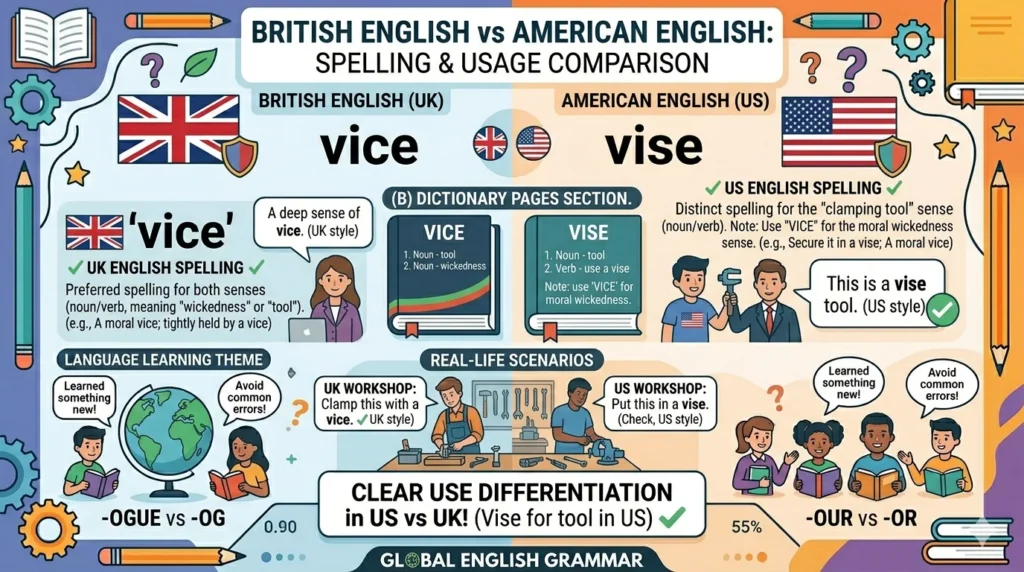
British English vs American English Spelling
The biggest source of confusion comes from regional spelling rules.
British English
British English generally uses vice for both meanings:
- Bad habit
- Clamping tool
Examples:
- Gambling is a dangerous vice.
- Secure the board in the vice.
American English
American English separates the meanings:
- Vice = immoral behavior
- Vise = clamping tool
Examples:
- Excessive drinking is a vice.
- Clamp the pipe in the vise.
Comparison Table
| Meaning | British English | American English |
|---|---|---|
| Bad habit | Vice | Vice |
| Moral failing | Vice | Vice |
| Workshop tool | Vice | Vise |
| Bench clamp | Vice | Vise |
| Mechanical gripping tool | Vice | Vise |
Other Similar Examples
| British English | American English |
|---|---|
| Defence | Defense |
| Practise | Practice |
| Licence | License |
| Vice (tool) | Vise |
Which Spelling Should You Use?
The correct spelling depends on your audience.
For American Readers
Use vise when referring to the tool.
Examples:
- Bench vise
- Woodworking vise
- Pipe vise
For British Readers
Use vice for both meanings.
Examples:
- Engineer’s vice
- Machine vice
- Dangerous vice
For Global Audiences
If your audience is international:
- Use vice for moral behavior.
- Use the spelling most familiar to your readers for the tool.
- Many global companies follow American spelling and use vise.
Professional Advice
If you are writing:
| Audience | Recommended Spelling |
|---|---|
| United States | Vise |
| Canada | Usually Vise |
| United Kingdom | Vice |
| Australia | Vice |
| New Zealand | Vice |
| International Business | Usually Vise |
Common Mistakes with Vice vs Vise
Many people confuse these words because they sound identical.
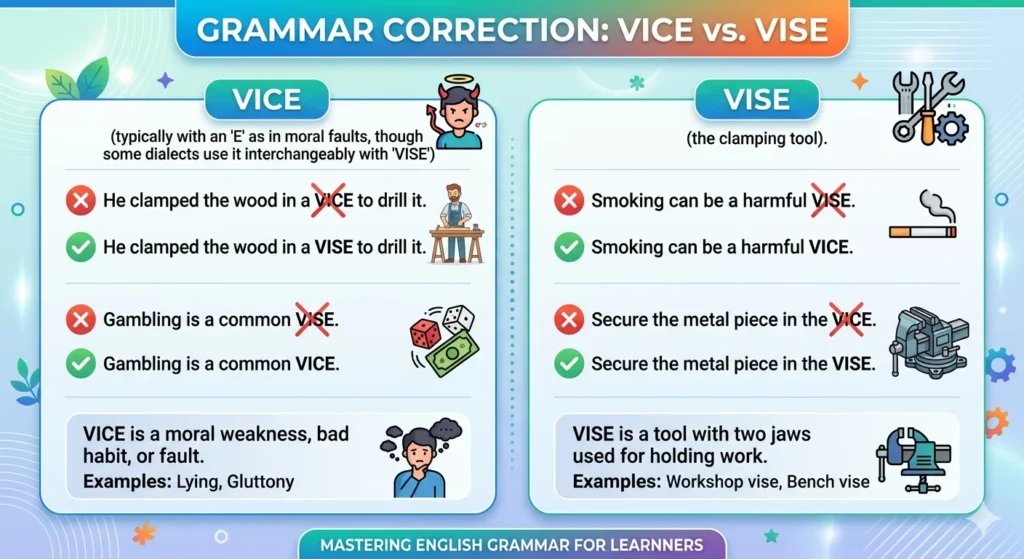
Mistake #1
❌ Clamp the board in the vice. (American audience)
✅ Clamp the board in the vise.
Mistake #2
❌ Gambling is a vise.
✅ Gambling is a vice.
Mistake #3
❌ My biggest vise is procrastination.
✅ My biggest vice is procrastination.
Mistake #4
❌ The mechanic adjusted the vice. (American manual)
✅ The mechanic adjusted the vise.
Mistake #5
❌ Vice or vice grip? (American tool context)
✅ Vise grip.
Vice vs Vise in Everyday Examples
In Emails
American English
Please secure the component in the vise before drilling.
British English
Please secure the component in the vice before drilling.
In News Articles
Authorities warned that illegal gambling remains a harmful vice.
On Social Media
Coffee is my only vice.
This vise saved my woodworking project today.
In Business Writing
The machine includes a heavy-duty vise for precision work.
In Academic Writing
Researchers examined how social vice affects communities.
In Technical Manuals
Lock the material firmly in the vise before operation.
Vice vs Vise Meaning
Here is the simplest definition:
Vice Meaning
A vice is:
- A bad habit
- An immoral practice
- A weakness in character
Examples:
- Laziness is a vice.
- Greed is a vice.
- Excessive gambling is a vice.
Vise Meaning
A vise is:
- A tool used to hold objects tightly
- Common in workshops and manufacturing
Examples:
- The vise held the pipe firmly.
- He installed a new bench vise.
Vice vs Virtue
People often compare vice vs virtue.
| Vice | Virtue |
|---|---|
| Bad behavior | Good behavior |
| Moral weakness | Moral strength |
| Harmful habit | Positive quality |
| Greed | Generosity |
| Dishonesty | Honesty |
Examples:
- Patience is a virtue.
- Greed is a vice.
A simple way to remember:
Vice hurts; virtue helps.
Vise or Vice Grip
Many people search for vise or vice grip.
The answer depends on location.
American English
Vise-Grip is the common spelling.
Examples:
- Locking vise grip pliers
- Adjustable vise grip
British English
You may sometimes see vice grip, but vise grip is more common because of product branding and international usage.
Vise or Vice Versa
This is another common confusion.
Vice Versa Meaning
Vice versa means “the other way around.”
Examples:
- Parents influence children and vice versa.
- Teachers learn from students and vice versa.
Important
❌ Vise versa
✅ Vice versa
The phrase always uses vice, never vise.
Number Wise or Vise
Some users mistakenly search for number vise.
The correct phrase is:
✅ Number-wise
Examples:
- Number-wise, sales increased.
- Budget-wise, the project was successful.
The word vise has no connection to this phrase.
Vise Person Meaning
There is no standard English expression called vise person.
People usually mean one of these:
Vice President
A leadership position in government or business.
Person with a Vice
Someone who has a bad habit or weakness.
Examples:
- He struggles with the vice of gambling.
- She overcame her vice and improved her life.
Vice vs Vise Synonym
Synonyms of Vice
- Fault
- Weakness
- Immorality
- Corruption
- Bad habit
- Wrongdoing
Synonyms of Vise
- Clamp
- Holder
- Grip
- Fastener
- Locking device
Vice vs Vise Examples
Vice Examples
- Smoking can become a vice.
- Greed is often considered a vice.
- Gambling is a costly vice.
- Dishonesty is a serious vice.
- Addiction may start as a vice.
Vise Examples
- Place the pipe in the vise.
- The vise held the metal securely.
- He tightened the vise before cutting.
- A bench vise is useful for repairs.
- The mechanic replaced the old vise.
Vice vs Vise – Google Trends & Usage Data
Search behavior shows clear patterns around the world.
Countries Where “Vice” Is More Common
- United Kingdom
- Australia
- New Zealand
- Ireland
These regions generally follow British spelling conventions.
Countries Where “Vise” Is More Common
- United States
- Many American-based industries
- Technical and manufacturing sectors
Popular Search Queries
People frequently search:
- What is the difference between vice and vise?
- Is it vise or vice UK?
- Is the tool a vice or vise?
- Vice vs vise meaning
- Vice vs vise examples
- Vice vs virtue
- Vise or vice grip
- Vise or vice versa
The popularity of these searches shows that users want both a quick answer and a deeper explanation of spelling differences.
Vice vs Vise Comparison Table
| Feature | Vice | Vise |
|---|---|---|
| Pronunciation | Same | Same |
| Moral meaning | Yes | No |
| Bad habit meaning | Yes | No |
| Tool meaning in UK | Yes | No |
| Tool meaning in US | Rare | Yes |
| British English | Common | Rare |
| American English | Moral meaning only | Tool meaning |
| Example | Gambling is a vice | Tighten the vise |
❓ Frequently Asked Questions
1. What is the difference between vice and vise?
Vice refers to a bad habit or moral failing, while vise is the American English spelling for a clamping tool. In British English, vice is used for both meanings.
2. Is it vise or vice in the UK?
In British English, the tool is generally spelled vice.
3. Is the tool called a vice or vise?
Both are correct. Americans use vise, while British speakers usually use vice for the tool.
4. Is vice versa spelled with vice or vise?
The correct phrase is vice versa. Always with a C.
5. Can vice mean a tool?
Yes. In British English, vice can refer to a workshop clamping tool.
6. Is gambling a vice or a vise?
Gambling is a vice because it refers to a bad habit.
7. What is a vise used for?
A vise is used to hold materials securely during cutting, drilling, shaping, or repair work.
8. Is it vice grip or vise grip?
In American English, it is Vise-Grip. In British English, you may see vice grip, but vise grip is more common globally.
Conclusion
The difference between vice vs vise is simple once you understand the context. Vice is always the correct spelling when referring to a bad habit, moral weakness, or wrongdoing. Examples include greed, gambling, dishonesty, and addiction. However, when talking about a workshop tool, the spelling depends on your audience. British English uses vice, while American English uses vise.
This distinction explains why many people become confused when reading technical manuals, news articles, online forums, and international content. If your audience is American, use vise for the clamping tool. If your audience is British or from most Commonwealth countries, use vice. For moral behavior, always use vice regardless of location.
Remember this simple rule: Vice relates to bad behavior, while vise usually refers to a tool in American English. Following this guideline will help you write clearly, avoid spelling mistakes, and communicate effectively with readers worldwide.

David Crystal is a renowned English linguist and author, known for making English grammar, linguistics, and language history clear and engaging.