Many English learners find it confusing to understand the difference between “so” and “such” because both are used to give emphasis in sentences. However, they follow different grammar structures.
This confusion appears in common searches such as so vs such grammar, so vs such sentences, so vs such worksheet, so and such exercises PDF, and Wordwall practice activities.
The main reason for confusion is that both words show intensity, but they are used differently. For example, we say “so beautiful”, but we say “such a beautiful girl.” One works with adjectives or adverbs, while the other works with nouns.
This guide explains the rule, usage, examples, practice exercises, common mistakes, and exam-level understanding in a simple and clear way.
So vs Such
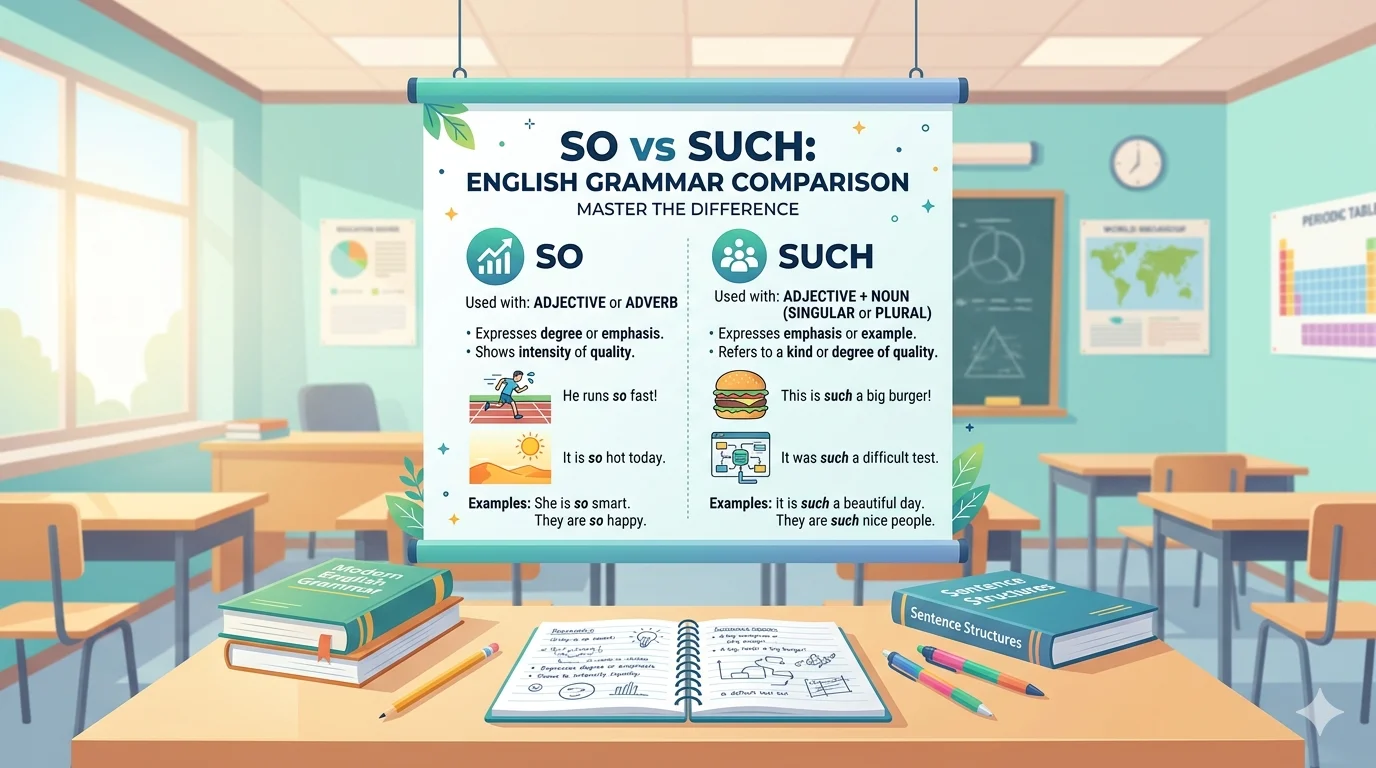
So is used before adjectives or adverbs to show intensity.
Such is used before nouns or noun phrases to describe type or category.
Examples:
- She is so intelligent.
- He runs so fast.
- It is such a beautiful place.
- They are such kind people.
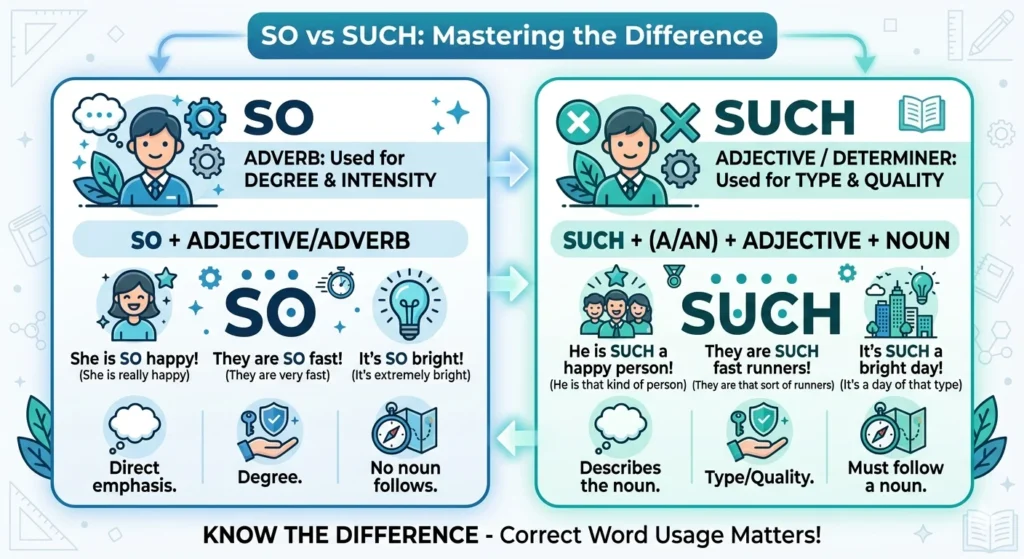
Grammar Rules of So vs Such
So + Adjective / Adverb
Examples:
- He is so tired.
- She speaks so quickly.
This structure is used to express degree or intensity.
Such + (a/an) + Adjective + Noun
Examples:
- It is such a nice day.
- They are such intelligent students.
This structure is used to describe a type or category.
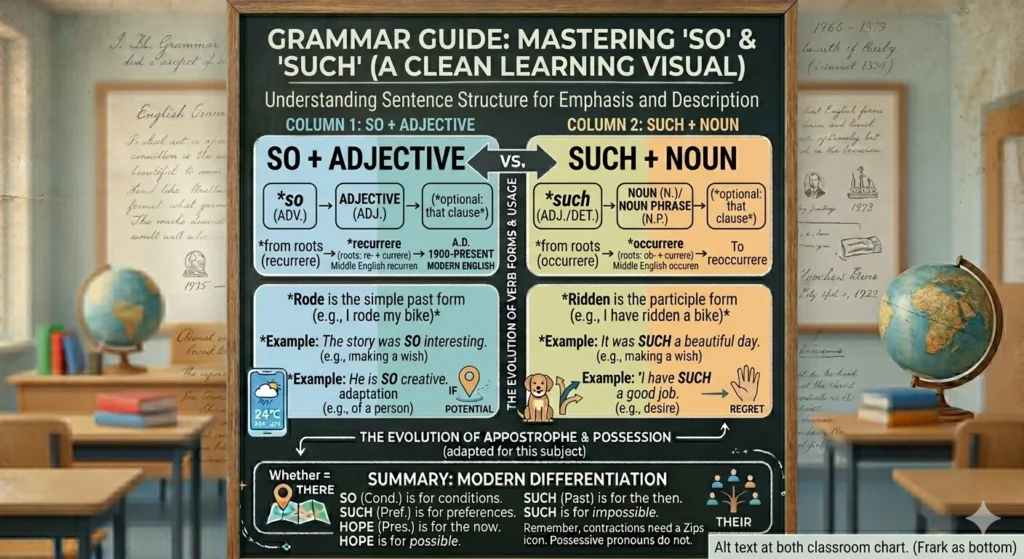
So vs Such with “That Clause”
Examples:
- She was so tired that she fell asleep immediately.
- It was such a hot day that we stayed indoors.
This structure shows result or consequence.
Practice
Fill in the blanks:
- She is ___ honest girl.
- It was ___ cold night.
- He runs ___ fast.
- They are ___ kind people.
Answers:
- such an
- such a
- so
- such
Interactive Learning
Students often use interactive grammar activities where they choose between so and such to complete sentences. These exercises help improve understanding through practice and repetition.
Example:
- She is ___ a nice teacher → such
Exam Practice
Common practice tasks include:
- Fill in the blanks
- Sentence correction
- Rewriting sentences
Example:
- It is a very beautiful house → It is such a beautiful house
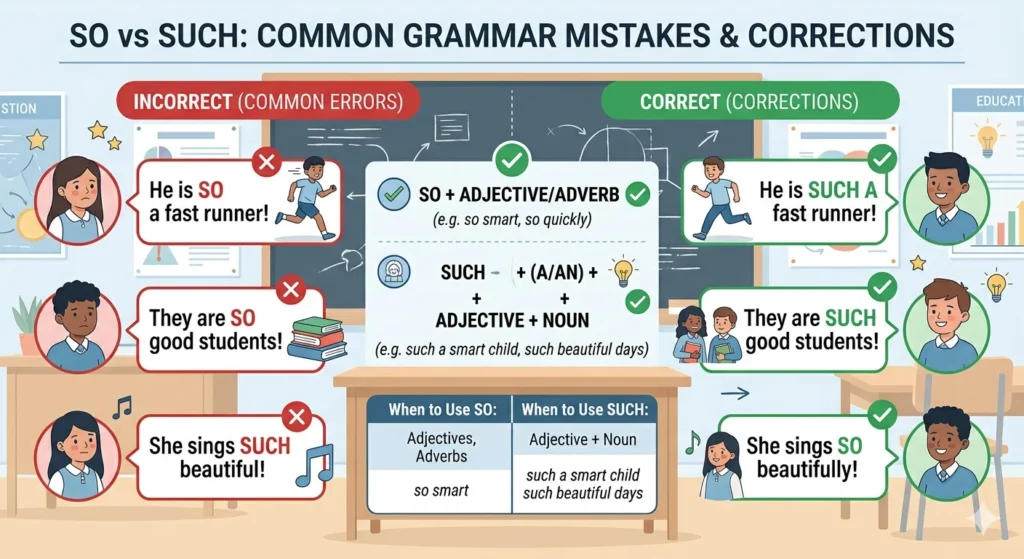
Common Mistakes
Incorrect:
- She is such beautiful.
- He is so a good boy.
- It is so a big house.
Correct:
- She is so beautiful.
- He is such a good boy.
- It is such a big house.
Common errors include wrong structure order and missing “a/an” after such.
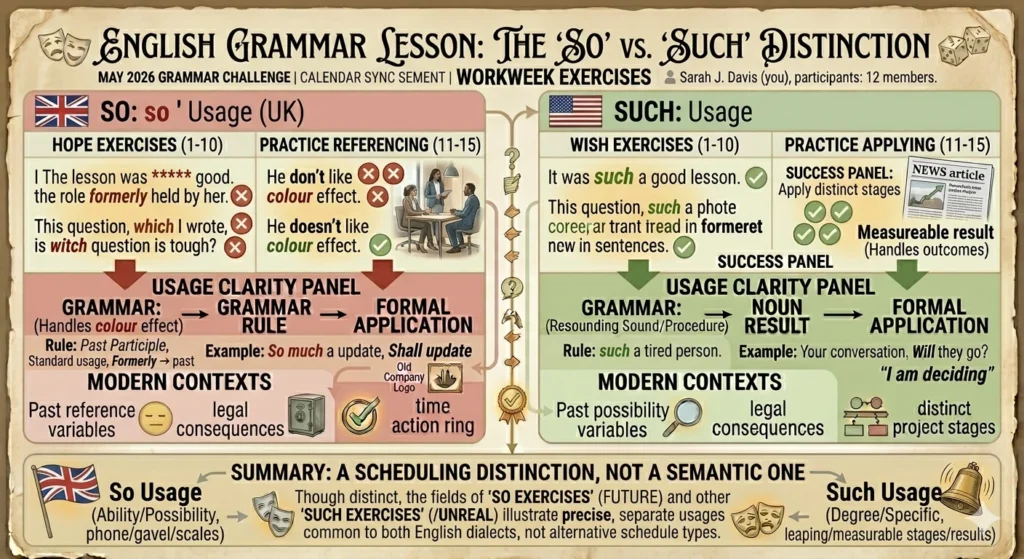
Advanced Understanding
So and such are both intensifiers, but they work differently:
- so = used with adjectives/adverbs
- such = used with noun phrases
Examples:
- so tired
- such a tired person
Real Life Usage
Email:
- We are so happy to inform you.
- This is such an important update.
Social Media:
- This cake is so delicious.
- It is such a beautiful day.
Academic Writing:
- This is such a significant finding.
- The results are so important.
Comparison Table
| Feature | So | Such |
|---|---|---|
| Usage | adjective/adverb | noun phrase |
| Structure | so + adj | such + noun |
| Example | so fast | such a fast car |
| Meaning | intensity | type/category |
FAQs
What is the rule for so or such?
So is used with adjectives or adverbs, while such is used with nouns.
Can we use so with nouns?
No, use such instead.
Why do learners confuse them?
Because both express intensity but follow different grammar patterns.
What is so that vs such that?
So that shows purpose, while such that shows result or condition.
Conclusion
The difference between so and such is simple once the rule is understood. So is used with adjectives and adverbs, while such is used with nouns or noun phrases.
Many learners make mistakes at first, but with practice using exercises and real examples, it becomes easy to use correctly.
This guide provides a complete understanding of the topic with rules, examples, and practice to help improve English grammar skills in both writing and speaking.

Scott Thornbury is a respected English language educator and author, known for practical grammar insights, teacher training, and clear learner-focused explanations.