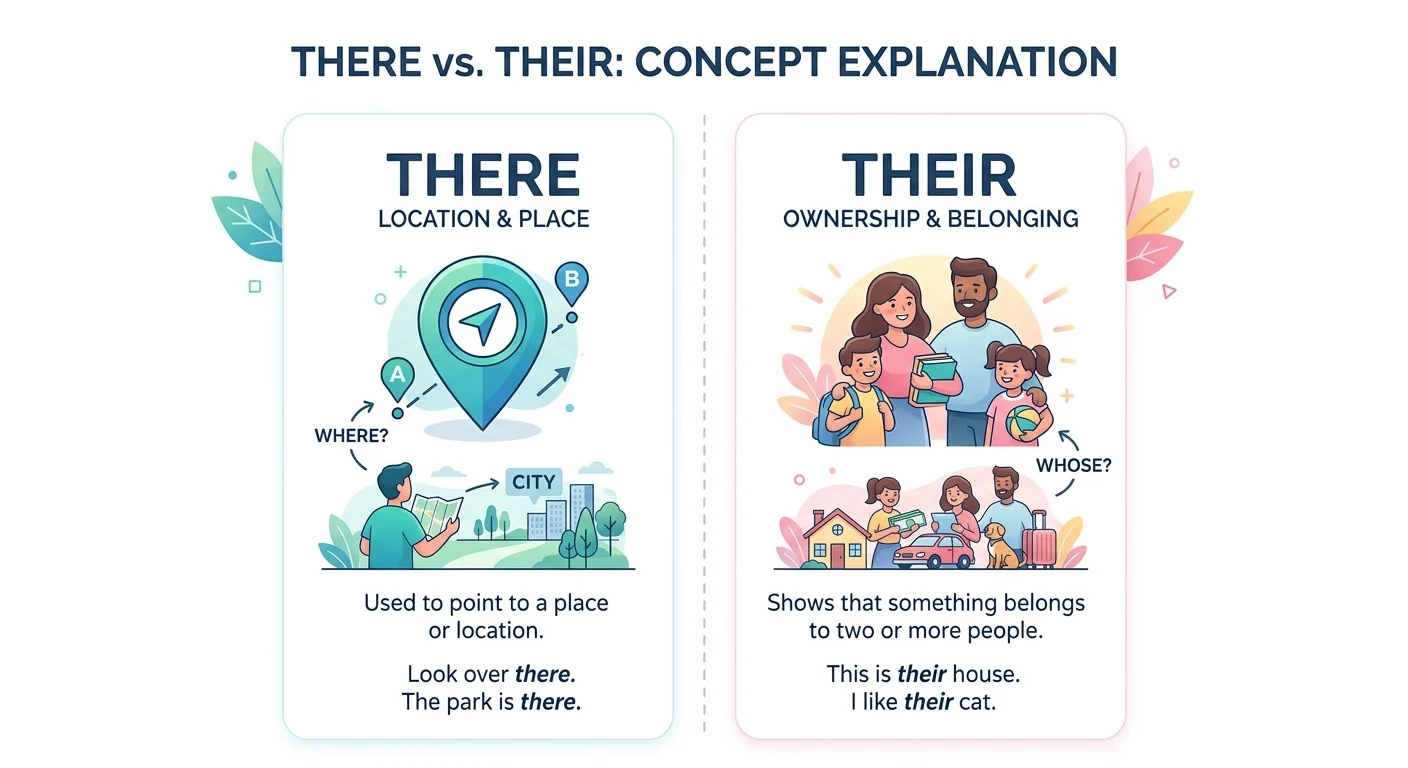
There vs their is one of the most confusing topics in English grammar. Many people feel unsure when using these words in writing.
For example, you may write “their is a problem” instead of “there is a problem.” This small mistake can make your sentence look incorrect and unclear.
The reason for this confusion is simple. Both words sound the same, but they have different meanings and uses. Because of this, students, bloggers, and writers often search for there vs their sentences, difference between there and their examples, and when to use there or their.
In this guide, you will learn everything in a clear and simple way. You will see meanings, grammar rules, examples, and easy tricks.
By the end, you will understand exactly when to use there and when to use their without any confusion.
There vs Their
👉 There refers to a place or shows that something exists.
👉 Their shows ownership or possession.
Examples:
- There is a book on the table.
- Their book is on the table.
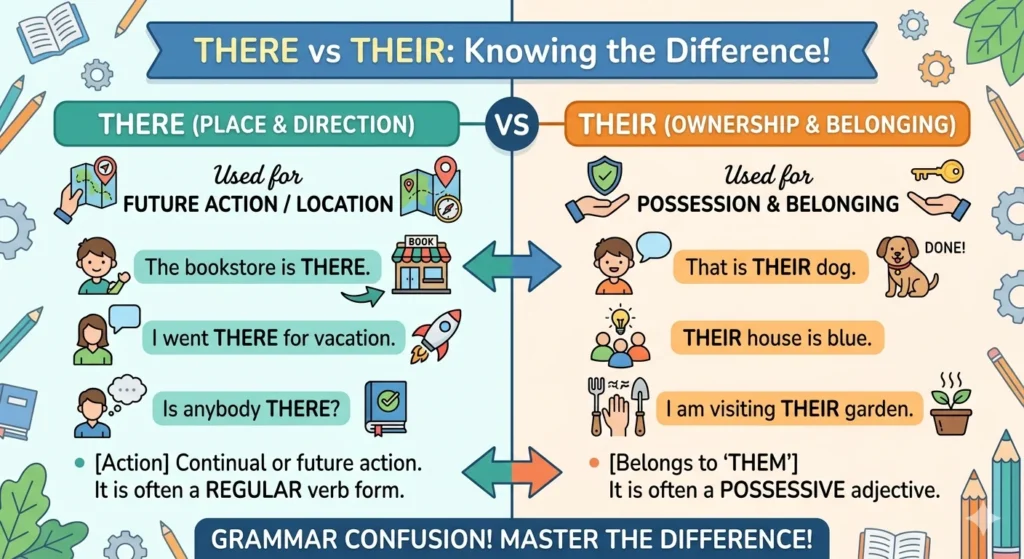
Quick Definition
- There = place, position, or existence
- Their = belonging to them
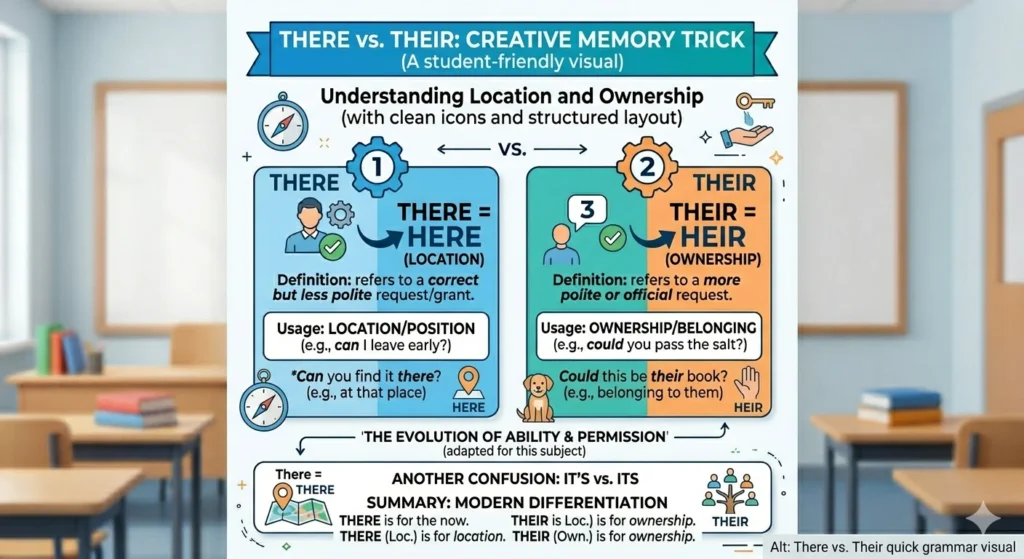
Easy Trick to Remember There vs Their
A simple trick can help you remember:
- There → contains “here” → place
- Their → contains “heir” → ownership
Examples:
- Put the bag over there.
- It is their house.
This trick makes choosing the correct word much easier.
Master Comparison Table
| Feature | There | Their |
|---|---|---|
| Meaning | Place or existence | Ownership |
| Grammar Type | Adverb | Possessive adjective |
| Use | Shows location | Shows belonging |
| Example | There is a car | Their car is new |
The Origin of There vs Their
These words come from different languages.
- There comes from Old English and means in that place.
- Their comes from Old Norse and means belonging to them.
This difference explains why their meanings are not the same.
British English vs American English Spelling
There is no difference between British and American English for these words.
Both use:
- There
- Their
👉 The spelling is the same everywhere.
Could vs Can: The Grammar Difference Explained
Which Spelling Should You Use?
Use There when:
- You talk about a place
- You show something exists
Examples:
- There is a park near my house.
- Sit there.
Use Their when:
- You show ownership
Examples:
- Their house is very big.
- Their ideas are helpful.
👉 If you are talking about a person’s belongings, use their.
Rule Summary
👉 There = place or existence
👉 Their = ownership
👉 Ask yourself: place or ownership?
Common Mistakes with There vs Their
❌ Their is a problem.
✔️ There is a problem.
❌ There car is very fast.
✔️ Their car is very fast.
❌ Is it there house?
✔️ Is it their house?
👉 Correct usage:
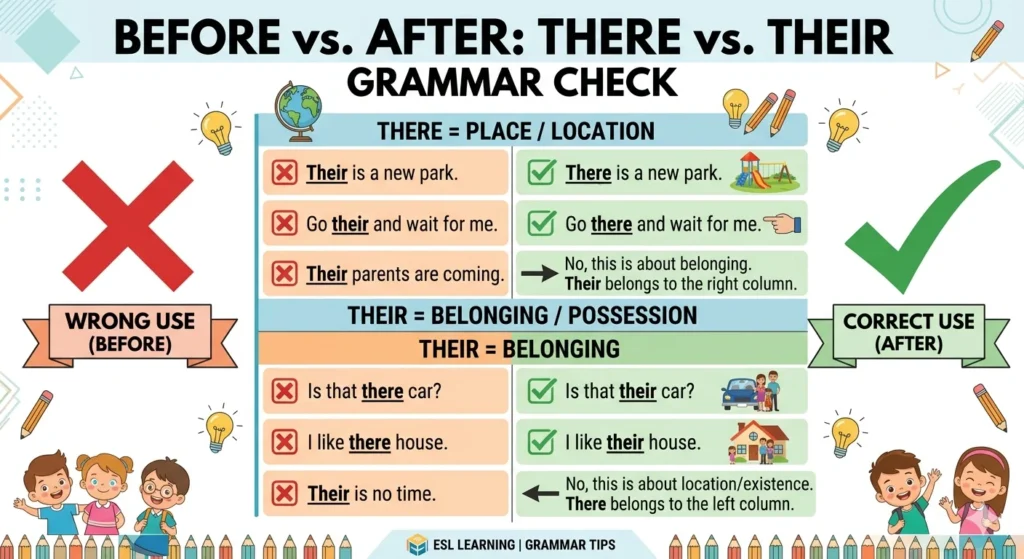
- Their house
- Their kid
There vs Their in Everyday Examples
Emails:
- There is an issue with your order.
- Their request has been approved.
Social Media:
- There are many people here.
- I like their posts.
News:
- There was heavy rain last night.
- The team won their match.
Formal Writing:
- There is strong evidence to support this idea.
- The company improved their performance.
👉 Using correct grammar makes your writing clear and professional.
There vs Their Sentences
Basic Examples:
- There is a dog outside.
- Their dog is very friendly.
Advanced Examples:
- There are many students who forgot their books.
- There is a house, and their car is parked outside.
These examples show real usage.
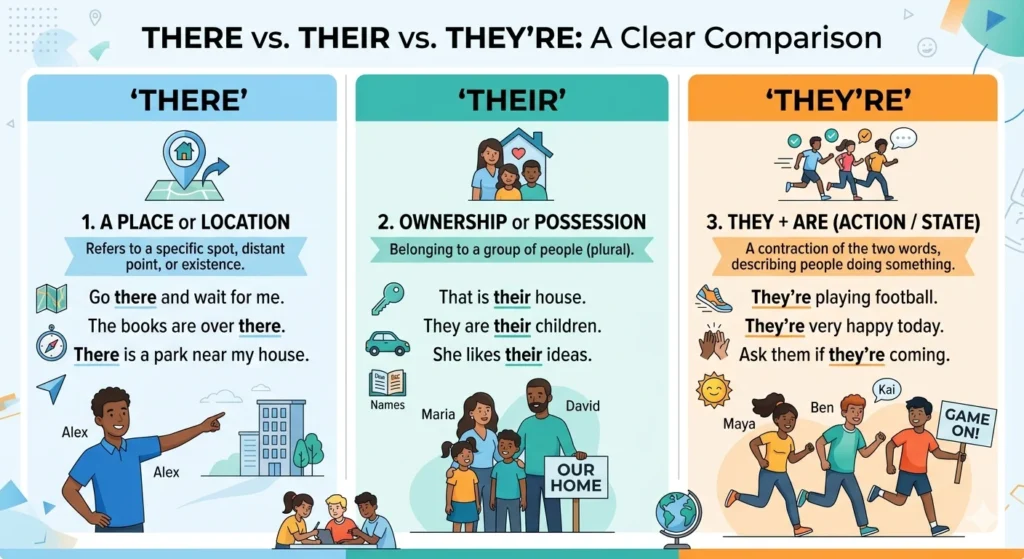
There, Their, They’re Examples
| Word | Meaning |
|---|---|
| There | Place |
| Their | Ownership |
| They’re | They are |
Examples:
- There is a shop nearby.
- Their shop is very popular.
- They’re opening a new shop.
There vs Their Pronunciation
Both words are pronounced the same:
👉 /ðɛər/
That is why confusion happens in writing.
There vs Their Grammar Rules
There:
- Used as an adverb
- Used in “there is” or “there are”
Example:
- There are many students in the class.
Their:
- Possessive adjective
- Used before a noun
Example:
- Their house is clean.
Correct grammar is important in writing.
Difference Between There and Their Examples
| Use Case | There | Their |
|---|---|---|
| Place | There is a park | ❌ |
| Ownership | ❌ | Their park |
| Sentence start | There are people | ❌ |
| Possession | ❌ | Their ideas |
When to Use There
Use there:
- For location
- To show existence
Examples:
- There is a book on the table.
- Put your bag there.
When Should You Use There or Their?
Ask one simple question:
👉 Are you talking about a place or ownership?
- Place → There
- Ownership → Their
Quick Quiz
Fill in the blanks:
- ___ is my book.
- ___ are many people here.
- ___ car is parked outside.
Answers:
- Their
- There
- Their
There vs Their – Google Trends & Usage Data
The keyword there vs their is widely searched across the world. It has steady monthly search volume and remains important for students and writers.
It is popular in:
- USA
- UK
- Pakistan
- India
People search this topic because:
- It is a common grammar mistake
- It appears in school and exams
- It improves writing skills
👉 This makes it an evergreen and high-value grammar topic.
FAQs
1. What are there and their examples of?
They are homophones.
2. When to use there?
Use it for place or existence.
3. When should you use there or their?
Use there for place and their for ownership.
4. Is it “there” or “their” house?
✔️ Their house
5. Is it their kid or there kid?
✔️ Their kid
6. Why are there and their confusing?
Because they sound the same but have different meanings.
7. Do there and their have the same pronunciation?
Yes, both are pronounced the same.
Conclusion
The difference between there vs their is simple but important. These words sound the same, but their meanings are very different.
There is used for place or to show that something exists.
Their is used to show ownership.
Many people make mistakes, but you can avoid them with one simple rule:
👉 Place = there | Ownership = their
We also covered examples, grammar rules, and real-life usage. These will help you write clearly and correctly.
Next time you write, pause and ask yourself:
👉 Is this about place or ownership?
This simple habit will improve your writing and confidence.

David Crystal is a renowned English linguist and author, known for making English grammar, linguistics, and language history clear and engaging.