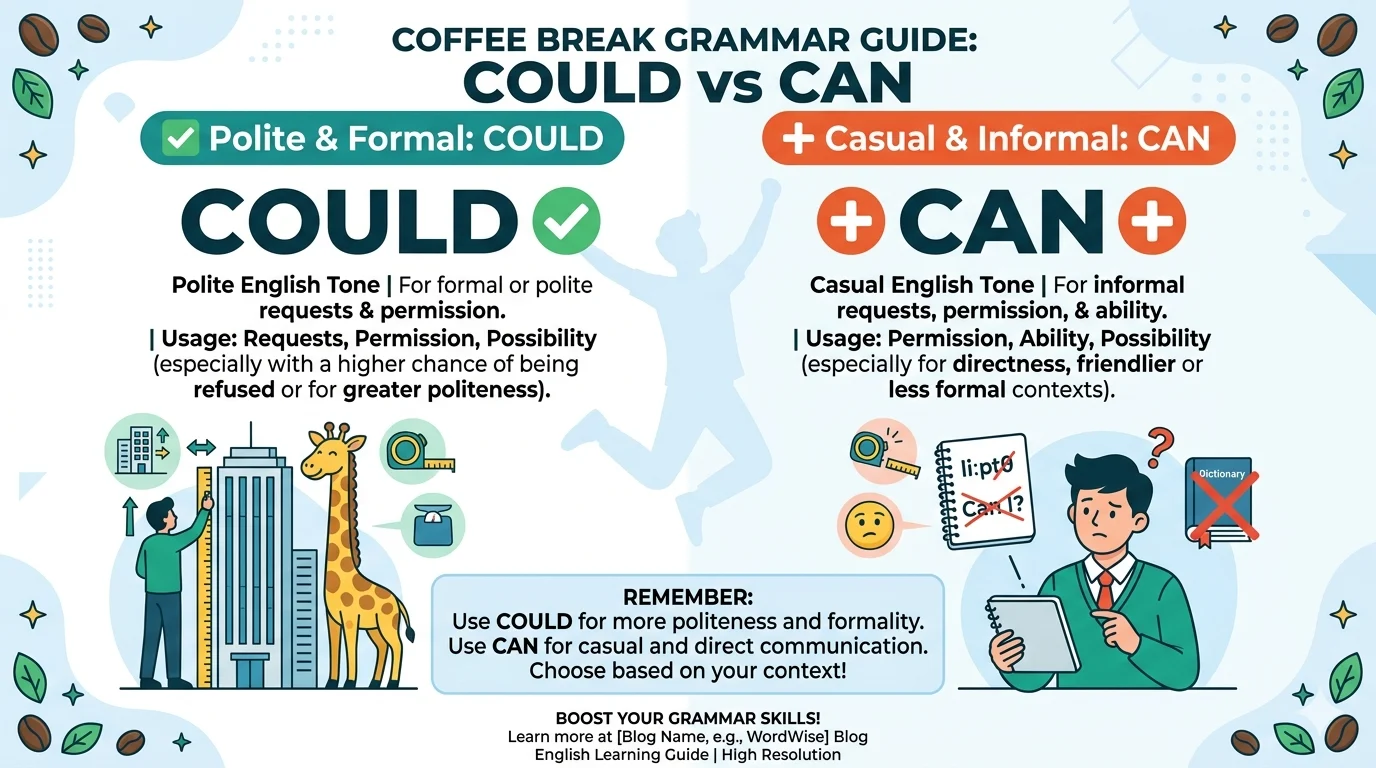
“Could vs can” is one of the most common grammar questions in English. Many learners get confused because both words look similar and are used in similar situations. But in real communication, they have different meanings based on time, tone, and situation.
People search for “could vs can” to improve their English for daily speaking, exams, emails, and professional writing. For example, should you say “Can I talk?” or “Could I talk?” Both are correct, but could sounds more polite. This small difference can change how others see your communication skills.
According to standard grammar references like Oxford and Cambridge, modal verbs such as can and could express ability, permission, and possibility. This guide will explain when to use can and could with examples, including rules, questions, and real-life usage.
By the end, you will clearly understand could vs can rules, polite English usage, and how to use both words confidently.
Could vs Can
What is the difference between can and could?
- Can = present ability, permission, strong possibility
- Could = past ability, polite request, weak possibility
✅ Examples:
- I can swim
- I could swim when I was young
- Can I talk?
- Could I talk?
👉 Simple rule:
Use can for present. Use could for past or polite tone.
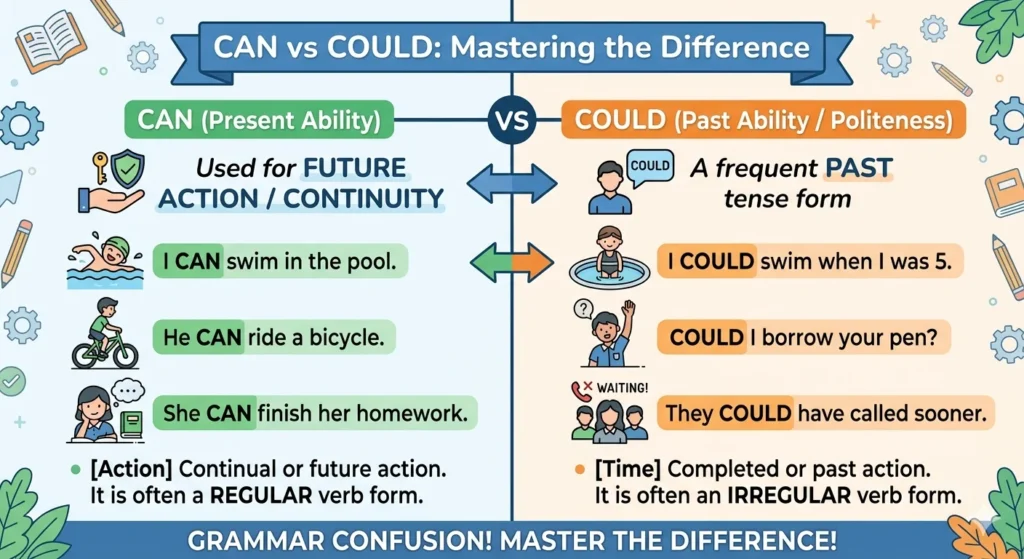
Can vs Could
- Can = present + casual tone
- Could = past + polite tone
- Can = strong possibility
- Could = weak possibility
👉 This quick summary helps you remember the difference easily.
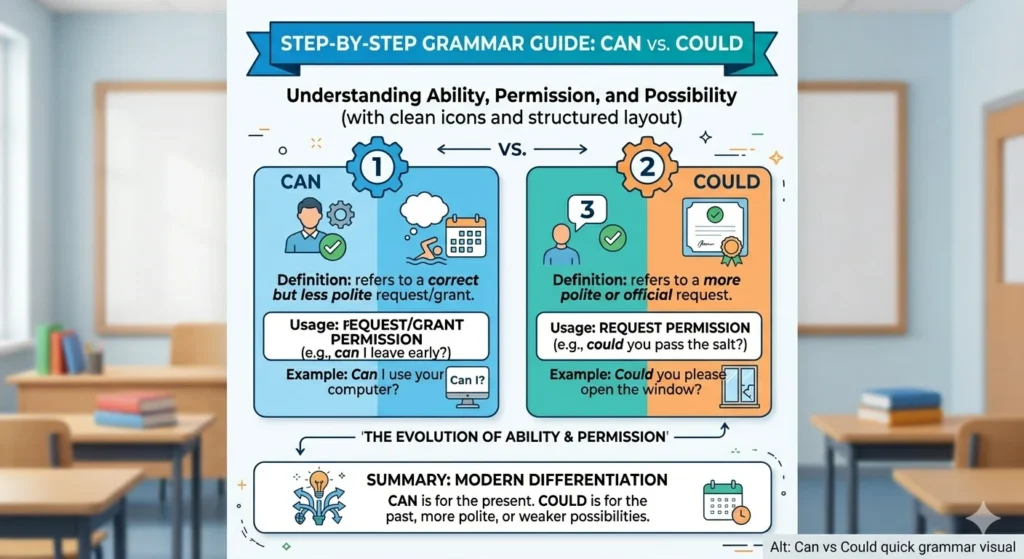
The Origin of Could vs Can
The words can and could come from Old English.
- Can comes from “cunnan” (to know or be able)
- Could developed as the past form of can
Later, English spelling changed. The letter “l” was added to could due to influence from similar words like would and should. However, pronunciation stayed the same.
Today, could is used not only for the past but also for:
- Politeness
- Possibility
- Uncertainty
👉 This explains why:
- Can = direct and simple
- Could = polite and flexible
British English vs American English Usage
There is no spelling difference between can and could. The difference is in usage and tone.
| Usage Type | Can | Could |
|---|---|---|
| Ability | I can drive | I could drive (past) |
| Permission | Can I go? | Could I go? (polite) |
| Possibility | It can rain | It could rain |
| Tone | Direct | Polite / formal |
🌍 Usage Insight:
- US → more casual (can)
- UK → more polite (could)
- Global → could safer in formal English
Leaped vs Leapt: Which One Should You Use?
Which Should You Use?
✔ Use Can when:
- Talking about present ability
- Speaking casually
- Asking simple questions
👉 Example: I can help you
✔ Use Could when:
- You want to be polite
- Writing formal emails
- Talking about past ability
- Showing possibility
👉 Example: Could you help me?
👉 Pro Tip: If unsure, use could.
Could vs Can Rules
📌 Rule 1: Ability
- Present → can
- Past → could
📌 Rule 2: Permission
- Casual → can
- Polite → could
📌 Rule 3: Possibility
- Strong → can
- Weak → could
📌 Rule 4: Negative Form
- can’t / cannot
- couldn’t / could not
📌 Rule 5: Question Form
- Can you help me?
- Could you help me?
👉 These are essential could vs can rules for correct usage.
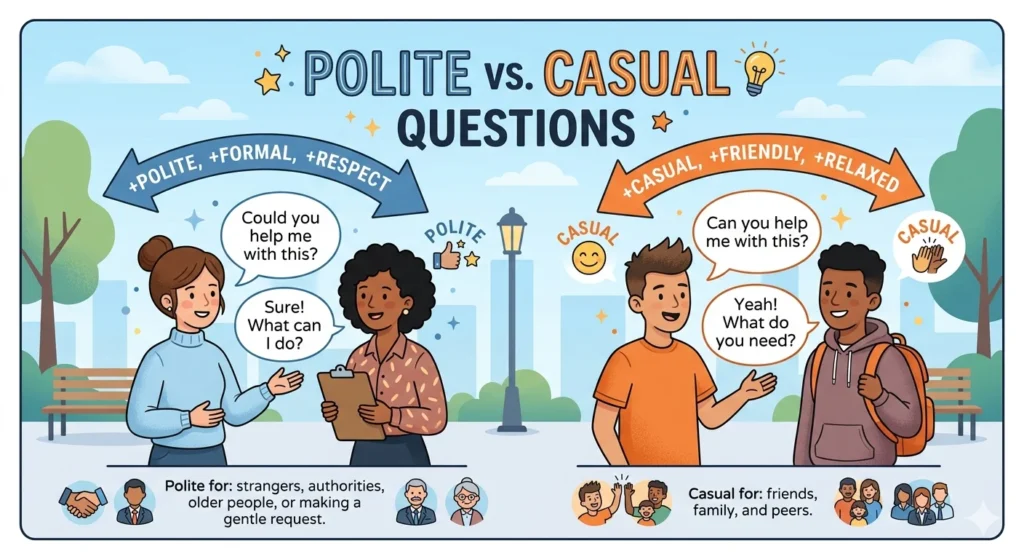
Could vs Can in a Question
| Form | Example | Tone |
|---|---|---|
| Can | Can you help me? | Casual |
| Could | Could you help me? | Polite |
👉 Use could in formal situations.
Could vs Can vs Would
| Word | Use | Example |
|---|---|---|
| Can | Ability / permission | I can help |
| Could | Past / polite / possibility | I could help |
| Would | Choice / condition | I would help |
👉 Example:
- I can help now
- I could help later
- I would help if needed
When to Use Can and Could in Formal vs Informal English
- Formal: Could you please send the report?
- Informal: Can you send the report?
👉 Rule:
- Formal → could
- Informal → can
Common Mistakes with Could vs Can
❌ I can swim when I was young
✔ I could swim when I was young
❌ Can you help me yesterday?
✔ Could you help me yesterday
❌ Can you send the file? (less polite)
✔ Could you send the file
❓ Could I talk or can I talk?
✔ Both correct
✔ Could I talk? is more polite
Could vs Can for Future
- Can = sure
- Could = possible
👉 Example:
- I can meet tomorrow
- I could meet tomorrow
Use of Could with Examples
- She could be at home
- We could try again
- He could speak English as a child
- It could rain today
Could vs Can in Everyday Examples
Could you please send the report?
💬 Social Media
I can do this!
📰 News
The situation could change
📄 Formal Writing
This method could improve results
Could vs Can – Google Trends & Usage Data
- “Can” is used more in daily speaking
- “Could” is used more in formal and polite communication
- Students search this for grammar learning
- Professionals search this for email writing
👉 Country insight:
- UK / Canada → more could
- US → more can
Could vs Can – Comparison Table
| Feature | Can | Could |
|---|---|---|
| Time | Present | Past / flexible |
| Tone | Direct | Polite |
| Ability | Yes | Past ability |
| Permission | Casual | Formal |
| Possibility | Strong | Weak |
Could vs Can Exercises
- I ___ swim well
- ___ you help me?
- When I was young, I ___ run fast
- ___ I talk to you?
✔ Answers:
can, could, could, can/could
Real-Life Practice: Can vs Could
- ___ you help me with homework?
- I ___ finish this today
- ___ I use your laptop?
- I ___ swim when I was a child
✔ Answers:
Could, can, Can/Could, could
Pro Tips for Using Can vs Could
- Use could in interviews
- Use can with friends
- Use could to sound polite
- Avoid can in formal writing
- When unsure, use could
When to use can and could with examples?
- I can help
- I could help
What is more polite, can or could?
- Could is more polite
FAQs
When to use could and can?
Use can for present and could for past or polite tone
Could I talk or can I talk?
Both are correct. Could is more polite
Should I use can I or could I?
Use could I in formal situations
Could vs would?
Could = possibility
Would = condition
Can I use could for future?
Yes, for possible future
Could vs can rules?
Can = present
Could = past or polite
Is can wrong in formal English?
No, but could is better
Conclusion
Understanding could vs can is simple when you focus on time, tone, and situation. Can is used for present ability and casual communication. Could is used for past ability, polite requests, and uncertain situations.
If you want to sound polite and professional, could is the better choice. If you are speaking casually, can is correct. This small difference can improve your English communication a lot.
Practice daily. Try using both words in your own sentences. Over time, it will become natural. Now you clearly know when to use can and could, how to use them in questions, and how to apply them in real life.