“Can I go outside?” sounds normal in everyday English—but many teachers still correct it to “May I go outside?” This creates confusion for millions of English learners worldwide.
The topic of can vs may is one of the most searched grammar questions because both words look similar but are used differently in tone, politeness, and meaning. Students often search for can vs may grammar, difference between may and can with examples, and when should you use can or may because incorrect usage can make sentences sound either too informal or unnecessarily formal.
In modern English, both are correct—but context matters more than strict rules. Grammar guides from standard academic English usage (including Cambridge-style grammar principles) show that “may” is preferred in formal permission, while “can” is widely accepted in informal speech.
This guide will give you:
- A quick direct answer
- Clear grammar rules
- Real-life examples
- Legal, formal, and daily usage
- Differences between can vs may vs could, might, and shall
Can vs May
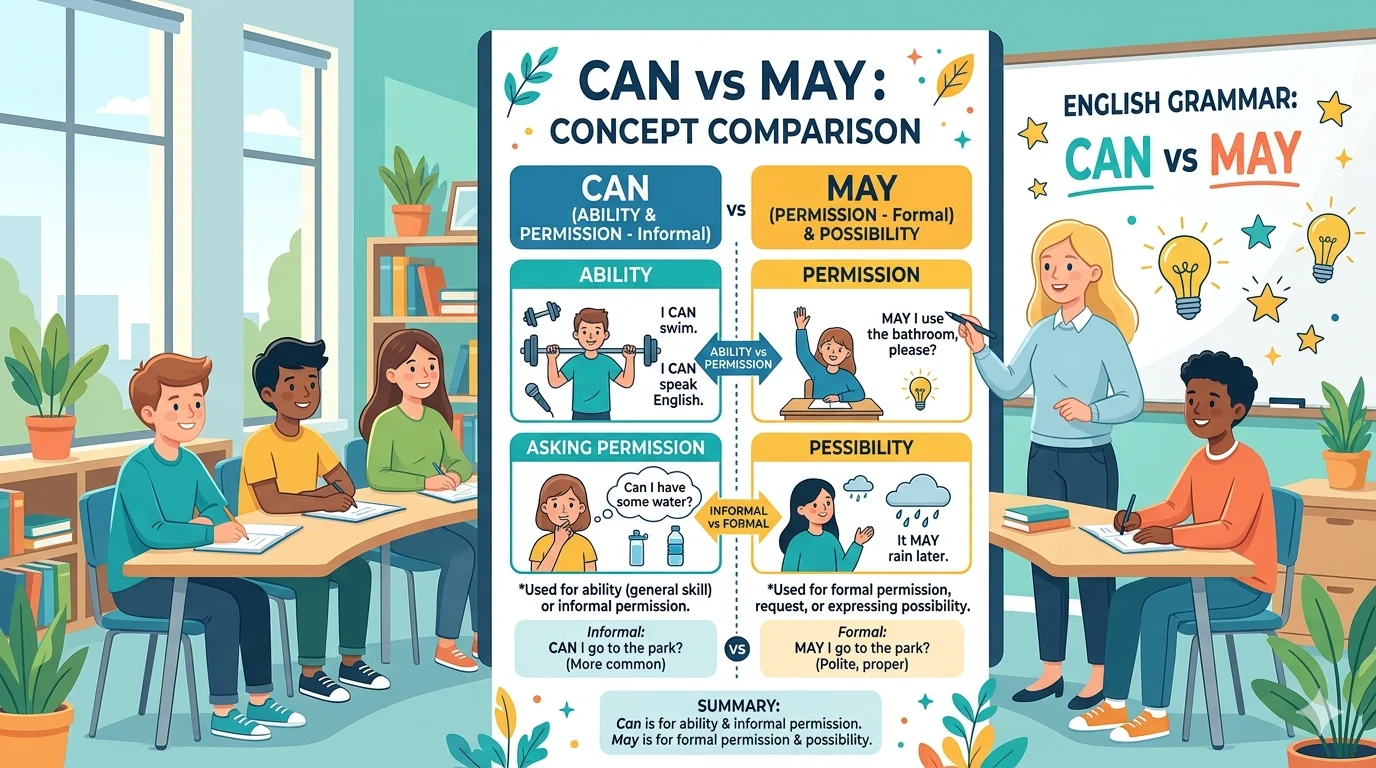
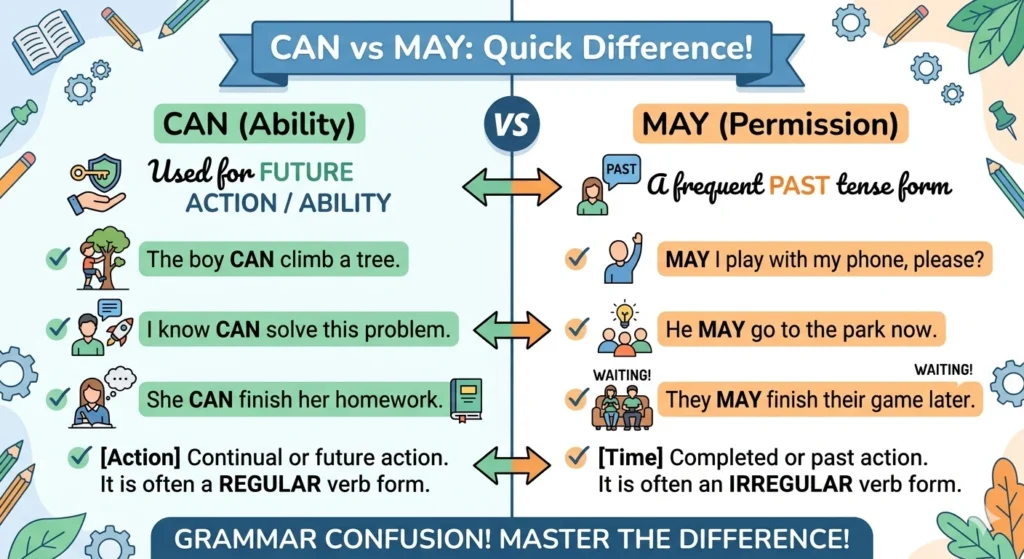
Can is used for ability and informal permission, while may is used for formal permission and possibility in standard English grammar.
Examples:
- I can drive a car. (ability)
- Can I leave now? (informal permission)
- May I leave now? (formal permission)
- It may rain today. (possibility)
👉 Simple rule:
Use can for everyday conversation and may for polite or formal communication.
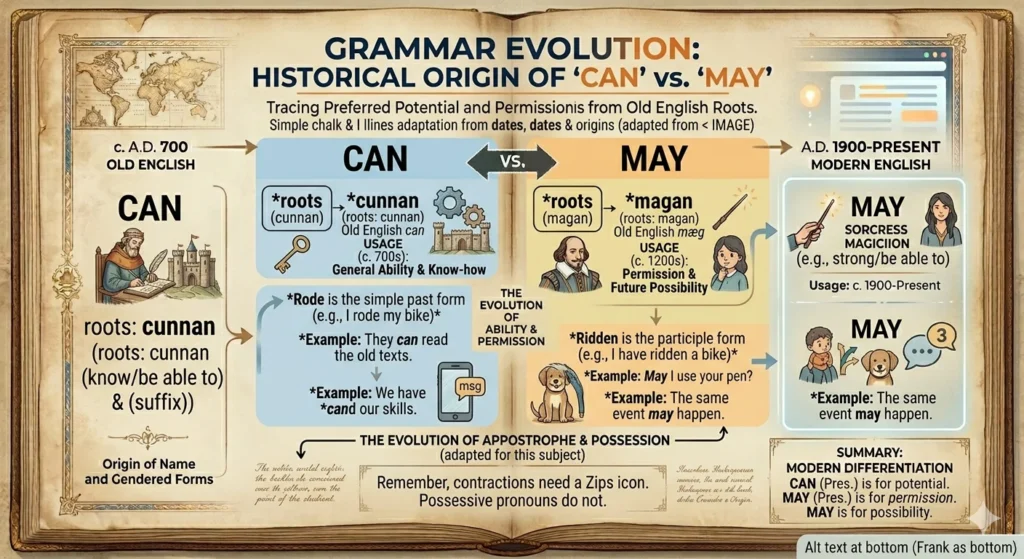
The Origin of Can vs May
To fully understand usage, we must look at history.
- Can comes from Old English cunnan, meaning “to know or be able.”
- May comes from Old English magan, meaning “to have power or permission.”
📌 Grammar Evolution Insight:
Originally:
- Can = ability only
- May = permission only
Over time, spoken English became more flexible. People started using can for permission in casual speech, which created modern confusion.
👉 Today’s Standard Usage:
- Can → ability + informal permission
- May → formal permission + possibility
Can vs May – Grammar Rules
According to standard English grammar rules used in academic writing:
- May is preferred in formal and polite requests
- Can is acceptable in informal speech
- Both are correct depending on context
👉 This is why exams, formal letters, and professional writing still prefer “may I”.
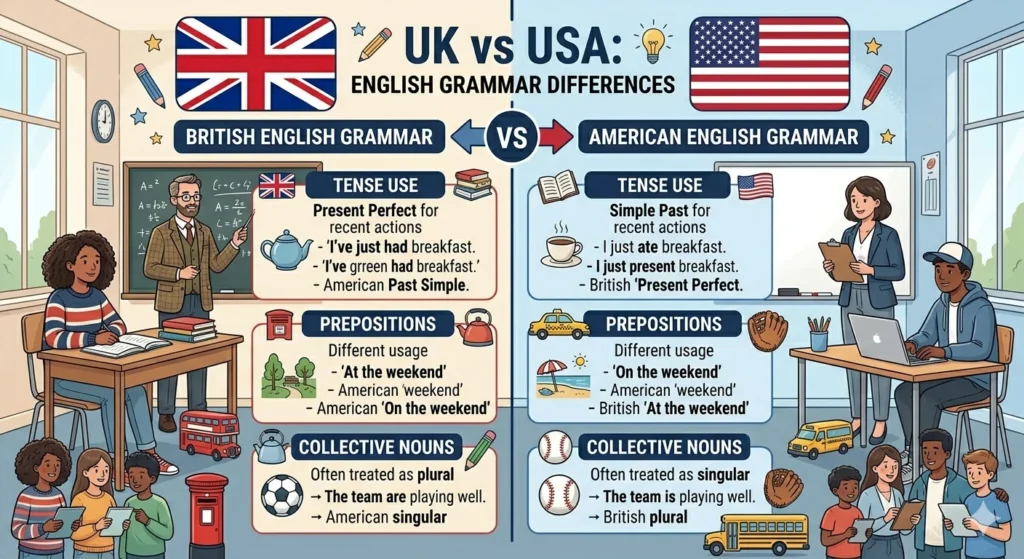
British English vs American English Usage
This difference is about style and formality, not correctness.
🇬🇧 British English:
- More traditional grammar approach
- “May I” is preferred in formal contexts
🇺🇸 American English:
- More relaxed usage
- “Can I” is commonly used even for permission
📊 Comparison Table:
| Situation | British English | American English |
|---|---|---|
| Asking permission | May I open the door? | Can I open the door? |
| Formal writing | May | May |
| Classroom usage | May preferred | Can accepted |
| Casual speech | Can | Can |
👉 Conclusion: Meaning is the same; only tone changes.
Which Should You Use?
✔ Use CAN when:
- Talking about ability
- Speaking casually
- Chatting or informal writing
Examples:
- I can solve this problem.
- Can I call you later?
✔ Use MAY when:
- Asking polite permission
- Writing formal emails
- Expressing possibility
Examples:
- May I ask a question?
- This may improve performance.
Common Mistakes with Can vs May
❌ Mistake 1: Formal request using “can”
- Wrong: Can I request approval?
- Correct: May I request approval?
❌ Mistake 2: Using “may” for ability
- Wrong: I may swim fast
- Correct: I can swim fast
❌ Mistake 3: Confusing possibility and ability
- “It can rain” → general capability
- “It may rain” → real possibility
Can vs May Examples in Real Life
📧 Email:
- May I schedule a meeting? (formal)
- Can we meet tomorrow? (casual)
🏢 Office:
- May I take leave tomorrow?
- Can you check this file?
📰 News:
- The government may introduce new reforms.
📱 Social Media:
- Can anyone help me with this?
🎓 Classroom:
- May I enter the class?
Can vs May vs Could
- Can → ability / informal permission
- Could → polite request / past ability
- May → formal permission
Examples:
- Can I join?
- Could I join? (polite)
- May I join? (formal)
Can vs May vs Might
- May → moderate possibility
- Might → weaker possibility
Examples:
- It may rain today (likely)
- It might rain today (less likely)
Can vs May vs Shall
- Can → ability
- May → permission
- Shall → suggestion or formal intention
Example:
- Shall we begin?
Difference Between May and Can with Examples
| Sentence | Meaning |
|---|---|
| Can I go? | Informal permission |
| May I go? | Polite permission |
| I can go | Ability |
| I may go | Possibility |
Can vs May
In legal and formal documents, precision is important:
- May = optional permission
- Shall = obligation or requirement
- Can = ability (rare in legal writing)
Example:
- The user may access the system.
- The user shall follow all rules.
👉 This distinction is critical in contracts and policies.
Common Sentences Learners Get Wrong
- ❌ Can I take your permission? → ✔ May I take your permission?
- ❌ I may lift 50kg → ✔ I can lift 50kg
- ❌ Can it rain tomorrow? → ✔ May it rain tomorrow?
Can and May Exercises
Fill in the blanks:
- ___ I use your laptop?
- She ___ speak English fluently.
- It ___ rain later today.
- ___ I ask you something?
- Students ___ submit assignments online.
✔ Answers:
- May / Can
- Can
- May
- May
- Can
When Should You Use Can or May?
- Teacher → May
- Friend → Can
- Formal email → May
- Ability → Can
Can I Ask or May I Ask?
- Can I ask? → informal
- May I ask? → polite and professional
👉 Preferred in formal communication: May I ask
What is the Difference Between “We Can” and “We May”?
- We can → ability
- We may → permission or possibility
Example:
- We can start now
- We may start now
Why “May I” Sounds More Polite
- It follows traditional English grammar
- It is preferred in academic and formal writing
- It shows respect and professionalism
👉 However, modern English accepts both in casual usage.
Can vs May – Google Trends & Usage Insight
Search behavior shows:
- “Can” is more common globally due to everyday speech
- “May” is used in formal writing, exams, and legal documents
🌍 Why people search this:
- Students: exam confusion
- Professionals: email tone
- Writers: grammar accuracy
👉 High-intent SEO keywords include:
- can vs may examples
- can vs may grammar
- difference between may and can with examples
Comparison Table
| Word | Use Case | Example |
|---|---|---|
| Can | Ability / casual | I can drive |
| May | Permission | May I enter? |
| Could | Polite request | Could I sit here? |
| Might | Weak possibility | It might rain |
| Shall | Suggestion | Shall we go? |
FAQs
1. What is the main difference between can and may?
Can shows ability or informal permission, while may shows formal permission or possibility.
2. Is “Can I” correct English?
Yes, it is correct in modern English, especially in informal speech.
3. Which is more polite: can or may?
“May” is more polite and used in formal communication.
4. Does “may” mean possibility?
Yes, it expresses probability, e.g., “It may rain.”
5. When should I use can or may?
Use can for ability and may for polite or formal permission.
6. Is “may” still used today?
Yes, especially in academic, legal, and professional writing.
7. Can I say “Can I ask a question?”
Yes, but “May I ask a question?” is more formal.
Conclusion
The difference between can vs may depends entirely on context and tone. Can is used for ability and informal communication, while may is used for formal permission and possibility.
Modern English allows flexibility, but standard grammar rules still recommend may for polite and professional usage. This is why you will see it in exams, official letters, and academic writing.
Understanding related modal verbs like could, might, and shall helps you improve accuracy and fluency. The key is simple: match your word choice with the situation and audience.
Mastering this small grammar rule improves your writing quality, speaking confidence, and professional communication skills significantly.

Scott Thornbury is a respected English language educator and author, known for practical grammar insights, teacher training, and clear learner-focused explanations.