Have you ever written an academic essay, nursing report, or professional email and suddenly seen a red underline under the word “affective” when you actually meant “effective”? This is one of the most common English grammar and vocabulary confusions in the world.
Millions of students, nurses, psychologists, teachers, and writers search for effective vs affective because these two words look almost identical but carry completely different meanings. Even a small spelling mistake can change the entire meaning of a sentence and make writing look incorrect or unprofessional.
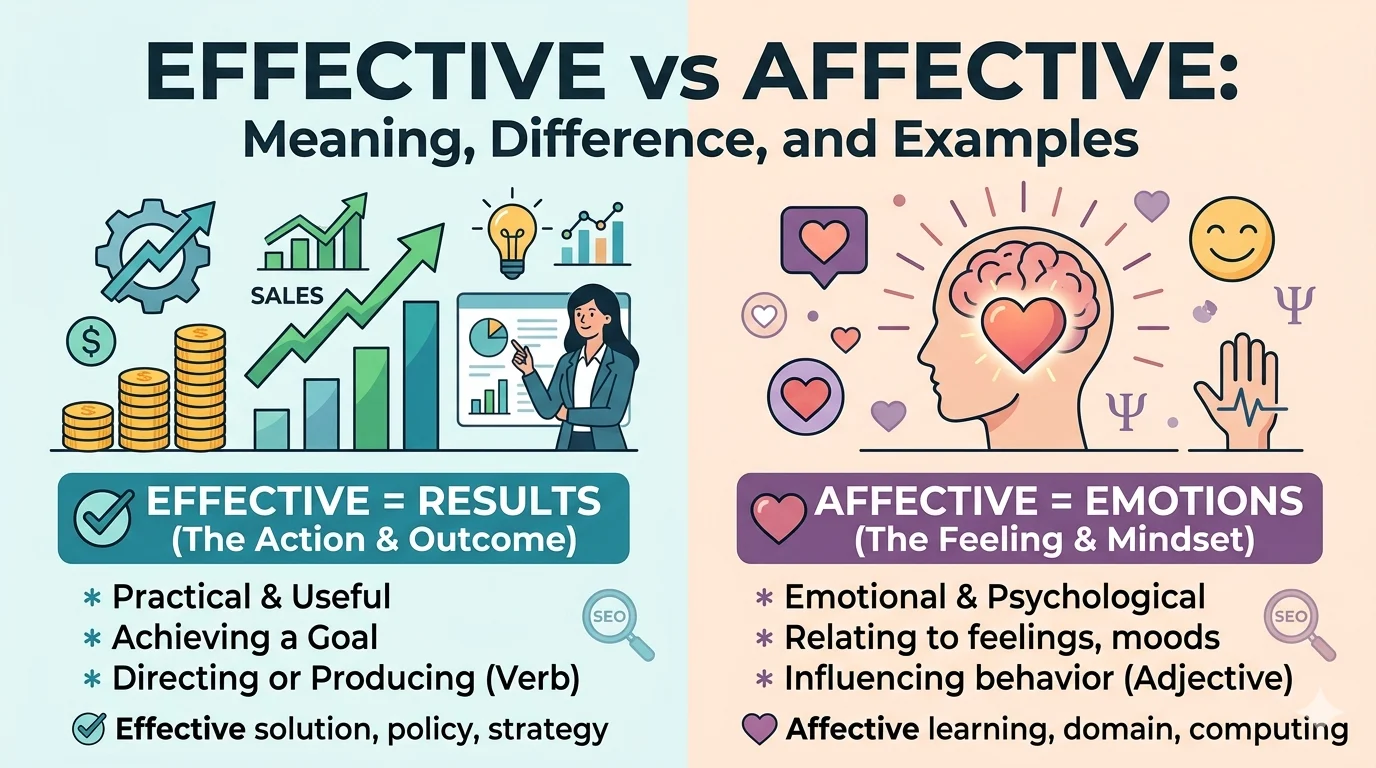
For example, “effective treatment” refers to something that works successfully, while “affective response” refers to emotional reactions and feelings. One is about results, the other is about emotions.
Effective vs Affective
What is the difference between effective and affective?
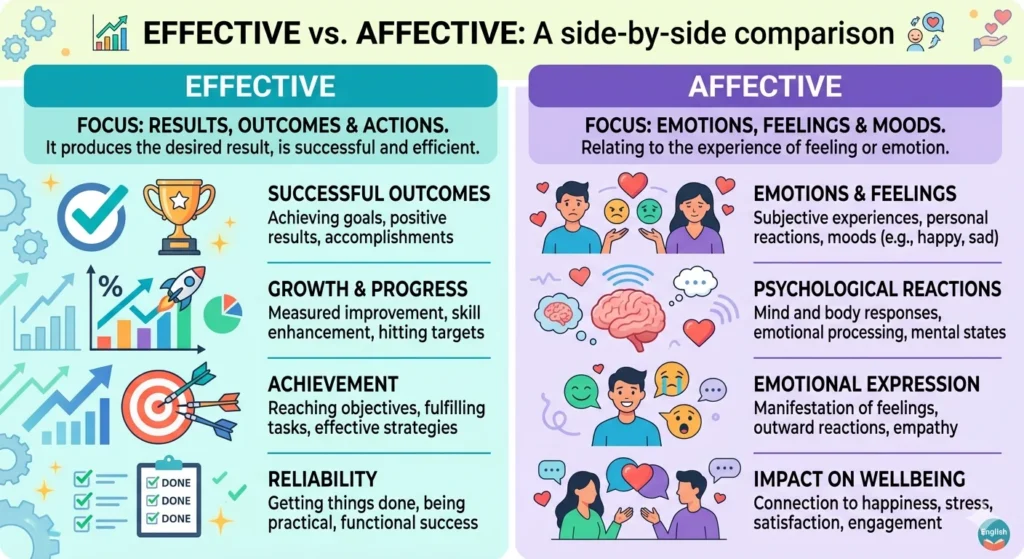
Effective means producing a successful result or outcome. Affective means related to emotions, feelings, and psychological responses. Effective is used for success and performance, while affective is used for emotions and behavior.
| Word | Meaning | Focus | Example |
|---|---|---|---|
| Effective | Produces results | Success | Effective strategy increases sales |
| Affective | Related to emotions | Feelings | Affective response to music |
The Origin of Effective vs Affective
Origin of Effective
The word effective comes from Latin effectivus, meaning “producing results.” It has been used in English since the 14th century in law, business, medicine, and management.
Origin of Affective
The word affective comes from Latin affectus, meaning “emotion or feeling state.” It is widely used in psychology, education, and behavioral science.
Why Confusion Happens
Both words share similar Latin roots:
- Effect = result
- Affect = emotion
Only one letter changes meaning completely.

British English vs American English
There is no spelling difference between UK and US English.
| Word | UK English | US English |
|---|---|---|
| Effective | Effective | Effective |
| Affective | Affective | Affective |
Effective vs Affective Pronunciation
| Word | IPA | Sound |
|---|---|---|
| Effective | /ɪˈfek.tɪv/ | ih-FEK-tiv |
| Affective | /əˈfek.tɪv/ | uh-FEK-tiv |
Example Pronunciation Sentences
- This method is effective in learning English.
- Affective responses are studied in psychology.
Effective Meaning
Effective means something that produces a successful result.
Examples
- Effective communication improves teamwork.
- The vaccine is effective against the virus.
- This is an effective learning method.
- The policy is effective immediately.
Affective Meaning
Affective refers to emotions, feelings, moods, and psychological states.
Examples
- The therapist studied affective behavior.
- Music creates an affective response.
- Affective learning builds emotional intelligence.
- The patient showed strong affective reactions.
Effective vs Affective in Nursing
Effective in Nursing
Used for successful treatment and patient care outcomes.
- Effective pain management
- Effective medication plan
- Effective diagnosis process
Affective in Nursing
Used for emotional support and patient feelings.
- Affective communication
- Affective care support
- Affective assessment of emotions
Nursing Example
The nurse provided effective treatment along with affective emotional support.
Effective vs Affective in Psychology
Psychology uses both terms in different contexts.
Affective Psychology
Focuses on:
- emotions
- mood
- feelings
- emotional behavior
- mental states
Key Terms
- Affective disorder (depression, anxiety)
- Affective response
- Affective behavior
Cognitive vs Affective
| Cognitive | Affective |
|---|---|
| Thinking | Feeling |
| Logic | Emotion |
| Knowledge | Mood |
| Memory | Emotional response |
Affective vs Emotional
- Emotional = everyday language
- Affective = academic/psychology term
Example:
- Emotional reaction (general use)
- Affective response (academic use)
Are You Affected or Effected?
- Affected = influenced
- Effected = caused or produced
Example:
- Weather affected travel plans
- Company effected policy changes
Effective vs Affective Immediately
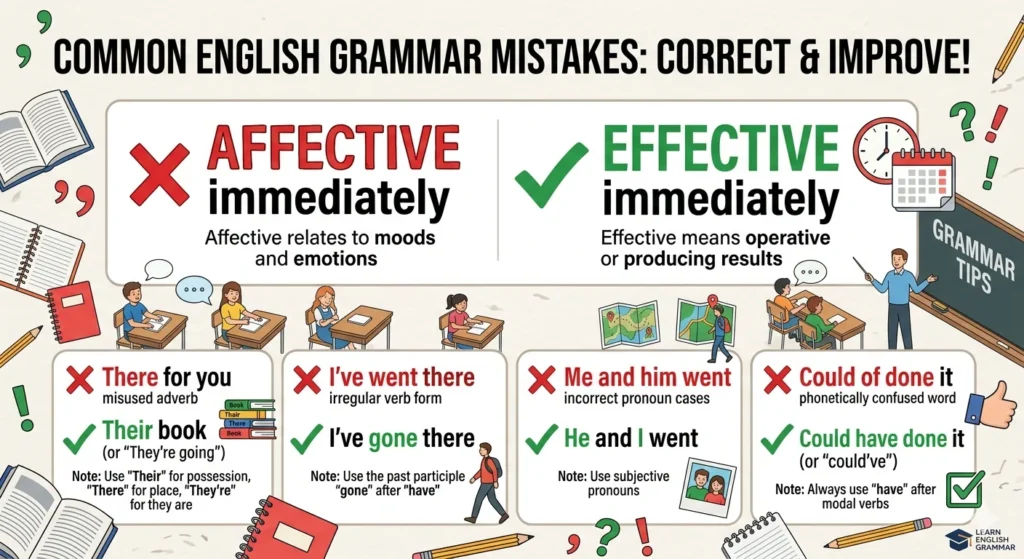
✔ Correct: Effective immediately
❌ Wrong: Affective immediately
Used in:
- law
- HR policies
- official notices
Effective vs Affective – Common Mistakes
❌ The training was affective
✔ The training was effective
❌ Affective communication improved sales
✔ Effective communication improved sales
❌ Policy is affective immediately
✔ Policy is effective immediately
Effective vs Affective in Real Life
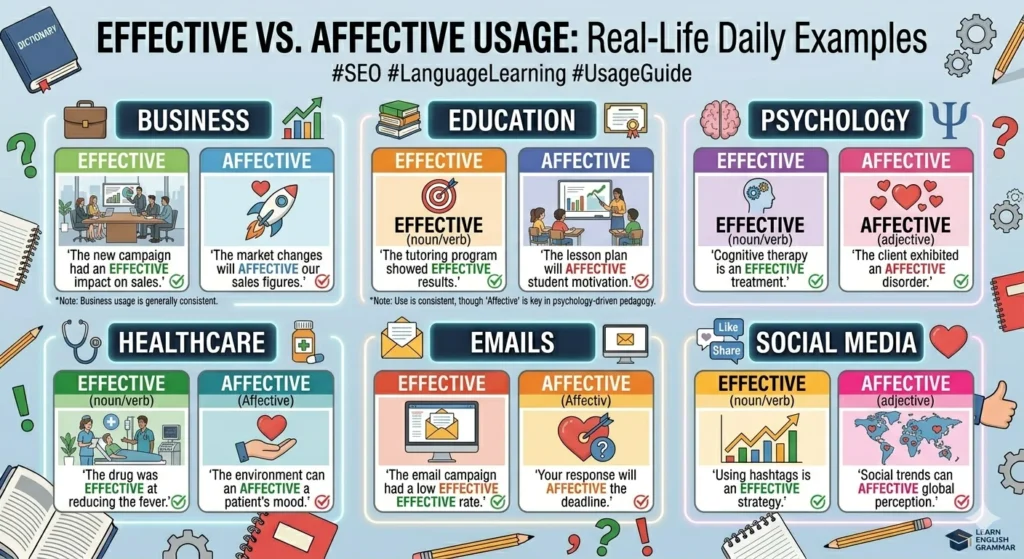
Business
- Effective strategy increases revenue
- Affective marketing builds emotional connection
Education
- Effective teaching improves learning
- Affective learning builds empathy
Healthcare
- Effective treatment cures disease
- Affective care supports emotions
Why People Search “Effective vs Affective”
Users search this keyword because:
- Exam confusion
- Nursing assignments
- Psychology studies
- Grammar correction tools
- Professional writing improvement
- ESL learning needs
Google Trends Insight
- “Effective” = very high global usage
- “Affective” = niche academic usage
Most searches are intent-based confusion correction.
FAQs
1. What is the difference between effective and affective?
Effective = results, Affective = emotions.
2. Is it effective or affective immediately?
Correct phrase is “effective immediately.”
3. What is affective behavior?
Behavior related to emotions and feelings.
4. Is affective a real English word?
Yes, it is widely used in psychology and education.
5. What is cognitive vs affective?
Cognitive = thinking, Affective = feeling.
6. Are effective and affective pronounced the same?
They sound similar but start differently.
7. When should I use effective?
Use it when talking about success, results, or performance.
Conclusion
The difference between effective vs affective is simple but extremely important in English writing. These two words are often confused because they look similar, but their meanings belong to completely different areas of language.
Effective is used when talking about results, success, performance, and practical outcomes in business, healthcare, law, and everyday communication. On the other hand, affective is used in psychology, education, and nursing to describe emotions, feelings, moods, and human behavior.
A powerful memory trick is:
👉 If it works → Effective
👉 If it feels → Affective
Understanding this difference improves your grammar accuracy, professional writing quality, and academic performance. Whether you are a student, nurse, psychologist, teacher, or content writer, using the correct word helps you communicate clearly and confidently.

David Crystal is a renowned English linguist and author, known for making English grammar, linguistics, and language history clear and engaging.