Many English learners get confused between wear, where, and ware because they look and sound almost the same. This is one of the most common grammar mistakes in English writing, especially in exams, emails, and content writing.
The main reason for confusion is that these words are homophones—they have similar pronunciation but different meanings and spellings.
This topic is frequently searched with queries like:
- wear vs where vs ware difference
- where or were or wear
- how to use wear or ware
- wear vs where vs ware examples
In this guide, you will learn simple meanings, pronunciation, mistakes, memory tricks, exam usage, and real-life examples in a very easy way.
Wear vs Where vs Ware
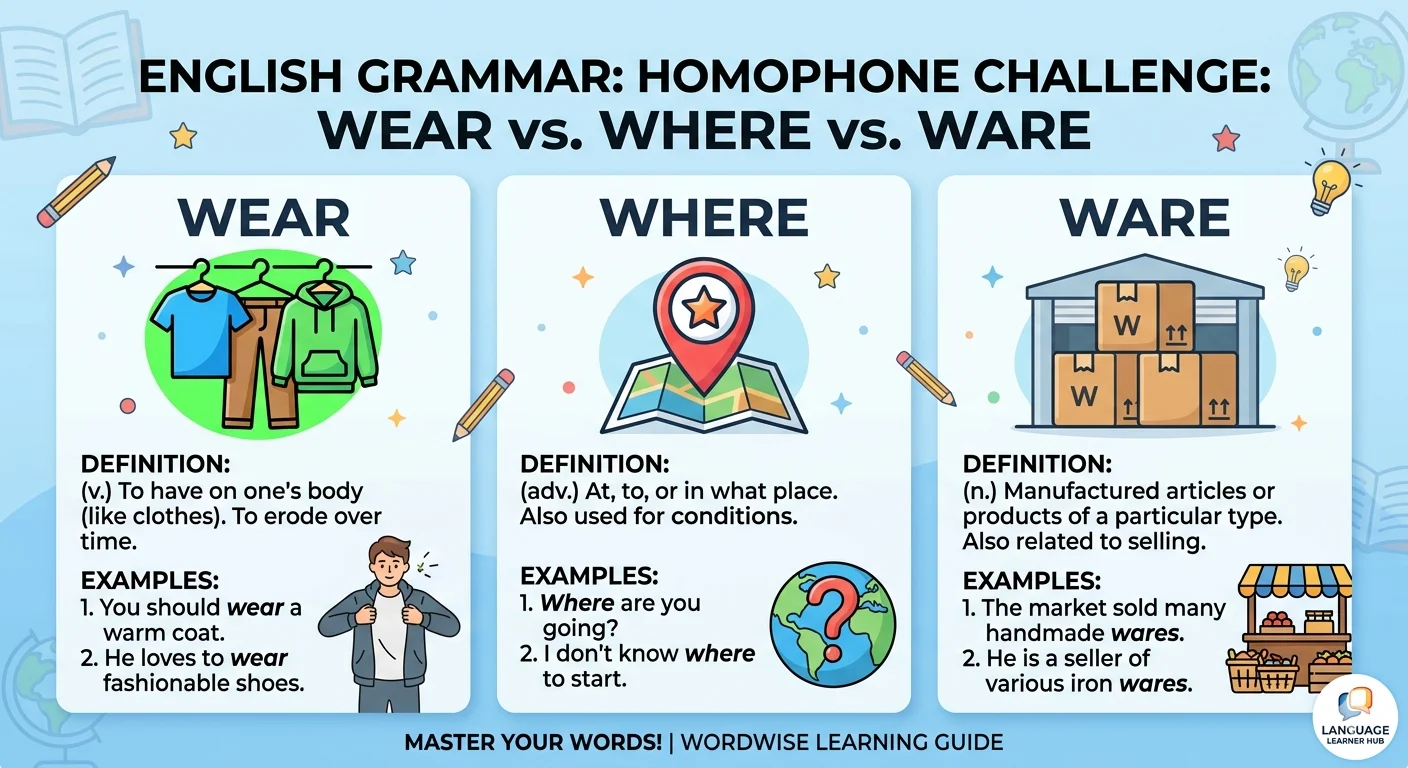
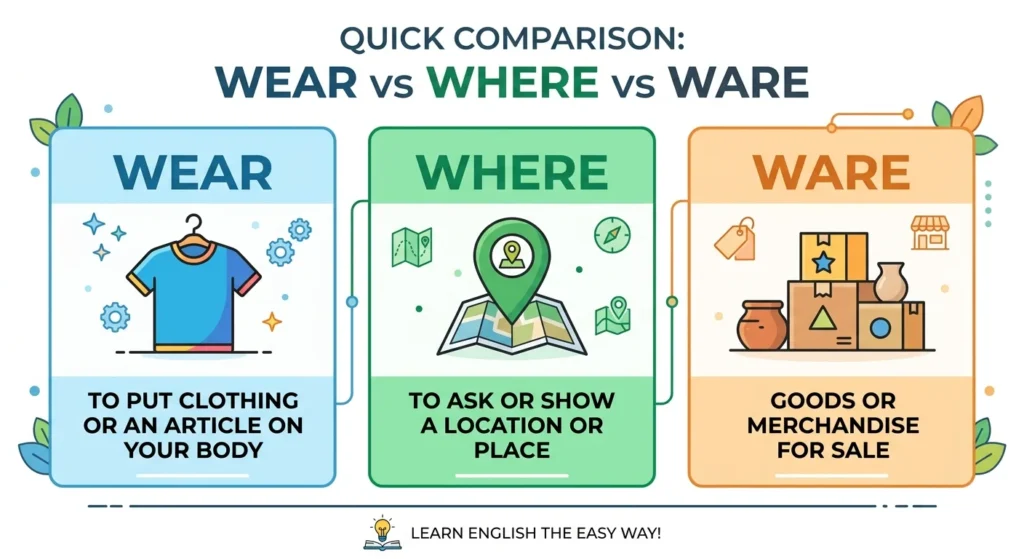
Wear = to put on clothes or get damaged over time
Where = a place or location
Ware = goods, products, or items
✔ Super simple:
👉 Wear = clothes
👉 Where = place
👉 Ware = goods
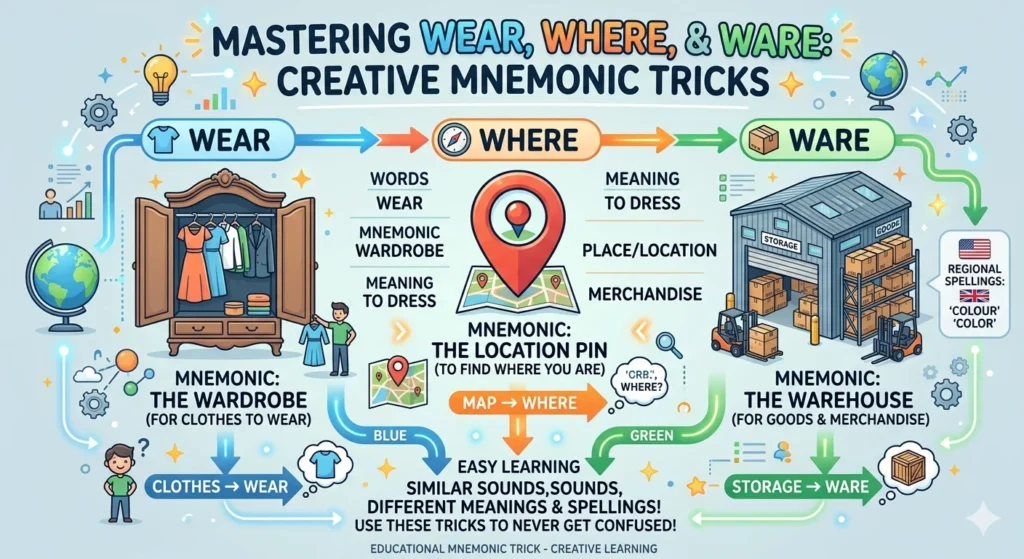
Wear vs Where vs Ware – One-Line Memory Trick
✔ Wear → Wardrobe (clothes) 👕
✔ Where → Where place? 📍
✔ Ware → Warehouse (products) 📦
👉 This is the fastest exam memory trick.
Why People Confuse Wear, Where and Ware
People make mistakes because:
- They are homophones
- They sound identical in fast speech
- ESL learners translate mentally from native language
- Typing quickly causes spelling errors
- Autocorrect sometimes changes words incorrectly
👉 That’s why this is a high-search grammar confusion topic.
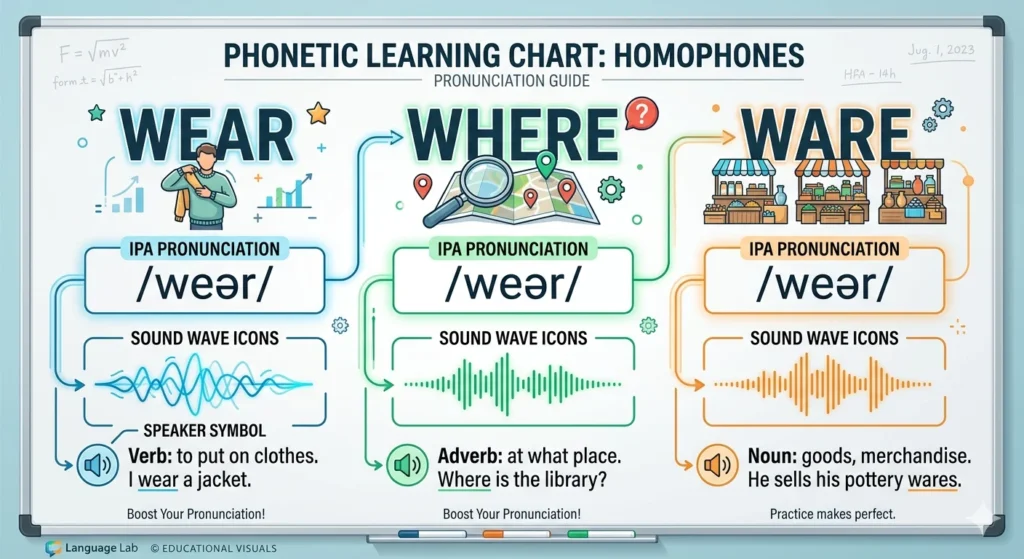
Wear vs Where vs Ware – Pronunciation Guide
| Word | Sound |
|---|---|
| Wear | /weər/ |
| Where | /weər/ |
| Ware | /weər/ |
👉 Same sound = major reason for confusion.
Wear vs Where vs Ware – Comparison Table
| Feature | Wear | Where | Ware |
|---|---|---|---|
| Type | Verb/Noun | Adverb | Noun |
| Meaning | Clothing / damage | Place | Products |
| Example | I wear shoes | Where are you? | Glassware |
Wear vs Where vs Ware – Simple Difference in One Sentence
- Wear = something you put on
- Where = asks about place
- Ware = items you sell or use
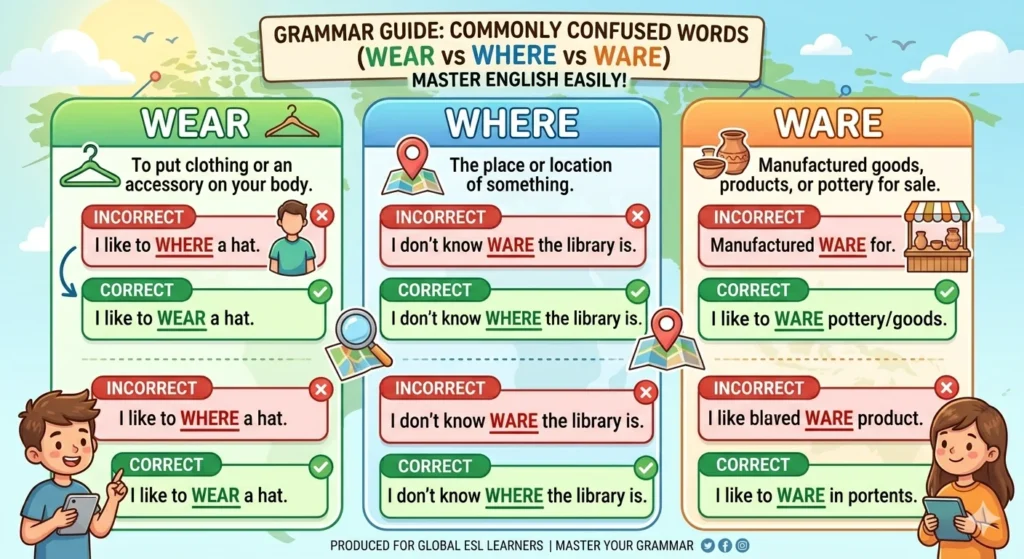
Common Mistakes
❌ I will where this shirt
✔ I will wear this shirt
❌ Wear is your home?
✔ Where is your home?
❌ Plastic wear products
✔ Plastic ware products
Wear vs Where vs Ware – Real-Life Examples
📧 Email:
- Please tell me where the office is
- You must wear formal dress
📱 Social Media:
- Guess where I am
- I love what I wear today
🏫 Study:
- Students must wear uniforms
- This shop sells kitchen ware
Wear or Ware Out / Wear Off
- Wear out → become old
- Wear off → disappear slowly
✔ Example:
- Shoes are wearing out
- Pain will wear off
Signs of Wear
- faded clothes
- broken shoes
- scratches
- old surfaces
👉 This is called “wear and tear”.
Wear vs Where vs Ware – Exam & IELTS Use
This topic is important for:
- IELTS Writing
- School exams
- English grammar tests
- Professional writing
👉 Correct spelling improves score and clarity.
Wear vs Where vs Ware – Voice Search Queries
People ask:
- What is difference between wear and where?
- How do you spell ware?
- Which is correct wear or where?
Mini Quiz
- I ___ a jacket.
- ___ is your school?
- This shop sells ___.
✔ Answers:
- wear
- where
- ware
Related Confusing Words
- their vs there vs they’re
- your vs you’re
- affect vs effect
- accept vs except
FAQs
1. What is wear vs where vs ware?
Wear = clothes, Where = place, Ware = goods.
2. Why are they confusing?
Because they sound the same.
3. Is ware a real word?
Yes, it means products.
4. What is wear meaning?
To put on clothes or become old.
5. What is where meaning?
It shows location.
Conclusion
The difference between wear vs where vs ware is simple once you understand their meanings and usage rules. These words confuse many learners because they sound identical but belong to different grammar categories.
- Wear = clothing or damage
- Where = location
- Ware = goods or products
By using memory tricks like wardrobe, warehouse, and location, you can easily avoid mistakes in writing and exams.
This guide helps you master one of the most common English grammar confusion topics with simple rules, examples, and practice exercises.

David Crystal is a renowned English linguist and author, known for making English grammar, linguistics, and language history clear and engaging.