When a friend is going through something painful, you might say, “I understand how you feel,” but what you truly mean could be very different. Are you feeling their pain with them—or simply feeling sorry for them? This is where the difference between empathize vs sympathize becomes important in everyday communication.
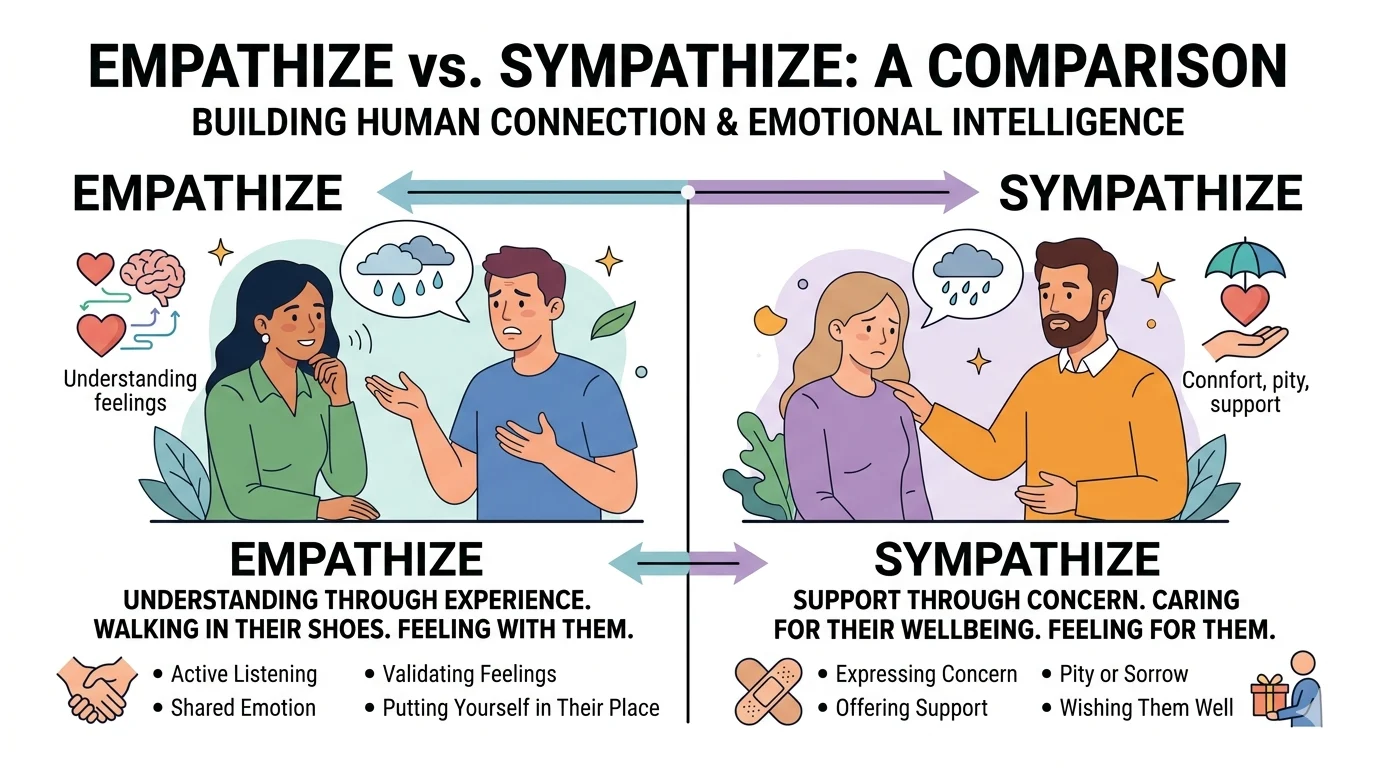
To empathize means to step into someone else’s emotional world and feel what they are feeling. It is a deep emotional connection where you understand their pain or joy as if it were your own. For example: “I can empathize with your loss because I know how deeply it hurts.”
To sympathize, on the other hand, means to acknowledge someone’s feelings and feel concern or sadness for them, without fully experiencing their emotions. For example: “I sympathize with what you are going through and hope things get better soon.”
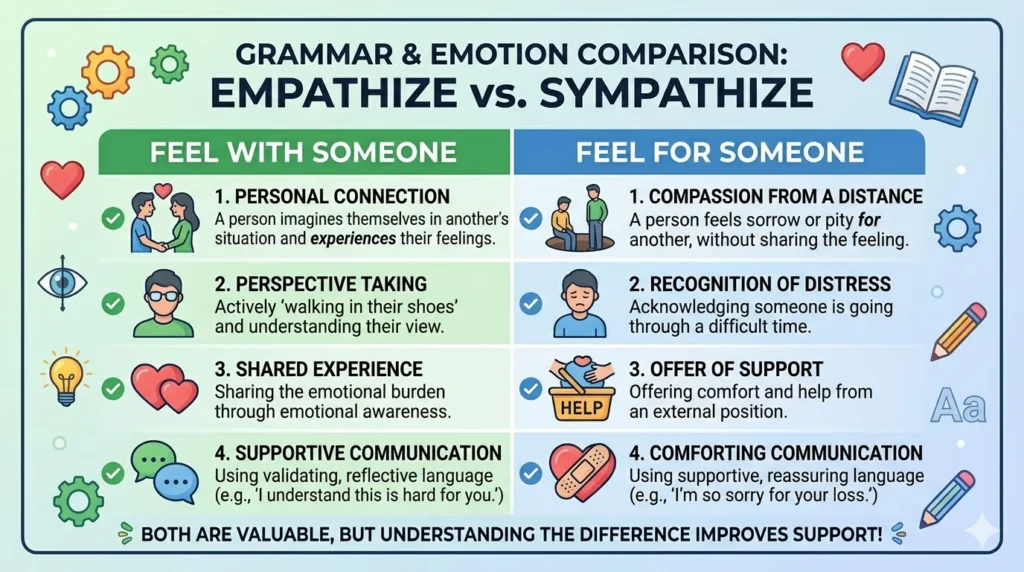
A simple way to remember the difference is: empathy is feeling with someone, sympathy is feeling for someone. Empathy connects you emotionally, while sympathy offers care and support from a distance.
Understanding empathize vs sympathize helps you communicate more clearly, respond more appropriately in emotional situations, and build stronger, more meaningful relationships.
Empathize vs Sympathize
Featured Snippet Answer
Empathize means understanding and sharing another person’s feelings from their perspective, while sympathize means feeling concern, sorrow, or pity for their situation.
A simple memory trick is:
Empathy = Feel with someone
Sympathy = Feel for someone
Empathize vs Sympathize Comparison Table
| Feature | Empathize | Sympathize |
|---|---|---|
| Meaning | Understand another person’s emotions | Feel concern for another person’s situation |
| Emotional Connection | Deep | Moderate |
| Perspective Taking | Yes | Usually No |
| Shared Experience | Often | Not Required |
| Emotional Awareness | High | Moderate |
| Relationship Building | Strong | Supportive |
| Example | “I understand how painful that feels.” | “I’m sorry you’re going through that.” |
Quick Examples
✅ Empathize: “I empathize with your stress because I experienced the same challenge.”
✅ Sympathize: “I sympathize with your loss and hope things get better.”
Key Takeaway
Empathy helps people feel understood. Sympathy helps people feel supported.
The Origin of Empathize vs Sympathize
Understanding the history of these words makes their meanings easier to remember.
Sympathize Origin
The word sympathy comes from the Greek word sympatheia.
- Sym means “together.”
- Pathos means “feeling.”
It entered English centuries ago and originally referred to sharing feelings with another person.
Empathize Origin
The word empathy is much newer.
It comes from the German term Einfühlung, which means “feeling into.”
Psychologists introduced empathy into English in the early twentieth century to describe the ability to understand another person’s emotions from their perspective.
Why People Confuse These Words
People often confuse empathy and sympathy because:
- Both involve emotions.
- Both show care and concern.
- Both are used during difficult situations.
- Both appear in psychology and communication discussions.
However, empathy focuses on emotional understanding, while sympathy focuses on emotional concern.
British English vs American English Usage
Unlike spelling pairs such as color vs colour or analyze vs analyse, there is no spelling difference between empathize and sympathize in modern English.
Comparison Table
| American English | British English | Correct? |
|---|---|---|
| Empathize | Empathize | Yes |
| Sympathize | Sympathize | Yes |
| Empathy | Empathy | Yes |
| Sympathy | Sympathy | Yes |
Usage Examples
American English:
- I empathize with your concerns.
- We sympathize with affected families.
British English:
- I empathize with your situation.
- We sympathize with the victims.
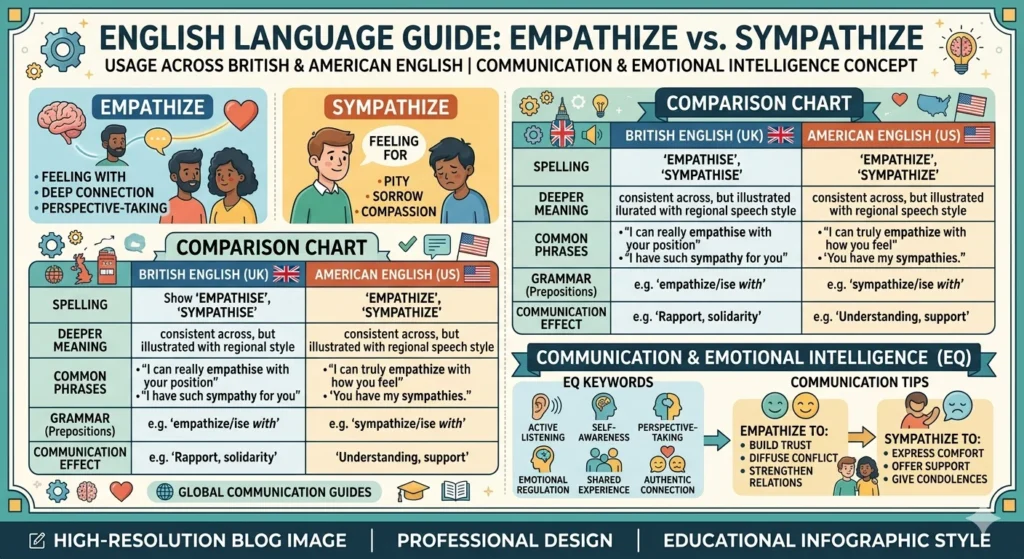
The spelling remains the same across both varieties of English.
When Should You Use Empathy Instead of Sympathy?
Many people know the definitions but still wonder which word fits a specific situation.
Use Empathy When:
- Someone needs emotional understanding.
- You have experienced something similar.
- You want to build trust.
- Active listening is important.
- You are working on conflict resolution.
Use Sympathy When:
- Offering condolences.
- Expressing concern.
- Supporting someone from a distance.
- Responding to tragedy or hardship.
- Writing formal messages of support.
Decision Table
| Situation | Better Choice |
|---|---|
| Friend feeling stressed | Empathy |
| Employee burnout | Empathy |
| Customer complaint | Empathy |
| Relationship conflict | Empathy |
| Funeral message | Sympathy |
| Condolence card | Sympathy |
| Natural disaster victims | Sympathy |
Key Takeaway
If you want someone to feel understood, choose empathy. If you want someone to feel supported, choose sympathy.
The 4 Biggest Differences Between Sympathy and Empathy
1. Emotional Understanding
Empathy involves understanding another person’s emotions.
Sympathy involves recognizing another person’s emotions.
2. Perspective Taking
Empathy requires seeing the world through another person’s eyes.
Sympathy allows you to remain outside the experience.
3. Emotional Connection
Empathy creates deeper emotional connection and trust building.
Sympathy creates supportive communication without deeply sharing emotions.
4. Relationship Impact
Empathy often strengthens long-term relationships.
Sympathy provides comfort but may not create the same level of emotional bonding.
What Do Psychologists Say About Empathy and Sympathy?
Psychology experts consider empathy an essential emotional intelligence skill.
Empathy helps people improve:
- Communication skills
- Social awareness
- Emotional resilience
- Relationship building
- Conflict resolution
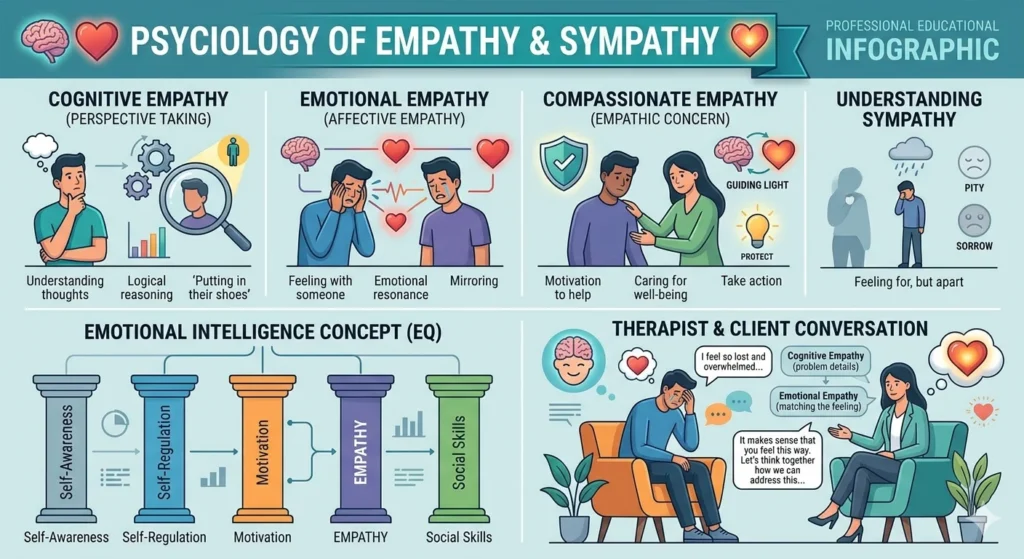
Psychologists commonly divide empathy into three categories.
Cognitive Empathy
Understanding what another person thinks.
Emotional Empathy
Feeling what another person feels.
Compassionate Empathy
Understanding emotions and taking action to help.
Sympathy, on the other hand, focuses more on concern and emotional support rather than sharing another person’s emotional experience.
Because of this, therapists, counselors, teachers, and leaders often rely heavily on empathy to build trust and human connection.
Expert Insight
Counselors, therapists, leadership coaches, and communication experts often emphasize empathy because people are more likely to trust someone who understands their emotions. While sympathy shows kindness and concern, empathy creates a deeper emotional connection that supports trust building, conflict resolution, and healthier relationships.
Empathy vs Sympathy in the Workplace
Modern workplaces increasingly value emotional intelligence, active listening, and effective communication. Understanding the difference between empathy and sympathy can help managers, leaders, and employees build stronger professional relationships.
Workplace Example
An employee says:
“I’ve been overwhelmed with deadlines lately.”
Sympathy Response
“I’m sorry you’re feeling stressed.”
This response shows concern but remains somewhat distant.
Empathy Response
“I understand how overwhelming multiple deadlines can feel. Let’s look at your workload together and see how we can help.”
This response acknowledges the employee’s emotions and offers support.
Why Empathy Matters at Work
Workplace empathy can:
- Improve trust building
- Increase employee engagement
- Strengthen teamwork
- Reduce workplace conflict
- Improve leadership skills
Key Takeaway
Empathy often creates stronger workplace relationships because employees feel understood rather than simply acknowledged.
Empathy vs Sympathy in Relationships
Healthy relationships depend on emotional awareness, communication skills, and human connection.
Relationship Example
Your partner says:
“I had a terrible day.”
Sympathy Response
“I’m sorry your day was bad.”
Empathy Response
“That sounds exhausting. Tell me what happened.”
The empathetic response encourages conversation and emotional connection.
Why Empathy Strengthens Relationships
Empathy helps people:
- Feel heard
- Feel valued
- Build trust
- Improve communication
- Resolve conflicts more effectively
Key Takeaway
In close relationships, empathy often creates deeper emotional bonds than sympathy alone.
Empathize vs Sympathize in Everyday Examples
In Emails
Empathy
“I empathize with the challenges your team is facing and understand how difficult this situation must be.”
Sympathy
“We sympathize with everyone affected by this unfortunate event.”
In News Reporting
Empathy
“The counselor empathized with survivors and listened carefully to their experiences.”
Sympathy
“Officials expressed sympathy for the victims and their families.”
On Social Media
Empathy
“I completely empathize with your frustration.”
Sympathy
“My deepest sympathies go out to everyone affected.”
In Formal Writing
Empathy
Effective leaders empathize with employees during challenging times.
Sympathy
The organization sympathized with affected communities after the disaster.
Common Phrases Using Empathize and Sympathize
Common Empathize Phrases
- I empathize with you.
- I can empathize with that.
- Many people empathize with her struggle.
- I truly empathize with your concerns.
- It’s easy to empathize with his situation.
Common Sympathize Phrases
- I sympathize with your loss.
- We sympathize with the victims.
- I sympathize with your situation.
- They sympathize with struggling families.
- I deeply sympathize with those affected.
Using these common phrases correctly can make your communication sound more natural and professional.
Common Mistakes with Empathize vs Sympathize
Many people use these words incorrectly.
Mistake 1
❌ I empathize for your loss.
✅ I sympathize with your loss.
Mistake 2
❌ I sympathize exactly how you feel.
✅ I empathize with how you feel.
Mistake 3
❌ Empathy means feeling sorry for someone.
✅ Sympathy means feeling sorry for someone.
Mistake 4
❌ Sympathy and empathy mean the same thing.
✅ They are related but different emotional responses.
Mistake 5
❌ Empathy always requires agreement.
✅ You can empathize with someone’s feelings without agreeing with their actions.
Sympathy vs Empathy Examples
Situation: Job Loss
Sympathy
“I’m sorry you lost your job.”
Empathy
“I understand how stressful that feels because I experienced something similar.”
Situation: Exam Failure
Sympathy
“I’m sorry that happened.”
Empathy
“I know how disappointing that feels.”
Situation: Illness
Sympathy
“I hope you recover soon.”
Empathy
“I understand how frustrating that condition can be because I faced it myself.”
Situation: Financial Problems
Sympathy
“I’m sorry you’re going through this.”
Empathy
“I know how difficult financial stress can feel.”
3 Differences Between Sympathy and Empathy
1. Emotional Depth
Empathy involves deeper emotional understanding.
Sympathy involves emotional concern.
2. Personal Experience
Empathy often draws on shared experiences.
Sympathy does not require similar experiences.
3. Perspective
Empathy enters another person’s perspective.
Sympathy observes from outside.
Empathy vs Sympathy vs Compassion
Many people confuse empathy, sympathy, and compassion.
Comparison Table
| Trait | Empathy | Sympathy | Compassion |
|---|---|---|---|
| Understand Feelings | Yes | Somewhat | Yes |
| Feel Concern | Sometimes | Yes | Yes |
| Take Action | Not Always | Rarely | Usually |
| Goal | Understand | Comfort | Help |
Simple Definitions
Empathy: “I understand how you feel.”
Sympathy: “I’m sorry you’re hurting.”
Compassion: “I understand your pain, and I want to help.”
Key Takeaway
Compassion often combines empathy with action.
Can You Empathize but Not Sympathize?
Yes.
You can understand someone’s emotions without agreeing with their actions.
For example, a manager may empathize with an employee’s frustration but not support inappropriate behavior.
Can You Sympathize Without Empathizing?
Yes.
You can feel concern for someone even if you do not fully understand their emotions.
For example, you may sympathize with victims of a natural disaster without personally experiencing such an event.
Do You Say I Empathize or Sympathize?
Both are correct.
Use:
I empathize with you when you understand another person’s feelings.
Use:
I sympathize with you when you want to express concern or sorrow.
Examples:
✅ I empathize with your stress.
✅ I sympathize with your loss.
Is Empathy or Sympathy Better?
Neither is automatically better.
Each serves a different purpose.
Empathy Works Best For
- Relationships
- Counseling
- Leadership
- Conflict resolution
- Customer service
Sympathy Works Best For
- Condolences
- Tragic events
- Formal support messages
- Public statements
The strongest emotional support often combines empathy, sympathy, and compassion.
Empathize vs Sympathize Reddit Discussions
Many Reddit users explain empathy and sympathy in a simple way:
Empathy = Feeling with someone
Sympathy = Feeling for someone
Across discussions about relationships, mental health, psychology, and communication, users often describe empathy as the deeper emotional response because it involves understanding another person’s perspective. Sympathy is usually viewed as expressing concern or support without fully sharing the emotional experience.
While opinions vary, the most common view is that empathy helps people feel understood, while sympathy helps people feel supported.
Empathize vs Sympathize – Google Trends & Usage Data
Interest in empathy-related terms has increased significantly in recent years.
Why Empathy Searches Are Growing
Several factors contribute to this trend:
- Increased focus on mental health
- Emotional intelligence training
- Leadership development programs
- Workplace communication skills
- Relationship coaching
- Personal development content
Common Search Queries
- What is the difference between sympathize and empathize?
- Sympathy vs empathy examples
- Empathy vs sympathy psychology
- Empathy vs sympathy vs compassion
- Is empathy or sympathy better?
Empathy has become especially popular in discussions about workplace culture, leadership, counseling, and personal growth.
Frequently Asked Questions
What is the difference between sympathize and empathize?
Empathize means understanding another person’s emotions. Sympathize means feeling concern or sorrow for their situation.
Do you say I empathize or sympathize?
Both are correct depending on the context.
Can you empathize but not sympathize?
Yes. You can understand someone’s emotions without agreeing with them.
Can you sympathize without empathizing?
Yes. You can feel concern for someone without fully understanding their experience.
Are empaths high IQ?
Not necessarily. Empathy is more closely related to emotional intelligence than IQ.
What is empathy in simple words?
Empathy means understanding and sharing another person’s feelings.
What is sympathy in simple words?
Sympathy means feeling concern or sorrow for someone.
Is empathy a skill or a personality trait?
It can be both. Some people are naturally empathetic, while others develop empathy through practice and experience.
Why is empathy important in communication?
Empathy improves trust, understanding, active listening, and relationship building.
What is an example of empathizing?
“I understand how stressful that situation feels because I experienced something similar.”
What is an example of sympathizing?
“I’m sorry you’re going through such a difficult time.”
Conclusion
Understanding the difference between empathize vs sympathize can improve your communication, relationships, and emotional intelligence. Although these words are often used interchangeably, they describe different emotional responses.
Empathy means understanding another person’s feelings from their perspective. It involves emotional awareness, active listening, perspective taking, and human connection. Sympathy means feeling concern, sorrow, or support for someone experiencing difficulty.
A simple rule can help you remember the difference:
Empathy is feeling with someone.
Sympathy is feeling for someone.
Compassion is taking action to help someone.
Whether you are communicating with friends, family members, coworkers, customers, or clients, choosing the right response can strengthen trust and improve relationships. Empathy helps people feel understood, while sympathy helps people feel supported. Both are valuable skills that contribute to stronger communication, emotional resilience, and healthier relationships.
The next time someone shares a challenge with you, consider whether they need understanding, support, or both. That small distinction can make a powerful difference in how your message is received.

Betty Azar is a respected English language educator and author, known for clear grammar explanations and practical resources for learners worldwide.