You’ve probably seen people use both “honey” vs “hunny” in texts, captions, or romantic messages. They sound the same, but only one is the correct spelling. The confusion usually comes from informal writing and affectionate nicknames used in everyday conversations.
The correct word is “honey.” It originally refers to the sweet food made by bees, but it is also commonly used as a term of endearment for someone you love or care about. For example: “Good morning, honey!”
On the other hand, “hunny” is an informal, playful, or stylized spelling of “honey.” It is not the standard spelling in English, but people often use it in texting, social media captions, or cute messages to sound more affectionate or aesthetic. For example: “Hey hunny, miss you 💕”
A simple way to remember is: “honey” is correct English, while “hunny” is a cute, casual variation used for style.
Understanding honey vs hunny helps you write correctly when needed, while also knowing when it’s okay to use the playful version in informal chats or social media posts.
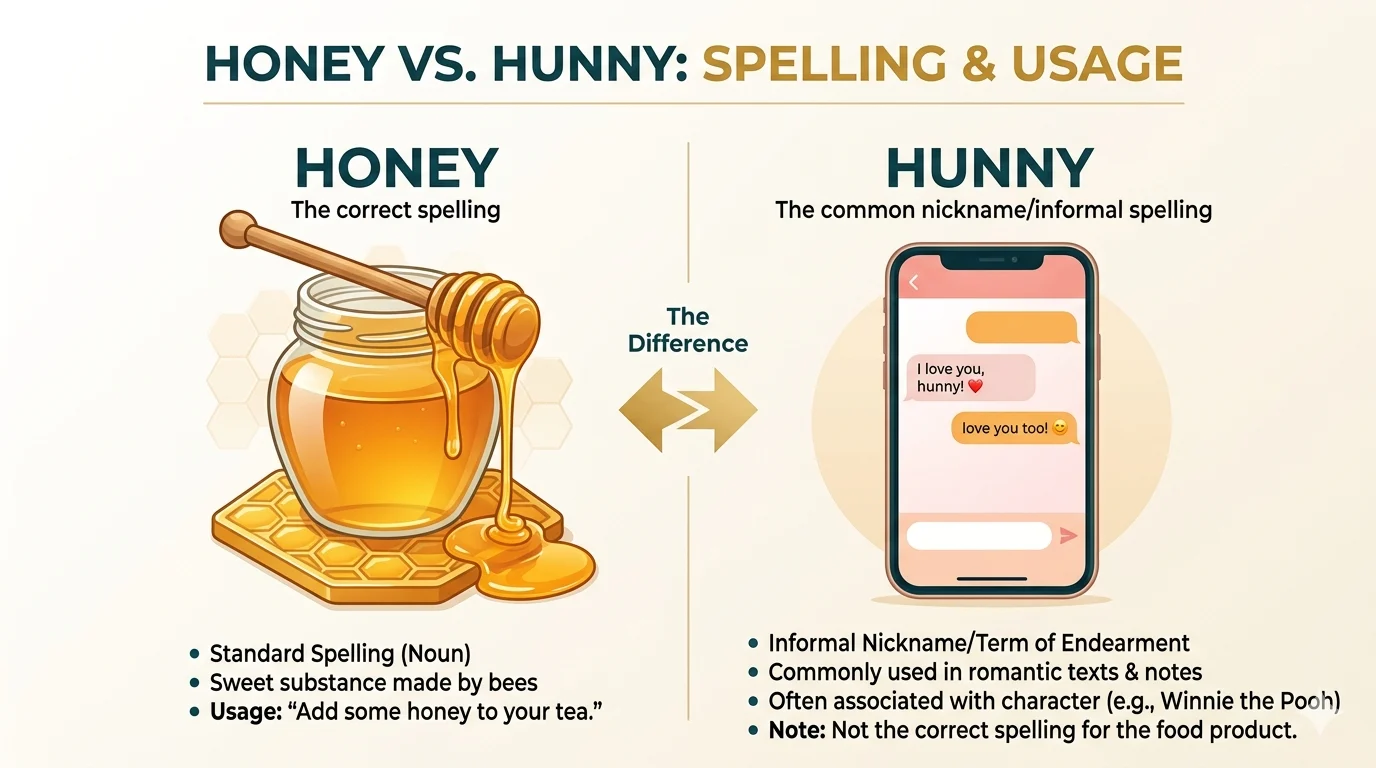
Honey vs Hunny
Honey is the correct and standard English spelling.
Hunny is an informal and affectionate spelling often used in text messages, social media, and romantic conversations.
Quick Summary Table
| Question | Answer |
|---|---|
| Correct spelling | Honey |
| Informal spelling | Hunny |
| Dictionary word | Honey |
| Formal writing | Honey |
| Romantic texting | Honey or Hunny |
| British English | Honey |
| American English | Honey |
Examples
✅ Honey, how was your day?
✅ Thank you, honey.
✅ Good morning, hunny ❤️
✅ Miss you, hunny.
❌ Dear Hunny, thank you for attending the meeting.
For formal writing, always choose honey.
The Origin of Honey vs Hunny
Understanding the history of these words helps explain why people confuse them.
Origin of Honey
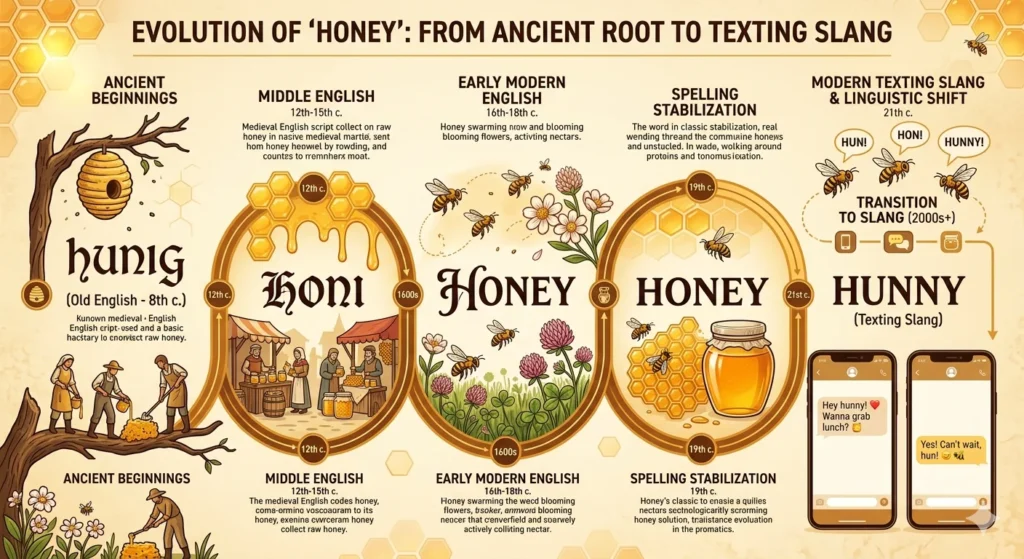
The word honey comes from Old English hunig. Originally, it referred to the sweet substance produced by bees.
Over time, English speakers began using honey as a term of endearment, similar to:
- Sweetheart
- Darling
- Dear
- Love
Examples:
- Honey, I’m home.
- Thank you, honey.
- My husband calls me honey.
Today, honey is one of the most common affectionate nicknames in English.
Origin of Hunny
The spelling hunny developed much later as a playful variation.
It became popular through:
- Text messaging
- Internet culture
- Social media
- Romantic chats
- Cute nickname spellings
Many people also recognize the spelling from Winnie-the-Pooh, where “hunny” appears as a humorous misspelling on honey pots.
Because of this influence, many people use hunny in casual online conversations.
Why the Confusion Exists
The confusion exists because:
- Both words sound identical.
- Both may be used affectionately.
- Social media encourages informal spellings.
- Many people assume hunny is the official spelling.
The key difference is simple:
Honey = Standard English spelling
Hunny = Informal spelling
British English vs American English Spelling
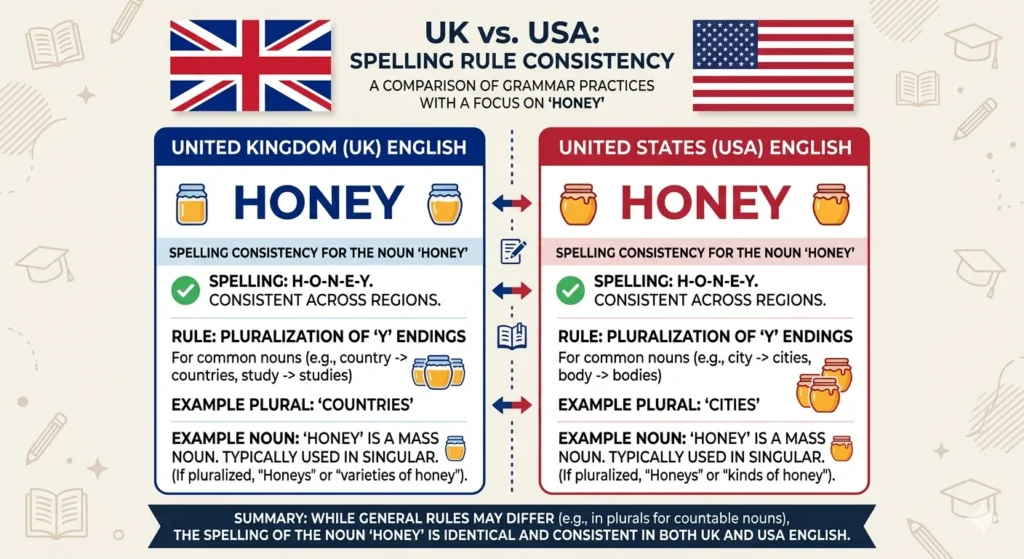
Many people believe honey and hunny represent a British vs American spelling difference. This is incorrect.
British English
Standard spelling:
✅ Honey
Examples:
- Thank you, honey.
- Good morning, honey.
American English
Standard spelling:
✅ Honey
Examples:
- Honey, where are the keys?
- I love you, honey.
Comparison Table
| Usage | British English | American English |
|---|---|---|
| Honey | ✅ Standard | ✅ Standard |
| Hunny | Informal | Informal |
| Formal Writing | Honey | Honey |
| Academic Writing | Honey | Honey |
| Business Communication | Honey | Honey |
Unlike words such as colour/color or favourite/favorite, there is no official regional spelling difference here.
Which Spelling Should You Use?
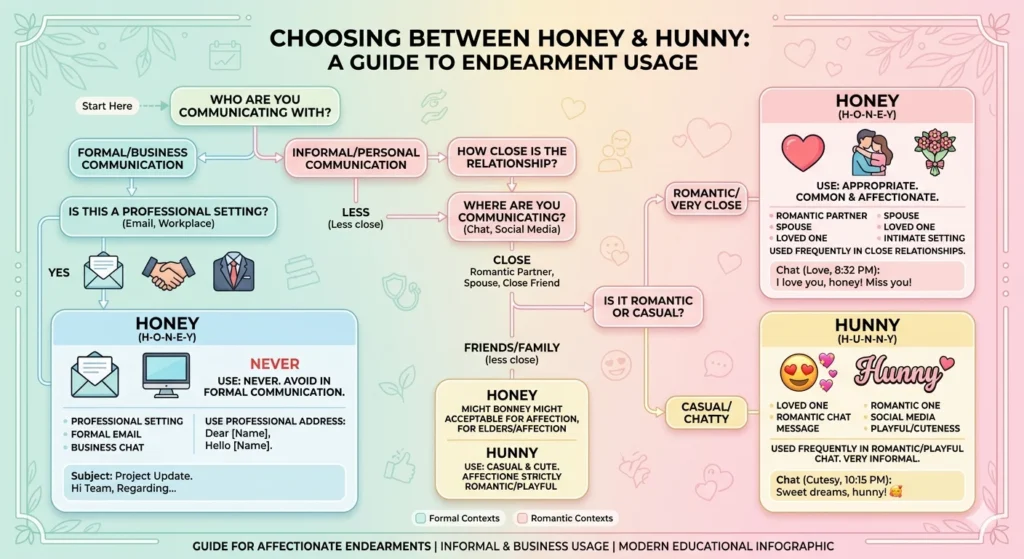
The best spelling depends on your audience and purpose.
Use Honey If:
- Writing an email
- Publishing an article
- Creating professional content
- Writing academic work
- Communicating formally
Examples:
- Thank you, honey.
- Honey, dinner is ready.
- She referred to her daughter as honey.
Use Hunny If:
- Sending a text message
- Posting on social media
- Chatting with a partner
- Using a playful nickname
Examples:
- Goodnight, hunny ❤️
- Miss you, hunny.
- Love you, hunny.
Audience-Based Advice
| Audience | Recommended Spelling |
|---|---|
| United States | Honey |
| United Kingdom | Honey |
| Canada | Honey |
| Australia | Honey |
| Academic Writing | Honey |
| Business Writing | Honey |
| Romantic Texting | Honey or Hunny |
| Social Media | Honey or Hunny |
Is It Hunny or Honey for Wife?
Both may be used affectionately, but honey is the standard spelling.
Hunny or Honey for Husband?
Again, both are common in personal messages, but honey is grammatically correct and universally accepted.
Honey Meaning in Chat
In chats, text messages, and online conversations, honey is commonly used as a warm and affectionate nickname.
It often means:
- Sweetheart
- Darling
- Dear
- Someone you care about
Examples:
- Good morning, honey.
- Thanks for your help, honey.
- I miss you, honey.
In chat language, honey may be romantic, friendly, or family-oriented depending on the relationship.
Hunny Meaning From a Girl
When a girl uses the word hunny, it usually expresses affection or friendliness.
Possible meanings include:
- Caring
- Warmth
- Friendship
- Romantic interest
- Playfulness
Examples:
- Take care, hunny.
- Goodnight, hunny ❤️
- Miss you, hunny.
The meaning depends on the context and relationship.
Hunny Meaning in Love
In romantic relationships, hunny is often used as a cute nickname.
It can express:
- Love
- Emotional closeness
- Affection
- Romantic attachment
Examples:
- I love you, hunny.
- Sweet dreams, hunny.
- You’re amazing, hunny.
Even in romantic settings, honey remains the standard spelling.
Is It Honey or Hunny When Talking to a Female?
Both spellings may be used affectionately.
Examples:
- Honey, how are you?
- Good morning, hunny.
However, if you are writing a greeting card, letter, article, or formal message, honey is usually the better choice.
Common Mistakes with Honey vs Hunny
Mistake #1: Using Hunny in Professional Writing
❌ Dear Hunny,
✅ Dear Honey,
Or better:
✅ Dear Sarah,
Mistake #2: Thinking Hunny Is the Standard Spelling
Many people assume hunny is officially recognized in standard English.
The accepted spelling is honey.
Mistake #3: Using Hunny in Academic Writing
❌ The author described the character as hunny.
✅ The author described the character as honey-like.
Mistake #4: Assuming They Have Different Meanings
In most situations, honey and hunny carry the same affectionate meaning.
The main difference is spelling and formality.
Mistake #5: Believing Hunny Is American English
This is false.
Both British and American English prefer honey.
Sync vs Synch: One Word, Two Spellings
Honey vs Hunny in Everyday Examples
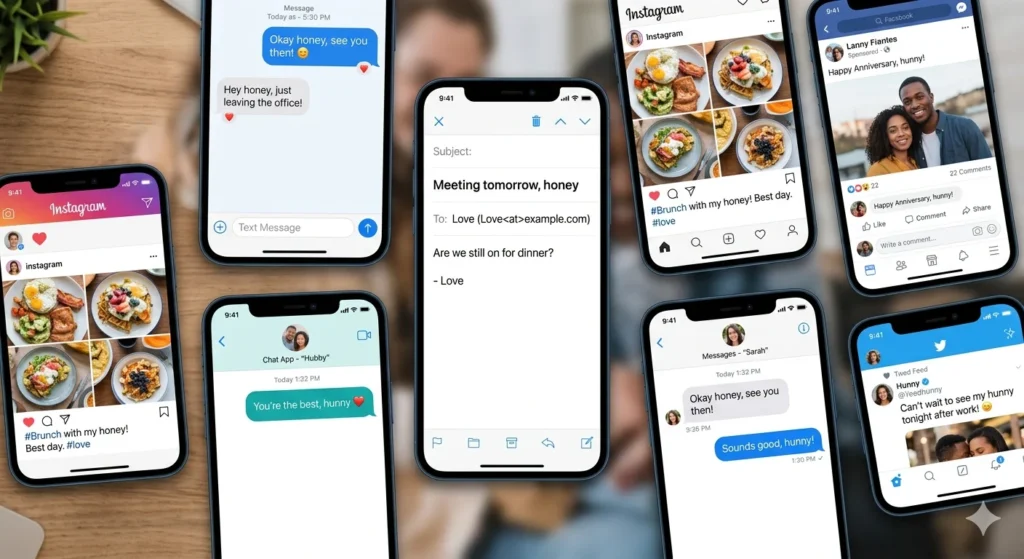
Text Messages
- Good morning, honey.
- Miss you, hunny.
- Love you, honey.
Social Media
- Happy birthday, honey!
- You look amazing, hunny ❤️
Emails
- Thank you for your support, honey.
Professional alternative:
- Thank you for your support.
Formal Writing
- Honey is produced by bees and used as a natural sweetener.
News Writing
Journalists almost always use the spelling honey.
Honey vs Hunny Reddit Discussions
Many discussions on Reddit and language forums reach a similar conclusion:
- Honey is the correct dictionary spelling.
- Hunny is considered a playful variation.
- Honey is preferred in formal writing.
- Hunny is mostly used in texting and online communication.
Many users feel honey looks more mature, while hunny feels more casual and affectionate.
What Drug Is Honey Slang For?
Some niche slang communities may occasionally use the word honey in specialized ways. However, this is not the common meaning.
For most English speakers, honey means:
- The sweet substance made by bees.
- A term of affection such as sweetheart or darling.
When people search this phrase, they are usually referring to uncommon slang usage rather than standard English meaning.
Honey vs Hunny – Google Trends & Usage Data
Search behavior shows that honey is significantly more common than hunny worldwide.
Usage Comparison
| Search Term | Popularity |
|---|---|
| Honey | Very High |
| Honey meaning | High |
| Honey meaning in chat | Growing |
| Hunny | Moderate |
| Hunny meaning | Moderate |
| Hunny meaning in love | Growing |
| Honey vs Hunny | Growing |
Popular Countries
- United States
- United Kingdom
- Canada
- Australia
- India
- Pakistan
The rise of texting, online dating, and social media has increased interest in hunny-related searches.
FAQs
Do you say hunny or honey?
Honey is the standard spelling. Hunny is an informal variation often used in texting.
What does hunny mean?
Hunny is usually a playful way of writing honey and is used as an affectionate nickname.
Is hunny a real word?
It is generally considered an informal spelling rather than the standard dictionary form.
Do you call your boyfriend honey or hunny?
Both are common, but honey is the accepted standard spelling.
Honey meaning in chat?
In chats, honey means sweetheart, darling, dear, or someone you care about.
Is it honey or hunny when talking to a female?
Both can be used affectionately, but honey is the standard spelling.
What does hunny mean in love?
In romantic conversations, hunny expresses affection, care, and emotional closeness.
Conclusion
The debate between honey vs hunny is simpler than many people think. Honey is the standard English spelling recognized in dictionaries, formal writing, business communication, academic work, and everyday English. Hunny, on the other hand, is an informal and playful variation that became popular through texting, social media, and affectionate online conversations.
If you are writing professionally, creating content, sending emails, or following standard grammar rules, choose honey. If you are chatting with a partner, sending a cute text, or using a nickname on social media, hunny can work as an informal alternative.
Whether you are searching for honey vs hunny meaning, honey meaning in chat, hunny meaning in love, is it honey or hunny for wife, or hunny or honey for husband, the key takeaway remains the same: honey is the correct standard spelling, while hunny is a casual and affectionate variation.
Using the right spelling for the right situation will help your writing look clearer, more natural, and more professional.

David Crystal is a renowned English linguist and author, known for making English grammar, linguistics, and language history clear and engaging.